
QuickNode MCP Server for Claude CodeGive Claude Code instant access to 18 tools to Create Kv List, Create Kv Set, Create Stream, and more
 GDPR Free for Subscribers
Claude Code is Anthropic's agentic CLI for terminal-first development. Add QuickNode as an MCP server in one command and Claude Code will discover every tool at runtime. ideal for automation pipelines, CI/CD integration, and headless workflows via Vinkius.
Ask AI about this MCP Server for Claude Code
The QuickNode MCP Server for Claude Code is a standout in the Ship It category — giving your AI agent 18 tools to work with, ready to go from day one.
Vinkius delivers Streamable HTTP and SSE to any MCP client
 Gemini
# Your Vinkius token. get it at cloud.vinkius.com
claude mcp add quicknode --transport http "https://edge.vinkius.com/[YOUR_TOKEN_HERE]/mcp"Vinkius Desktop App
The modern way to manage MCP Servers — no config files, no terminal commands. Install QuickNode and 4,000+ MCP Servers from a single visual interface.
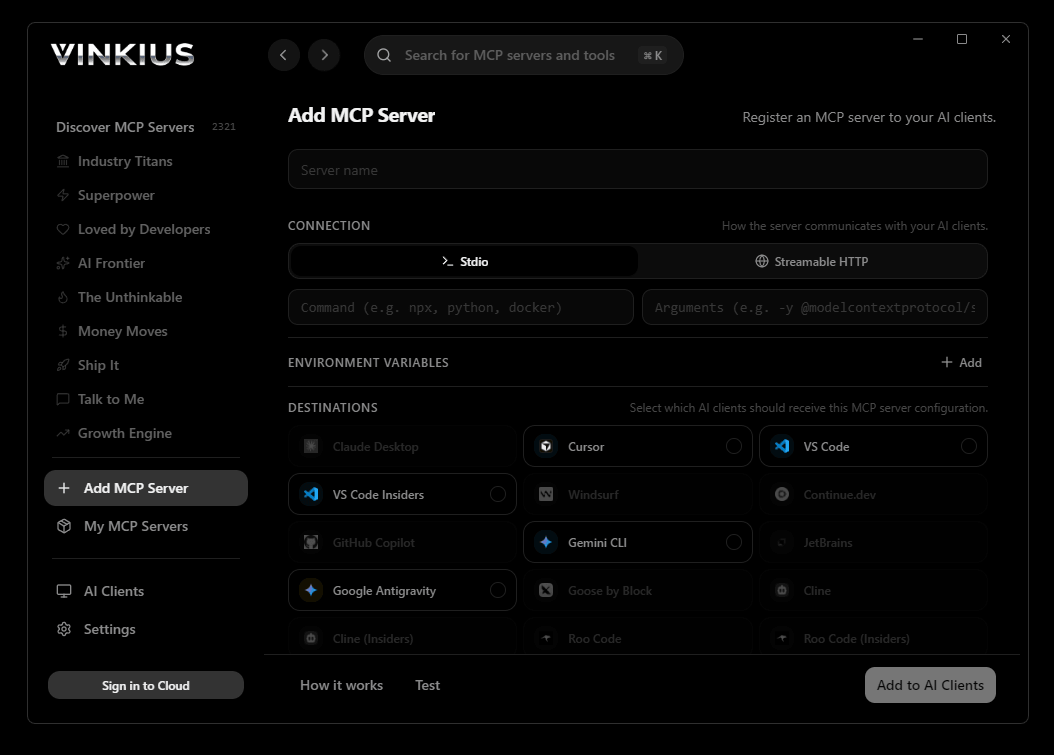

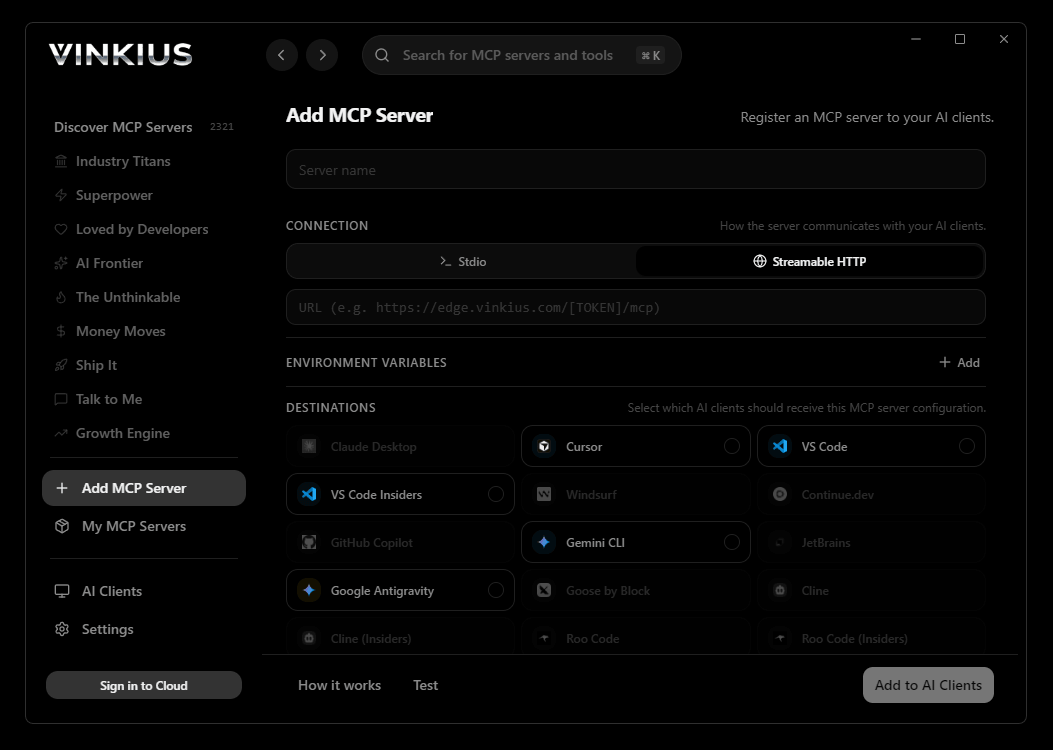
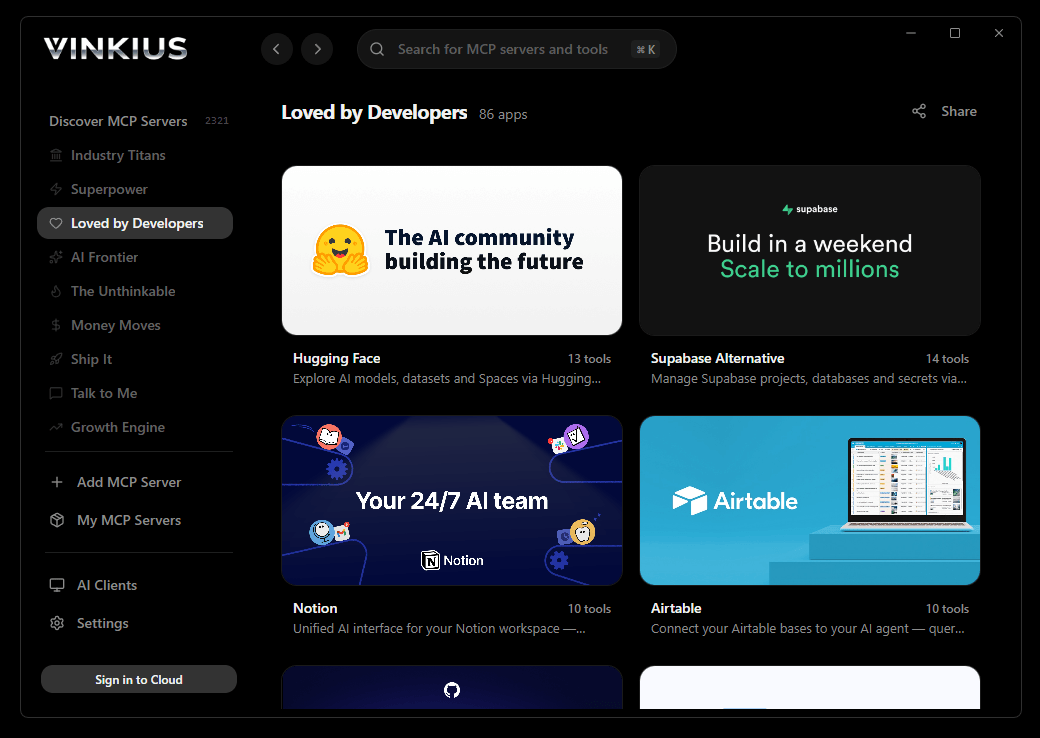

* Every MCP server runs on Vinkius-managed infrastructure inside AWS - a purpose-built runtime with per-request V8 isolates, Ed25519 signed audit chains, and sub-40ms cold starts optimized for native MCP execution. See our infrastructure
About QuickNode MCP Server
Connect your QuickNode account to any AI agent to orchestrate Web3 infrastructure through natural language. This server provides a comprehensive suite of tools to manage high-performance blockchain data pipelines and queries.
Claude Code registers QuickNode as an MCP server in a single terminal command. Once connected, Claude Code discovers all 18 tools at runtime and can call them headlessly. ideal for CI/CD pipelines, cron jobs, and automated workflows where QuickNode data drives decisions without human intervention.
What you can do
- Streams Management — Create, list, and update real-time data streams for historical and live blockchain ingestion using
create_streamandlist_streams. - Webhooks — Deploy webhooks from templates (like EVM wallet filters or contract events) to deliver real-time events to your HTTP endpoints via
create_webhook. - KV Store — Manage key-value pairs and lists to power advanced server-side filtering logic for your streams using
create_kv_listandcreate_kv_set. - Core RPC — Access fundamental blockchain data, such as retrieving the most recent block number using
rpc_eth_blocknumber.
The QuickNode MCP Server exposes 18 tools through the Vinkius. Connect it to Claude Code in under two minutes — credentials fully managed, no infrastructure to provision, no vendor lock-in. Your configuration, your data, your control.
All 18 QuickNode tools available for Claude Code
When Claude Code connects to QuickNode through Vinkius, your AI agent gets direct access to every tool listed below — spanning web3, ethereum, rpc, and more. Every call runs in a secure, isolated environment with full audit visibility. Beyond a simple connection, you get real-time monitoring of agent activity, enterprise governance, and optimized token usage.
Create kv list on QuickNode
Create a new KV Store list
Create kv set on QuickNode
Create a KV Store key-value pair
Create stream on QuickNode
Create a new QuickNode stream
Create webhook on QuickNode
Create a webhook from a template
Delete kv set on QuickNode
Delete a KV Store key-value pair
Delete stream on QuickNode
Delete a QuickNode stream
Delete webhook on QuickNode
Delete a QuickNode webhook
Get kv list on QuickNode
Retrieve items from a KV Store list
Get kv set on QuickNode
Retrieve a value from KV Store sets
Get stream on QuickNode
Retrieve details of a specific QuickNode stream
List streams on QuickNode
List all active QuickNode streams
List webhooks on QuickNode
Retrieve all QuickNode webhooks
Rpc eth blocknumber on QuickNode
Returns the number of the most recent block
Rpc eth call on QuickNode
Executes a new message call immediately without creating a transaction
Rpc eth getlogs on QuickNode
Returns an array of all logs matching a given filter object
Rpc eth gettransactionreceipt on QuickNode
Returns the receipt of a transaction by hash
Update kv list on QuickNode
Add or remove items from a KV Store list
Update stream on QuickNode
Update an existing QuickNode stream
Connect QuickNode to Claude Code via MCP
Follow these steps to wire QuickNode into Claude Code. The entire setup takes under two minutes — your credentials stay safe behind Vinkius.
Install Claude Code
npm install -g @anthropic-ai/claude-code if not already installedAdd the MCP Server
Verify the connection
claude mcp to list connected servers, or type /mcp inside a sessionStart using QuickNode
Why Use Claude Code with the QuickNode MCP Server
Claude Code provides unique advantages when paired with QuickNode through the Model Context Protocol.
Single-command setup: `claude mcp add` registers the server instantly. no config files to edit or applications to restart
Terminal-native workflow means MCP tools integrate seamlessly into shell scripts, CI/CD pipelines, and automated DevOps tasks
Claude Code runs headlessly, enabling unattended batch processing using QuickNode tools in cron jobs or deployment scripts
Built by the same team that created the MCP protocol, ensuring first-class compatibility and the fastest adoption of new protocol features
QuickNode + Claude Code Use Cases
Practical scenarios where Claude Code combined with the QuickNode MCP Server delivers measurable value.
CI/CD integration: embed QuickNode tool calls in your deployment pipeline to validate configurations or fetch secrets before shipping
Headless batch processing: schedule Claude Code to query QuickNode nightly and generate reports without human intervention
Shell scripting: pipe QuickNode outputs into other CLI tools for data transformation, filtering, and aggregation
Infrastructure monitoring: run Claude Code in a cron job to query QuickNode status endpoints and alert on anomalies
Example Prompts for QuickNode in Claude Code
Ready-to-use prompts you can give your Claude Code agent to start working with QuickNode immediately.
"List all my active QuickNode streams."
"Create a new webhook for EVM wallet filtering using the template 'evmWalletFilter'."
"What is the current block number on the network?"
Troubleshooting QuickNode MCP Server with Claude Code
Common issues when connecting QuickNode to Claude Code through Vinkius, and how to resolve them.
Command not found: claude
npm install -g @anthropic-ai/claude-codeConnection timeout
QuickNode + Claude Code FAQ
Common questions about integrating QuickNode MCP Server with Claude Code.
How do I add an MCP server to Claude Code?
claude mcp add --transport http "" in your terminal. Claude Code registers the server and discovers all tools immediately.Can Claude Code run MCP tools in headless mode?
How do I list all connected MCP servers?
claude mcp in your terminal to see all registered servers and their status, or type /mcp inside an active Claude Code session.Explore More MCP Servers
View all →
Spoonacular
4 toolsThe most comprehensive recipe API — search recipes, plan meals, find dishes by ingredients, and get full nutritional analysis for everything you cook.
Craftboxx
10 toolsEquip your AI agent to manage craft orders, appointments, and resources directly via the Craftboxx API.

Junta de Andalucía (Portal)
6 toolsAccess the official Open Data Portal of the Junta de Andalucía. Explore datasets, resources, and public records directly from your AI agent.

OpenDataSUS
8 toolsAccess Brazilian public health data (SUS) directly from your AI. Query datasets, search resources, and analyze health statistics from the official portal.