
Stanford bioRxiv MCP Server for Claude CodeGive Claude Code instant access to 16 tools to Get Preprint, Get Preprint Versions, Get Published Tracking, and more
 GDPR Free for Subscribers
Claude Code is Anthropic's agentic CLI for terminal-first development. Add Stanford bioRxiv as an MCP server in one command and Claude Code will discover every tool at runtime. ideal for automation pipelines, CI/CD integration, and headless workflows via Vinkius.
Ask AI about this MCP Server for Claude Code
The Stanford bioRxiv MCP Server for Claude Code is a standout in the Education category — giving your AI agent 16 tools to work with, ready to go from day one.
Vinkius delivers Streamable HTTP and SSE to any MCP client
 Gemini
# Your Vinkius token. get it at cloud.vinkius.com
claude mcp add stanford-biorxiv --transport http "https://edge.vinkius.com/[YOUR_TOKEN_HERE]/mcp"Vinkius Desktop App
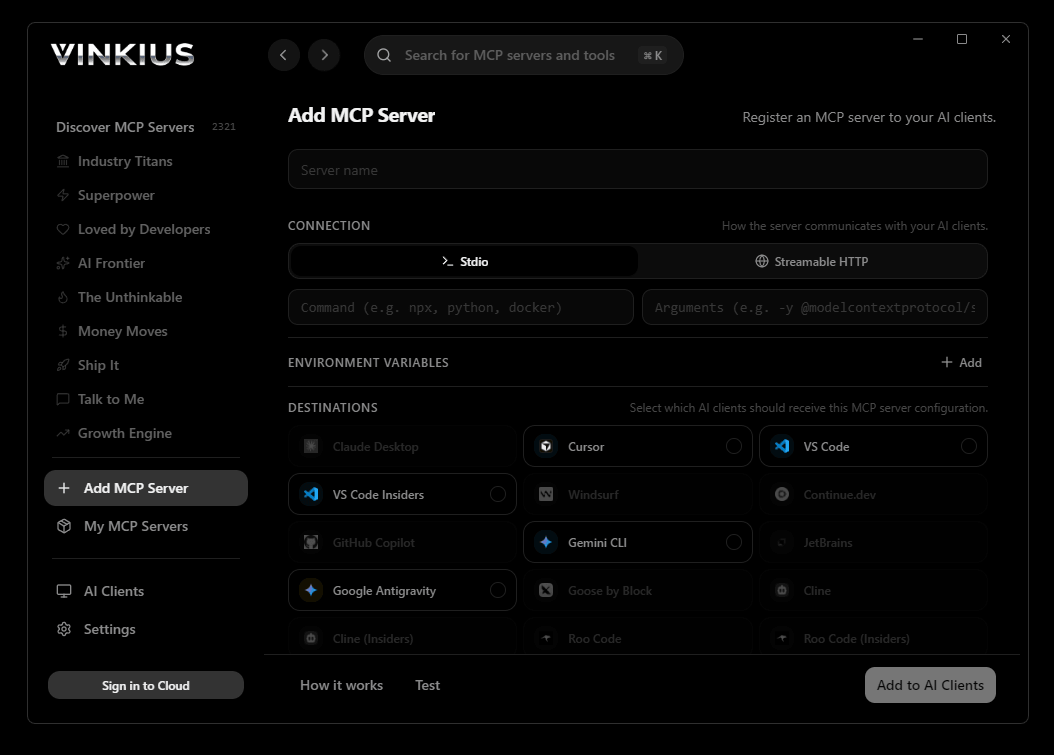
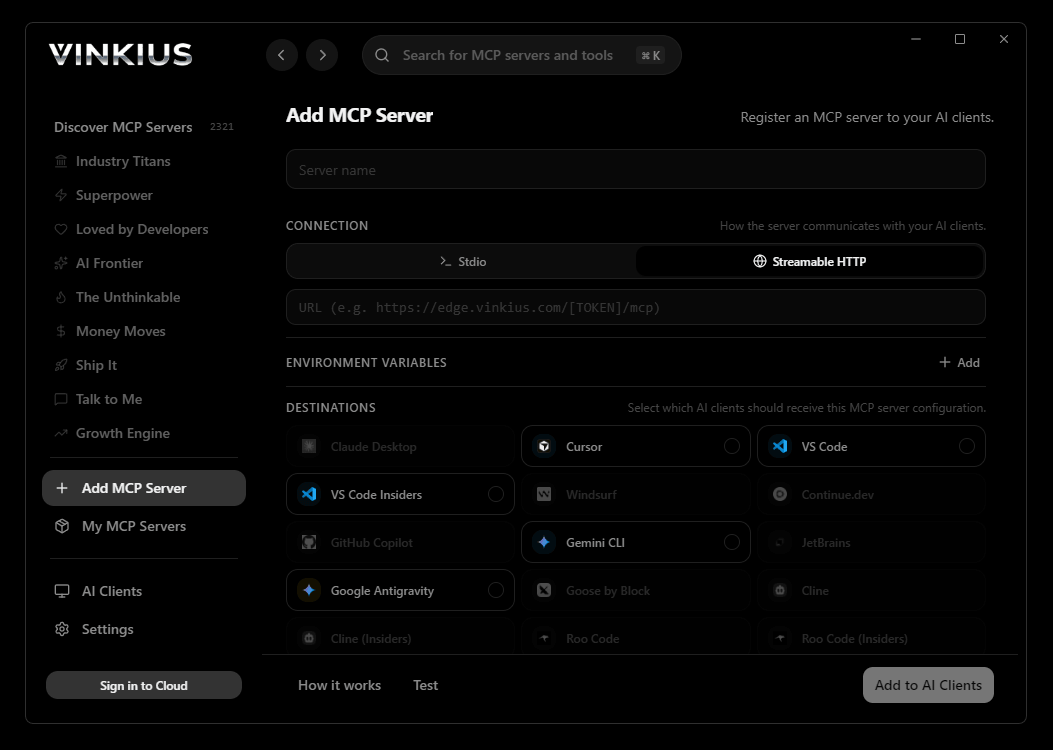
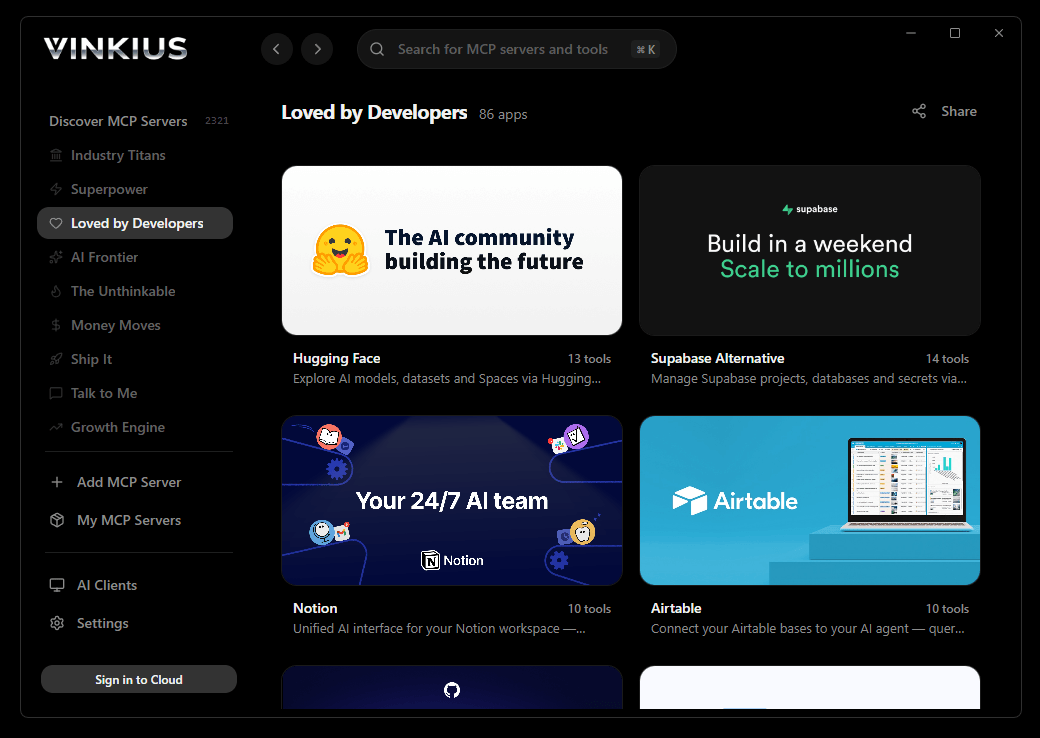
The modern way to manage MCP Servers — no config files, no terminal commands. Install Stanford bioRxiv and 4,000+ MCP Servers from a single visual interface.

* Every MCP server runs on Vinkius-managed infrastructure inside AWS - a purpose-built runtime with per-request V8 isolates, Ed25519 signed audit chains, and sub-40ms cold starts optimized for native MCP execution. See our infrastructure
About Stanford bioRxiv MCP Server
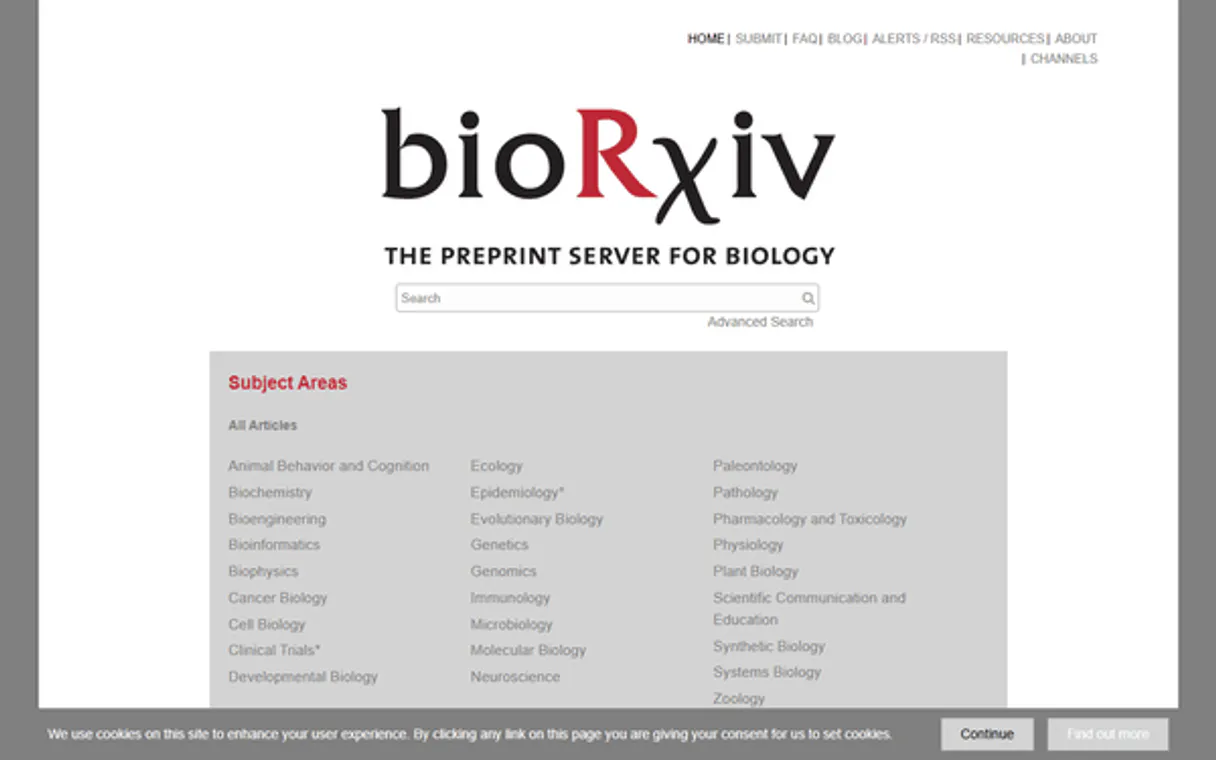
Connect to the bioRxiv and medRxiv APIs — the world's leading preprint servers for biology and health sciences.
Claude Code registers Stanford bioRxiv as an MCP server in a single terminal command. Once connected, Claude Code discovers all 16 tools at runtime and can call them headlessly. ideal for CI/CD pipelines, cron jobs, and automated workflows where Stanford bioRxiv data drives decisions without human intervention.
What you can do
- bioRxiv Preprints — Browse the latest biology preprints across 25+ categories
- medRxiv Preprints — Browse health sciences preprints (clinical, epidemiology, public health)
- Category Filters — Neuroscience, genomics, cell biology, cancer, immunology, and more
- Preprint Details — Get full metadata including abstracts by DOI
- Version Tracking — See how a preprint has been revised over time
- Publication Tracking — Discover which preprints have been published in peer-reviewed journals
- Institution View — Browse preprints by corresponding author institution
- Subject Feeds — Dedicated feeds for neuroscience, genomics, immunology, cell biology, cancer, and epidemiology
Why preprints matter
Preprints appear 6-12 months before peer-reviewed publication. This server gives you access to science at the cutting edge — the same day researchers share their findings with the world.
The Stanford bioRxiv MCP Server exposes 16 tools through the Vinkius. Connect it to Claude Code in under two minutes — credentials fully managed, no infrastructure to provision, no vendor lock-in. Your configuration, your data, your control.
All 16 Stanford bioRxiv tools available for Claude Code
When Claude Code connects to Stanford bioRxiv through Vinkius, your AI agent gets direct access to every tool listed below — spanning biorxiv, medrxiv, preprints, and more. Every call runs in a secure, isolated environment with full audit visibility. Beyond a simple connection, you get real-time monitoring of agent activity, enterprise governance, and optimized token usage.
Get preprint on Stanford bioRxiv
Searches both bioRxiv and medRxiv. Returns title, authors, corresponding author and institution, date, version, category, abstract, and license. DOI format: "10.1101/2024.01.15.575123". Get preprint details by DOI
Get preprint versions on Stanford bioRxiv
Preprints on bioRxiv/medRxiv can be updated multiple times. This lets you see the full revision history and understand how a manuscript has evolved. Get all versions of a preprint to track revisions
Get published tracking on Stanford bioRxiv
Shows the preprint DOI, published DOI, journal name, and publication date. Essential for understanding the preprint-to-publication pipeline. Track which preprints have been published in journals
Get published version on Stanford bioRxiv
Returns the published DOI, journal citation, and publication date. Essential for finding the final, peer-reviewed version of a preprint you have read. Find the journal-published version of a preprint
Get recent biorxiv on Stanford bioRxiv
Default is 7 days. Essential for staying at the cutting edge of biological research — preprints appear here 6-12 months before peer-reviewed publication. Get the latest bioRxiv preprints
Get recent medrxiv on Stanford bioRxiv
Covers clinical medicine, epidemiology, public health, and health systems research. Critical for monitoring emerging health research before journal publication. Get the latest medRxiv preprints
Search biorxiv on Stanford bioRxiv
The bioRxiv API returns preprints in batches of 100. Use the date interval format "YYYY-MM-DD/YYYY-MM-DD" (e.g. "2024-01-01/2024-01-31"). Use cursor for pagination (0, 100, 200, etc.). Browse bioRxiv preprints by date range
Search by category on Stanford bioRxiv
bioRxiv categories include: neuroscience, genomics, bioinformatics, cell_biology, cancer_biology, immunology, microbiology, molecular_biology, biochemistry, genetics, developmental_biology, evolutionary_biology, ecology, plant_biology, physiology, pharmacology, systems_biology, biophysics, synthetic_biology. medRxiv categories: epidemiology, infectious_diseases, public_and_global_health, health_systems, cardiovascular_medicine, oncology, psychiatry, neurology. Filter preprints by subject category
Search by institution on Stanford bioRxiv
Use this to explore what institutions are producing preprints in a given time period. Each preprint includes the corresponding author and their institutional affiliation. Browse preprints with author institution metadata
Search cancer on Stanford bioRxiv
Covers tumor biology, oncogenomics, cancer immunology, drug resistance, and experimental therapeutics. Browse cancer biology preprints
Search cell biology on Stanford bioRxiv
Covers cell signaling, organelle biology, cytoskeleton, cell division, stem cells, and cellular mechanisms of disease. Browse cell biology preprints
Search epidemiology on Stanford bioRxiv
Covers disease surveillance, outbreak analysis, population health, health policy, and clinical epidemiology. Critical for public health monitoring. Browse epidemiology and public health preprints
Search genomics on Stanford bioRxiv
Covers genome sequencing, gene regulation, epigenomics, metagenomics, and computational genomics — core disciplines in modern biology. Browse genomics and bioinformatics preprints
Search immunology on Stanford bioRxiv
Covers immune system research, host-pathogen interactions, vaccine development, autoimmune diseases, and immunotherapy. Browse immunology and microbiology preprints
Search medrxiv on Stanford bioRxiv
medRxiv covers clinical research, epidemiology, public health, and health policy. Use interval "YYYY-MM-DD/YYYY-MM-DD" format. Results paginated in batches of 100. Browse medRxiv preprints by date range
Search neuroscience on Stanford bioRxiv
Neuroscience is one of the largest and most active categories, covering brain research, neural circuits, cognitive science, and neurological disorders. Browse neuroscience preprints
Connect Stanford bioRxiv to Claude Code via MCP
Follow these steps to wire Stanford bioRxiv into Claude Code. The entire setup takes under two minutes — your credentials stay safe behind Vinkius.
Install Claude Code
npm install -g @anthropic-ai/claude-code if not already installedAdd the MCP Server
Verify the connection
claude mcp to list connected servers, or type /mcp inside a sessionStart using Stanford bioRxiv
Why Use Claude Code with the Stanford bioRxiv MCP Server
Claude Code provides unique advantages when paired with Stanford bioRxiv through the Model Context Protocol.
Single-command setup: `claude mcp add` registers the server instantly. no config files to edit or applications to restart
Terminal-native workflow means MCP tools integrate seamlessly into shell scripts, CI/CD pipelines, and automated DevOps tasks
Claude Code runs headlessly, enabling unattended batch processing using Stanford bioRxiv tools in cron jobs or deployment scripts
Built by the same team that created the MCP protocol, ensuring first-class compatibility and the fastest adoption of new protocol features
Stanford bioRxiv + Claude Code Use Cases
Practical scenarios where Claude Code combined with the Stanford bioRxiv MCP Server delivers measurable value.
CI/CD integration: embed Stanford bioRxiv tool calls in your deployment pipeline to validate configurations or fetch secrets before shipping
Headless batch processing: schedule Claude Code to query Stanford bioRxiv nightly and generate reports without human intervention
Shell scripting: pipe Stanford bioRxiv outputs into other CLI tools for data transformation, filtering, and aggregation
Infrastructure monitoring: run Claude Code in a cron job to query Stanford bioRxiv status endpoints and alert on anomalies
Example Prompts for Stanford bioRxiv in Claude Code
Ready-to-use prompts you can give your Claude Code agent to start working with Stanford bioRxiv immediately.
"Show me the latest neuroscience preprints"
"Has preprint 10.1101/2024.01.15.575123 been published in a journal?"
"Find the latest genomics preprints from this week"
Troubleshooting Stanford bioRxiv MCP Server with Claude Code
Common issues when connecting Stanford bioRxiv to Claude Code through Vinkius, and how to resolve them.
Command not found: claude
npm install -g @anthropic-ai/claude-codeConnection timeout
Stanford bioRxiv + Claude Code FAQ
Common questions about integrating Stanford bioRxiv MCP Server with Claude Code.
How do I add an MCP server to Claude Code?
claude mcp add --transport http "" in your terminal. Claude Code registers the server and discovers all tools immediately.Can Claude Code run MCP tools in headless mode?
How do I list all connected MCP servers?
claude mcp in your terminal to see all registered servers and their status, or type /mcp inside an active Claude Code session.Explore More MCP Servers
View all →
Ninehire
12 toolsHire smarter with a recruitment platform that posts jobs, screens applicants, and moves the best candidates through your pipeline.

ParseHub
10 toolsControl advanced cloud scraping projects via ParseHub — list targets, dispatch headless runs, trace crawler status, and fetch extracted datasets directly via AI.

Zoho CRM Analytics
5 toolsAccess custom views, organization info, module metadata, fields, and pipeline analysis in Zoho CRM.

CrowdSec
3 toolsAutomate threat intelligence via CrowdSec — query local decisions, stream security updates, and check global IP reputation directly from any AI agent.