
Stanford Semantic Scholar MCP Server for AutoGenGive AutoGen instant access to 16 tools to Batch Get Authors, Batch Get Papers, Bulk Search Papers, and more
 GDPR Free for Subscribers
Microsoft AutoGen enables multi-agent conversations where agents negotiate, delegate, and execute tasks collaboratively. Add Stanford Semantic Scholar as an MCP tool provider through Vinkius and every agent in the group can access live data and take action.
Ask AI about this MCP Server for AutoGen
The Stanford Semantic Scholar MCP Server for AutoGen is a standout in the Education category — giving your AI agent 16 tools to work with, ready to go from day one.
Vinkius delivers Streamable HTTP and SSE to any MCP client
 Gemini
import asyncio
from autogen_agentchat.agents import AssistantAgent
from autogen_ext.tools.mcp import McpWorkbench
async def main():
# Your Vinkius token. get it at cloud.vinkius.com
async with McpWorkbench(
server_params={"url": "https://edge.vinkius.com/[YOUR_TOKEN_HERE]/mcp"},
transport="streamable_http",
) as workbench:
tools = await workbench.list_tools()
agent = AssistantAgent(
name="stanford_semantic_scholar_agent",
tools=tools,
system_message=(
"You help users with Stanford Semantic Scholar. "
"16 tools available."
),
)
print(f"Agent ready with {len(tools)} tools")
asyncio.run(main())
* Every MCP server runs on Vinkius-managed infrastructure inside AWS - a purpose-built runtime with per-request V8 isolates, Ed25519 signed audit chains, and sub-40ms cold starts optimized for native MCP execution. See our infrastructure
About Stanford Semantic Scholar MCP Server
Connect to the Semantic Scholar Academic Graph API and unlock the world's largest free academic knowledge graph.
AutoGen enables multi-agent conversations where agents negotiate, delegate, and collaboratively use Stanford Semantic Scholar tools. Connect 16 tools through Vinkius and assign role-based access. a data analyst queries while a reviewer validates, with optional human-in-the-loop approval for sensitive operations.
What you can do
- Paper Search — Full-text search across 200M+ papers with filters for year, field of study, venue, and open access
- Citation Analysis — Navigate forward citations (who cited this?) and backward references (what did this cite?)
- Author Profiles — Search and retrieve author metrics including h-index, paper count, and citation count
- Batch Operations — Retrieve multiple papers or authors in a single request for efficient analysis
- AI Recommendations — Get machine learning-powered paper recommendations from single or multiple seed papers
- Venue Filtering — Search within specific conferences (NeurIPS, ICML, CVPR) or journals (Nature, Science, Cell)
- Field Filtering — Search within specific fields: Computer Science, Medicine, Biology, Physics, and 20+ more
The Stanford Semantic Scholar MCP Server exposes 16 tools through the Vinkius. Connect it to AutoGen in under two minutes — credentials fully managed, no infrastructure to provision, no vendor lock-in. Your configuration, your data, your control.
All 16 Stanford Semantic Scholar tools available for AutoGen
When AutoGen connects to Stanford Semantic Scholar through Vinkius, your AI agent gets direct access to every tool listed below — spanning semantic-scholar, academic-papers, citations, and more. Every call runs in a secure, isolated environment with full audit visibility. Beyond a simple connection, you get real-time monitoring of agent activity, enterprise governance, and optimized token usage.
Batch get authors on Stanford Semantic Scholar
Returns names, affiliations, paper counts, citation counts, and h-indices. Useful for comparing researchers or building collaboration network analyses. Retrieve multiple author profiles in a single request
Batch get papers on Stanford Semantic Scholar
Accepts S2 IDs, DOIs, ArXiv IDs, or PubMed IDs. Useful for comparing papers, building reading lists, or analyzing a set of related works. Retrieve multiple papers in a single request
Bulk search papers on Stanford Semantic Scholar
Each call returns a batch of results plus a continuation token. Pass the token in subsequent calls to get the next batch. Ideal for systematic literature reviews and meta-analyses. Bulk search for large result sets with token pagination
Get author on Stanford Semantic Scholar
Returns name, affiliations, homepage, external IDs (DBLP, ORCID), total paper count, citation count, and h-index. The definitive tool for understanding a researcher's academic impact. Get author profile with h-index, citations, and metrics
Get author papers on Stanford Semantic Scholar
Returns papers with titles, years, venues, citation counts, open access status, and fields of study. Essential for reviewing a researcher's body of work or finding specific publications by a known author. Get all papers by a specific author
Get multi recommendations on Stanford Semantic Scholar
The algorithm finds papers similar to the positive set but dissimilar to the negative set. Ideal for focused literature discovery. Get recommendations from multiple seed papers with positive/negative signals
Get paper on Stanford Semantic Scholar
Accepts multiple ID formats: Semantic Scholar ID (e.g. "649def34f8be52c8b66281af98ae884c09aef38b"), DOI (e.g. "10.1038/s41586-021-03819-2"), ArXiv ID (e.g. "arXiv:2106.09685"), PubMed ID (e.g. "PMID:34845388"), or ACL ID (e.g. "ACL:W12-3903"). Returns title, abstract, authors, venue, year, citation counts, open access PDF URL, and publication metadata. Get full paper details by ID, DOI, ArXiv ID, or PubMed ID
Get paper authors on Stanford Semantic Scholar
Useful for identifying research leaders and collaboration networks. Get authors of a specific paper with h-index and metrics
Get paper citations on Stanford Semantic Scholar
This is essential for understanding a paper's impact, finding follow-up work, and tracing how an idea has evolved. Returns citing paper metadata including titles, venues, years, and citation counts. Get papers that cite a given paper
Get paper references on Stanford Semantic Scholar
Essential for literature reviews, understanding the intellectual lineage of a work, and finding foundational papers in a research area. Get papers referenced by a given paper
Get recommendations on Stanford Semantic Scholar
The algorithm analyzes citation patterns, co-citation networks, and content similarity to find the most relevant papers you should read next. This is the AI-native way to discover related literature. Get AI-powered paper recommendations from a seed paper
Match paper title on Stanford Semantic Scholar
Uses fuzzy matching to handle slight variations. Returns the best matching paper with a match score. Ideal when you have a paper title from a reference list or bibliography and need to find its full metadata. Find an exact paper match from a title string
Search authors on Stanford Semantic Scholar
Returns author profiles with affiliations, paper counts, citation counts, and h-index. Use this to find researchers in a specific field, discover top contributors, or find collaborators. Search authors by name across the academic graph
Search by field on Stanford Semantic Scholar
Supported fields: Computer Science, Medicine, Biology, Chemistry, Physics, Mathematics, Engineering, Environmental Science, Economics, Business, Political Science, Sociology, Psychology, Art, History, Geography, Philosophy, Materials Science, Geology, Linguistics, Education, Agricultural and Food Sciences, Law. Search papers filtered by field of study
Search by venue on Stanford Semantic Scholar
Use venue names like "Nature", "Science", "NeurIPS", "ICML", "CVPR", "ACL", "EMNLP", "The Lancet", "JAMA", "Cell", "Physical Review Letters". Essential for tracking publications in specific top-tier venues. Search papers filtered by conference or journal
Search papers on Stanford Semantic Scholar
Returns titles, venues, years, citation counts, open access status, fields of study, and authors. Supports filtering by year range (e.g. "2020-2024"), fields of study (e.g. "Computer Science"), venue (e.g. "Nature"), and open access availability. Search across 200M+ academic papers by keyword
Connect Stanford Semantic Scholar to AutoGen via MCP
Follow these steps to wire Stanford Semantic Scholar into AutoGen. The entire setup takes under two minutes — your credentials stay safe behind Vinkius.
Install AutoGen
pip install "autogen-ext[mcp]"Replace the token
[YOUR_TOKEN_HERE] with your Vinkius tokenIntegrate into workflow
Explore tools
Why Use AutoGen with the Stanford Semantic Scholar MCP Server
AutoGen provides unique advantages when paired with Stanford Semantic Scholar through the Model Context Protocol.
Multi-agent conversations: multiple AutoGen agents discuss, delegate, and collaboratively use Stanford Semantic Scholar tools to solve complex tasks
Role-based architecture lets you assign Stanford Semantic Scholar tool access to specific agents. a data analyst queries while a reviewer validates
Human-in-the-loop support: agents can pause for human approval before executing sensitive Stanford Semantic Scholar tool calls
Code execution sandbox: AutoGen agents can write and run code that processes Stanford Semantic Scholar tool responses in an isolated environment
Stanford Semantic Scholar + AutoGen Use Cases
Practical scenarios where AutoGen combined with the Stanford Semantic Scholar MCP Server delivers measurable value.
Collaborative analysis: one agent queries Stanford Semantic Scholar while another validates results and a third generates the final report
Automated review pipelines: a researcher agent fetches data from Stanford Semantic Scholar, a critic agent evaluates quality, and a writer produces the output
Interactive planning: agents negotiate task allocation using Stanford Semantic Scholar data to make informed decisions about resource distribution
Code generation with live data: an AutoGen coder agent writes scripts that process Stanford Semantic Scholar responses in a sandboxed execution environment
Example Prompts for Stanford Semantic Scholar in AutoGen
Ready-to-use prompts you can give your AutoGen agent to start working with Stanford Semantic Scholar immediately.
"Find the most cited papers on transformer architectures published since 2020"
"What is Geoffrey Hinton's h-index and how many papers has he published?"
"Recommend papers similar to "Attention Is All You Need""
Troubleshooting Stanford Semantic Scholar MCP Server with AutoGen
Common issues when connecting Stanford Semantic Scholar to AutoGen through Vinkius, and how to resolve them.
McpWorkbench not found
pip install "autogen-ext[mcp]"Stanford Semantic Scholar + AutoGen FAQ
Common questions about integrating Stanford Semantic Scholar MCP Server with AutoGen.
How does AutoGen connect to MCP servers?
Can different agents have different MCP tool access?
Does AutoGen support human approval for tool calls?
Explore More MCP Servers
View all →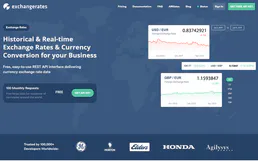
Exchange Rates API
7 toolsEquip your AI agent to access real-time and historical foreign exchange rates via the ExchangeRatesAPI.io service.
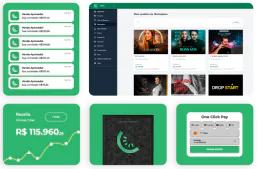
Kiwify
9 toolsSell digital products and online courses in the Brazilian market with a platform that handles payments, delivery, and affiliates.

Appointlet
10 toolsBring Appointlet scheduling directly into your AI agent — list schedules, track bookings, cancel events, and manage attendees seamlessly.

SuiteDash
11 toolsManage CRM, projects, tasks, and invoices on SuiteDash with AI agents.