
Bring Historical Data
to Vercel AI SDK
Create your Vinkius account to connect NOAA Climate — Historical Weather Records to Vercel AI SDK and start using all 5 AI tools in minutes. Fully managed, enterprise secure, and ready to use without writing a single line of code. No hosting, no server setup — just connect and start using.
 GDPR Free for Subscribers
Compatible with every major AI agent and IDE
 Gemini
What is the NOAA Climate — Historical Weather Records MCP Server?
The planet's largest archive of daily weather records, freely accessible.
What you can do
- Daily Data (GHCN-D) — Temperature, precipitation, snow, wind for 100K+ stations
- Monthly Summaries (GSOM) — Monthly aggregates
- Annual Summaries (GSOY) — Yearly climate data
- Climate Normals — 30-year baseline (1991-2020)
- Station Search — Find stations by location or name
Global Coverage
GHCN-Daily has worldwide stations, with densest coverage in the US, Europe, and Australia.
Built-in capabilities (5)
This is the statistical baseline that defines "normal" weather for any location. Get 30-year climate normals — the baseline for what is "normal" weather
This is the planet's largest archive of daily weather records. Filter by station, data types (TMAX, TMIN, PRCP, SNOW, SNWD), and date range. Stations are worldwide but densest coverage is in the US. Get daily weather data (GHCN-Daily): temperatures, precipitation, snow
Monthly aggregates of temperature averages, precipitation totals, and degree days. Less granular than daily but ideal for climate trend analysis. Get monthly climate summary (GSOM): average temp, total precipitation, heating degree days
Yearly temperature averages, precipitation totals, and extreme values. Perfect for long-term climate analysis spanning decades. Get annual climate summary (GSOY): yearly averages and extremes
Returns station IDs, names, and locations for use with other climate tools. Search NCEI weather stations by location bounding box or keyword
Why Vercel AI SDK?
The Vercel AI SDK gives every NOAA Climate — Historical Weather Records tool full TypeScript type inference, IDE autocomplete, and compile-time error checking. Connect 5 tools through Vinkius and stream results progressively to React, Svelte, or Vue components. works on Edge Functions, Cloudflare Workers, and any Node.js runtime.
- —
TypeScript-first: every MCP tool gets full type inference, IDE autocomplete, and compile-time error checking out of the box
- —
Framework-agnostic core works with Next.js, Nuxt, SvelteKit, or any Node.js runtime. same NOAA Climate — Historical Weather Records integration everywhere
- —
Built-in streaming UI primitives let you display NOAA Climate — Historical Weather Records tool results progressively in React, Svelte, or Vue components
- —
Edge-compatible: the AI SDK runs on Vercel Edge Functions, Cloudflare Workers, and other edge runtimes for minimal latency
NOAA Climate — Historical Weather Records in Vercel AI SDK
Why run NOAA Climate — Historical Weather Records with Vinkius?
The NOAA Climate — Historical Weather Records connection runs on our fully managed, secure cloud infrastructure. We handle the hosting, maintenance, and security so you don't have to deal with servers or code. All 5 tools are ready to work instantly without any complex setup.
You stay in complete control of your data. Your AI only accesses the information you approve, keeping your sensitive passwords and private details completely safe. Plus, with automatic optimizations, your AI works faster and more efficiently.
* Every connection is hosted and maintained by Vinkius. We handle the security, updates, and infrastructure so you don't have to write code or manage servers. See our infrastructure
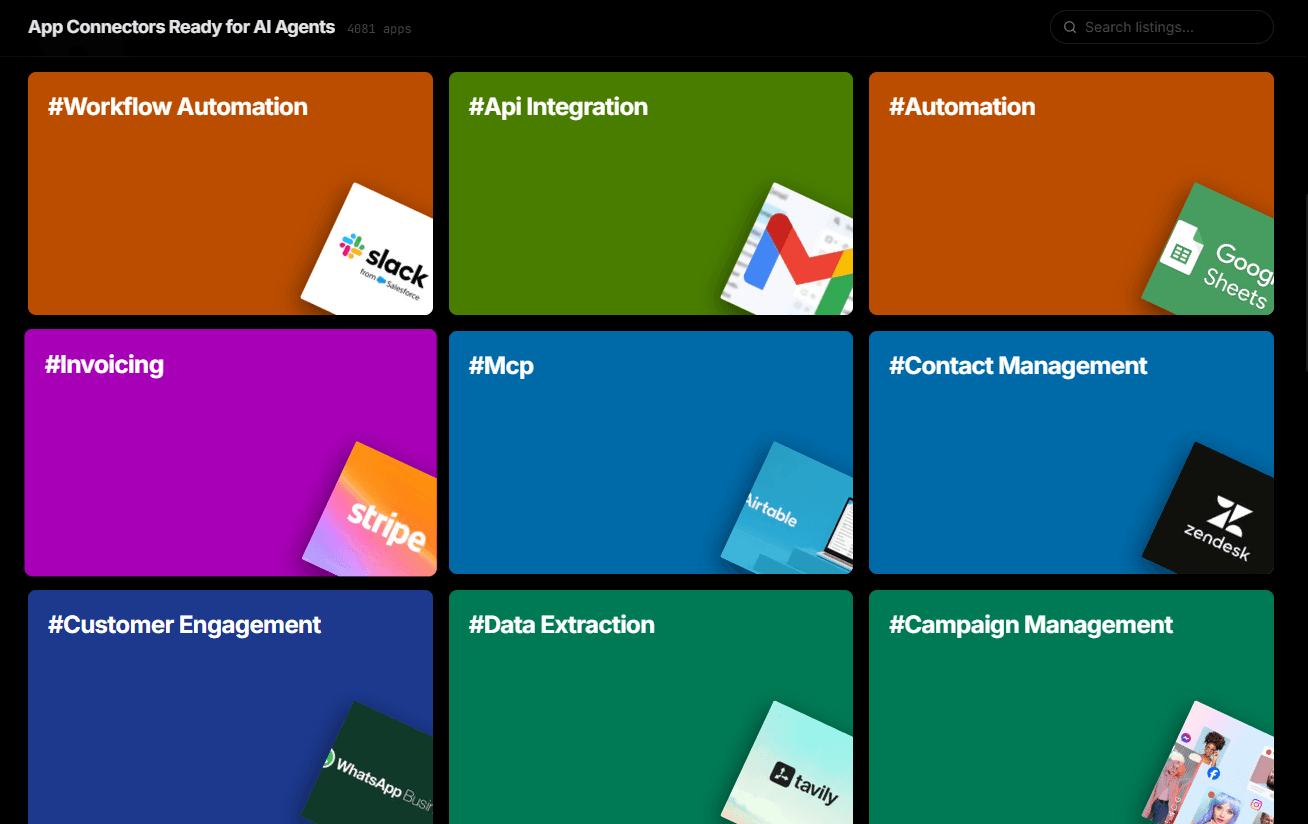
Over 4,000 integrations ready for AI agents
Explore a vast library of pre-built integrations, optimized and ready to deploy.
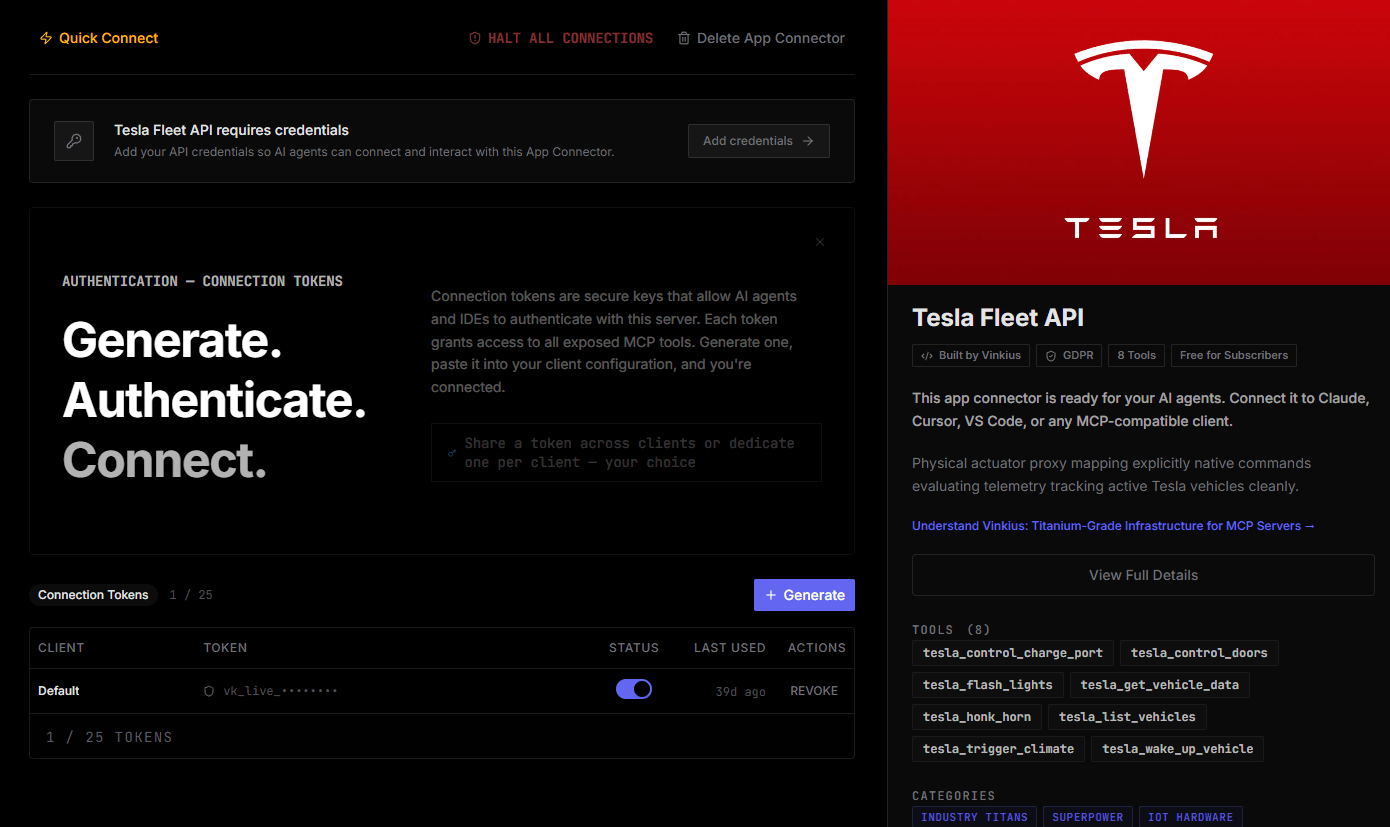
Connect securely in under 30 seconds
Generate tokens to authenticate and link external services in a single step.
Complete visibility into every agent action
Audit live requests, latency, success rates, and active security compliance policies.
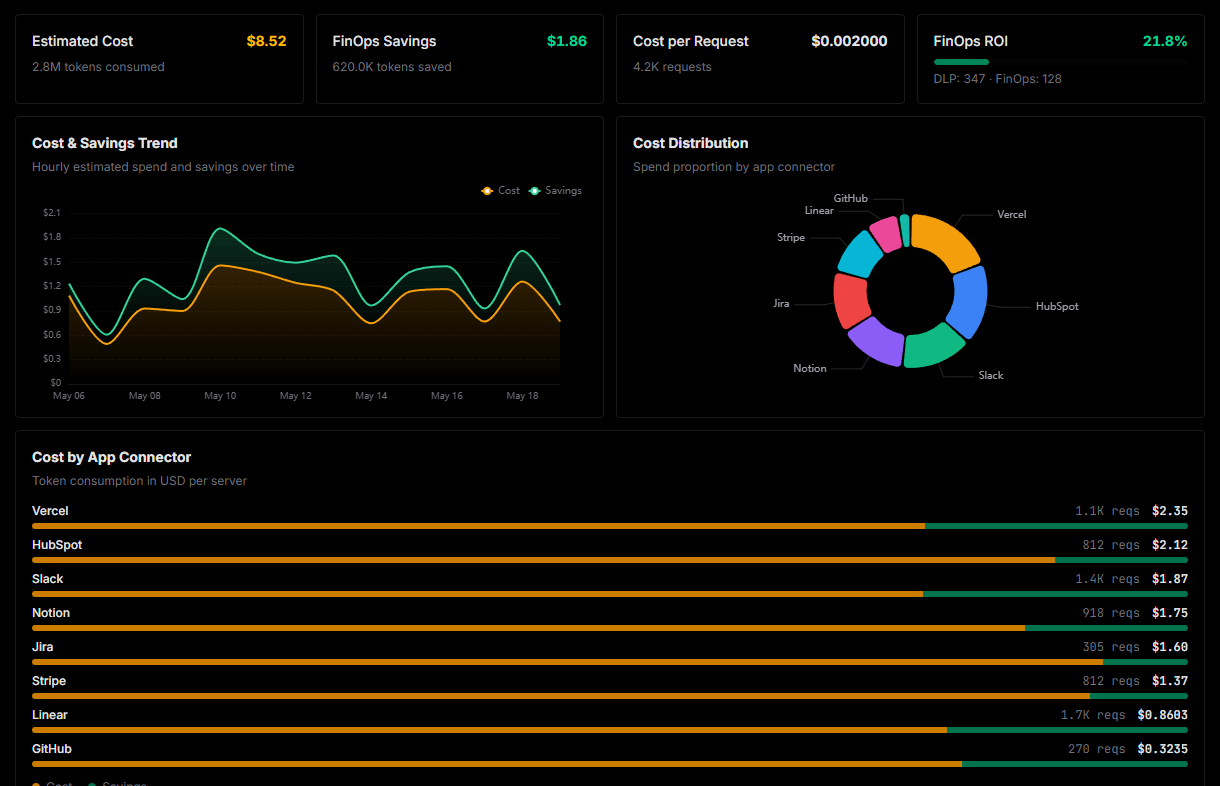
Optimize spending and track token ROI
Analyze real-time token consumption and cost metrics detailed by connection.
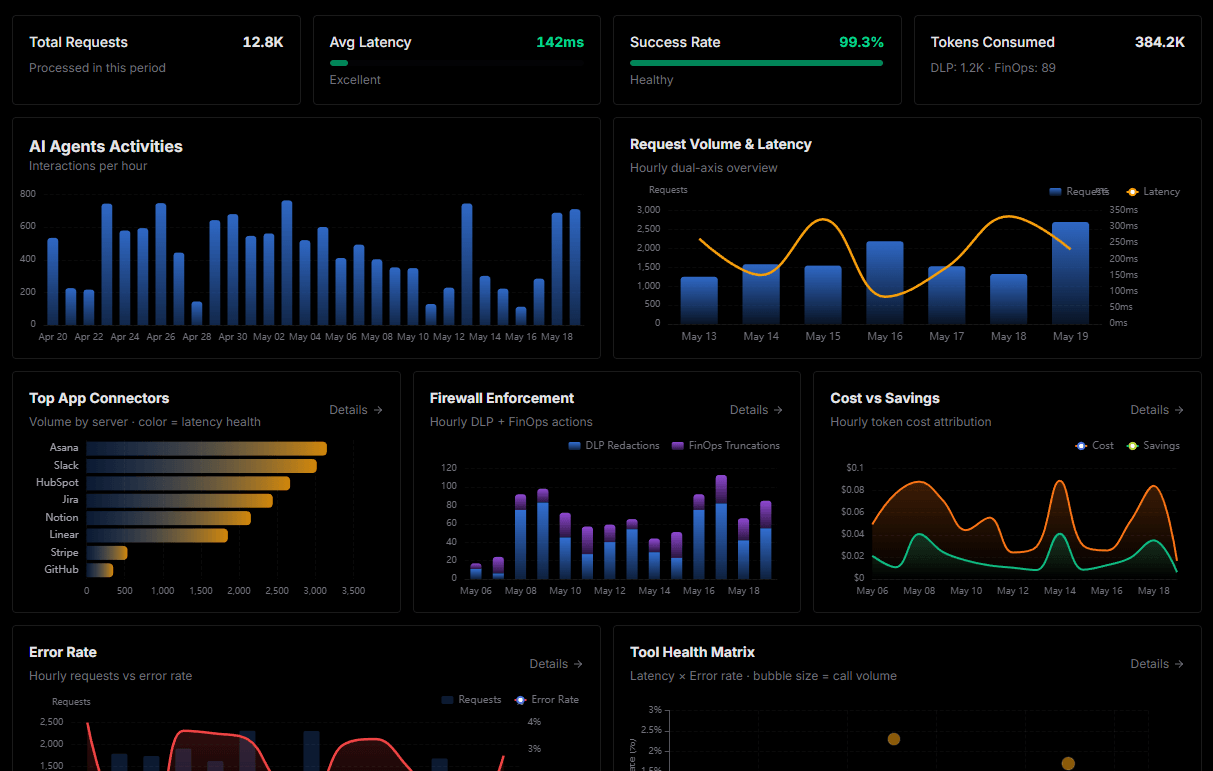
Explore our live AI Agents Analytics dashboard to see it all working
This dashboard is included when you connect NOAA Climate — Historical Weather Records using Vinkius. You will never be left in the dark about what your AI agents are doing with your tools.
NOAA Climate — Historical Weather Records and 4,000+ other AI tools. No hosting, no code, ready to use.
Professionals who connect NOAA Climate — Historical Weather Records to Vercel AI SDK through Vinkius don't need to write code, manage servers, or worry about security. Everything is pre-configured, secure, and runs automatically in the background.
Raw MCP | Vinkius | |
|---|---|---|
| Ready-to-use MCPs | Find and configure each manually | 4,000+ MCPs ready to use |
| Connection Setup | Manual coding & server setup | 1-click instant connection |
| Server Hosting | You host it yourself (needs 24/7 uptime) | 100% hosted & managed by Vinkius |
| Security & Privacy | Stored in plaintext config files | Bank-grade encrypted vault |
| Activity Visibility | Blind execution (no logs or tracking) | Live dashboard with real-time logs |
| Cost Control | Runaway AI token spend risk | Automatic budget limits |
| Revoking Access | Must delete files or code to stop | 1-click disconnect button |
How Vinkius secures
NOAA Climate — Historical Weather Records for Vercel AI SDK
Every request between Vercel AI SDK and NOAA Climate — Historical Weather Records is protected by our secure gateway. We automatically keep your sensitive data private, prevent unauthorized access, and let you disconnect instantly at any time.
Frequently asked questions
How far back does the data go?
GHCN-Daily records go back to the 1700s for some stations, with widespread coverage since the 1890s. Over 100,000 stations worldwide, with the densest network in the United States.
What is the difference between GHCN-D, GSOM, and GSOY?
GHCN-Daily provides day-by-day records. GSOM (Global Summary of the Month) aggregates these into monthly averages and totals. GSOY (Global Summary of the Year) provides annual summaries.
Are observations available for international locations?
Yes, while NOAA is a US agency, the GHCN incorporates data from over 100,000 stations worldwide, though the highest density remains in North America, Europe, and Australia.
How does the Vercel AI SDK connect to MCP servers?
Import createMCPClient from @ai-sdk/mcp and pass the server URL. The SDK discovers all tools and provides typed TypeScript interfaces for each one.
Can I use MCP tools in Edge Functions?
Yes. The AI SDK is fully edge-compatible. MCP connections work on Vercel Edge Functions, Cloudflare Workers, and similar runtimes.
Does it support streaming tool results?
Yes. The SDK provides streaming primitives like useChat and streamText that handle tool calls and display results progressively in the UI.
createMCPClient is not a function
Install: npm install @ai-sdk/mcp
Explore More MCP Servers
View all →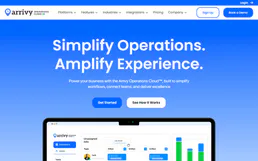
Arrivy
9 toolsManage field service tasks, crews, and customer bookings with Arrivy — coordinate last-mile delivery and jobs via AI.
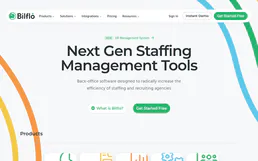
Bilflo
10 toolsManage your staffing operations via Bilflo — list clients, contractors, and timecards directly from any AI agent.

SimpleFatoora
20 toolsConnect your AI agents to SimpleFatoora for ZATCA-compliant e-invoicing with full product, customer, and tax document management.

HealthData.gov (HHS Open Data)
2 toolsAccess and query thousands of U.S. health datasets from HHS — browse the catalog and perform deep data analysis via SoQL.