
Bring Smart Home
to AutoGen
Create your Vinkius account to connect Google Home to AutoGen and start using all 12 AI tools in minutes. Fully managed, enterprise secure, and ready to use without writing a single line of code. No hosting, no server setup — just connect and start using.
 GDPR Free for Subscribers
Compatible with every major AI agent and IDE
 Gemini
What is the Google Home MCP Server?
Connect to Google Nest devices via the Smart Device Management (SDM) API and control your smart home from any AI agent. Manage thermostats, view camera feeds, and interact with doorbells.
What you can do
- List Devices — See all your Nest thermostats, cameras, doorbells, and displays
- Thermostat Control — Set mode (Heat/Cool/Off), adjust temperatures, enable eco mode, and control fan timer
- Camera Streaming — Generate live RTSP or WebRTC stream URLs from Nest cameras and doorbells
- Doorbell Management — View doorbell camera feeds and stream events
- Structure & Rooms — Browse your home's structures and room organization
- Device Details — Get full device state including all traits and current settings
How it works
- Subscribe to this server
- Obtain OAuth 2.0 access token and Project ID from Google Device Access console
- Start controlling your Nest devices from Claude, Cursor, or any MCP-compatible client
Your AI becomes a smart home assistant, helping you manage climate, security, and monitoring.
Who is this for?
- Smart Home Owners — control thermostats, view cameras, and manage Nest devices from AI assistants
- Home Automation Enthusiasts — integrate Nest devices into broader automation workflows
- Property Managers — monitor and adjust climate across multiple properties remotely
- Security-Conscious Users — check camera feeds and doorbell streams on demand
- Energy-Conscious Users — optimize thermostat settings and eco mode for energy savings
Built-in capabilities (12)
The stream token is temporary and should be used immediately. Stop the stream when done. Generate a live camera stream URL from a Nest camera or doorbell
Use device ID from list_devices or device name. Get details for a specific Google Nest device
Shows device types, traits, and room assignments. USE WHEN: - User wants to see all their Nest devices - User needs to find device IDs for other commands - User is exploring their smart home setup - User asks "what Nest devices do I have" EXAMPLES: - "List all my Nest devices" → call with no params - "Show my smart home devices" → call with no params - "What Nest devices are connected?" → call with no params List all Google Nest devices in your home
Useful for understanding device locations and room organization. List all rooms in a specific structure
Each structure contains rooms and devices. List all structures (homes) in your Google Nest account
Turns the fan on for a specified duration. Duration is optional and defaults to the thermostat setting. Set the fan timer on a Nest thermostat
Use this when the thermostat is in COOL or HEATCOOL mode. Set the cooling temperature on a Nest thermostat
This is a manual override of the eco/eco-friendly temperature settings. Set Nest thermostat to eco mode for energy savings
Use this when the thermostat is in HEAT or HEATCOOL mode. Set the heating temperature on a Nest thermostat
Supported modes: HEAT, COOL, HEATCOOL, OFF. Use device ID from list_devices to target a specific thermostat. USE WHEN: - User wants to change thermostat mode - User asks to turn heating/cooling on or off - User wants to switch thermostat operating mode - User says "set thermostat to heat/cool/off" PARAMETERS: - device_id (REQUIRED): Thermostat device ID - mode (REQUIRED): One of HEAT, COOL, HEATCOOL, or OFF EXAMPLES: - "Set thermostat to heat mode" → call with device_id, mode="HEAT" - "Turn off the thermostat" → call with device_id, mode="OFF" - "Set thermostat to cool" → call with device_id, mode="COOL" Set the mode of a Nest thermostat
Useful for HEATCOOL mode to define the comfort range. Set both heating and cooling temperatures on a Nest thermostat
Use the stream token returned from generate_camera_stream to properly terminate the stream session. Stop an active camera stream from a Nest camera or doorbell
Why AutoGen?
AutoGen enables multi-agent conversations where agents negotiate, delegate, and collaboratively use Google Home tools. Connect 12 tools through Vinkius and assign role-based access. a data analyst queries while a reviewer validates, with optional human-in-the-loop approval for sensitive operations.
- —
Multi-agent conversations: multiple AutoGen agents discuss, delegate, and collaboratively use Google Home tools to solve complex tasks
- —
Role-based architecture lets you assign Google Home tool access to specific agents. a data analyst queries while a reviewer validates
- —
Human-in-the-loop support: agents can pause for human approval before executing sensitive Google Home tool calls
- —
Code execution sandbox: AutoGen agents can write and run code that processes Google Home tool responses in an isolated environment
Google Home in AutoGen
Why run Google Home with Vinkius?
The Google Home connection runs on our fully managed, secure cloud infrastructure. We handle the hosting, maintenance, and security so you don't have to deal with servers or code. All 12 tools are ready to work instantly without any complex setup.
You stay in complete control of your data. Your AI only accesses the information you approve, keeping your sensitive passwords and private details completely safe. Plus, with automatic optimizations, your AI works faster and more efficiently.
* Every connection is hosted and maintained by Vinkius. We handle the security, updates, and infrastructure so you don't have to write code or manage servers. See our infrastructure
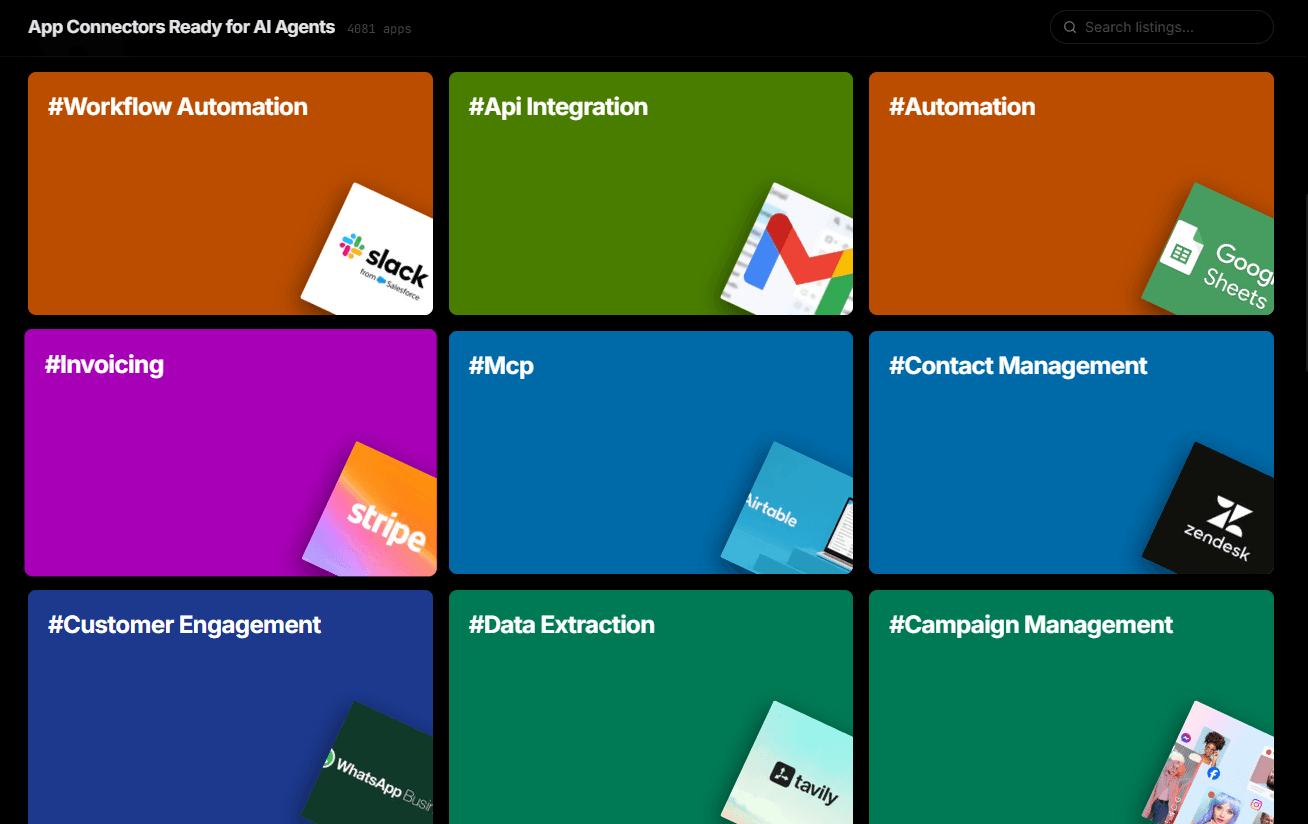
Over 4,000 integrations ready for AI agents
Explore a vast library of pre-built integrations, optimized and ready to deploy.
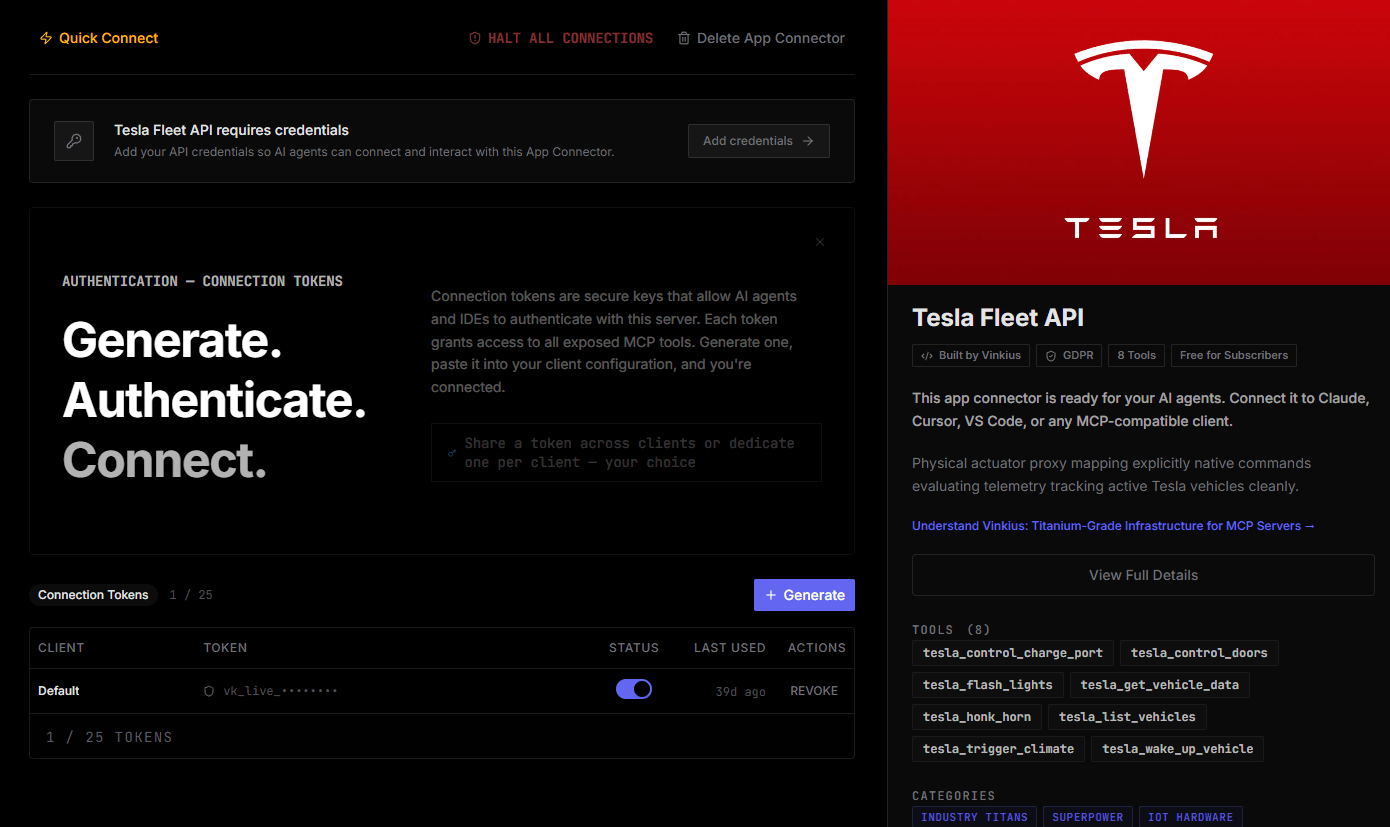
Connect securely in under 30 seconds
Generate tokens to authenticate and link external services in a single step.
Complete visibility into every agent action
Audit live requests, latency, success rates, and active security compliance policies.
Optimize spending and track token ROI
Analyze real-time token consumption and cost metrics detailed by connection.
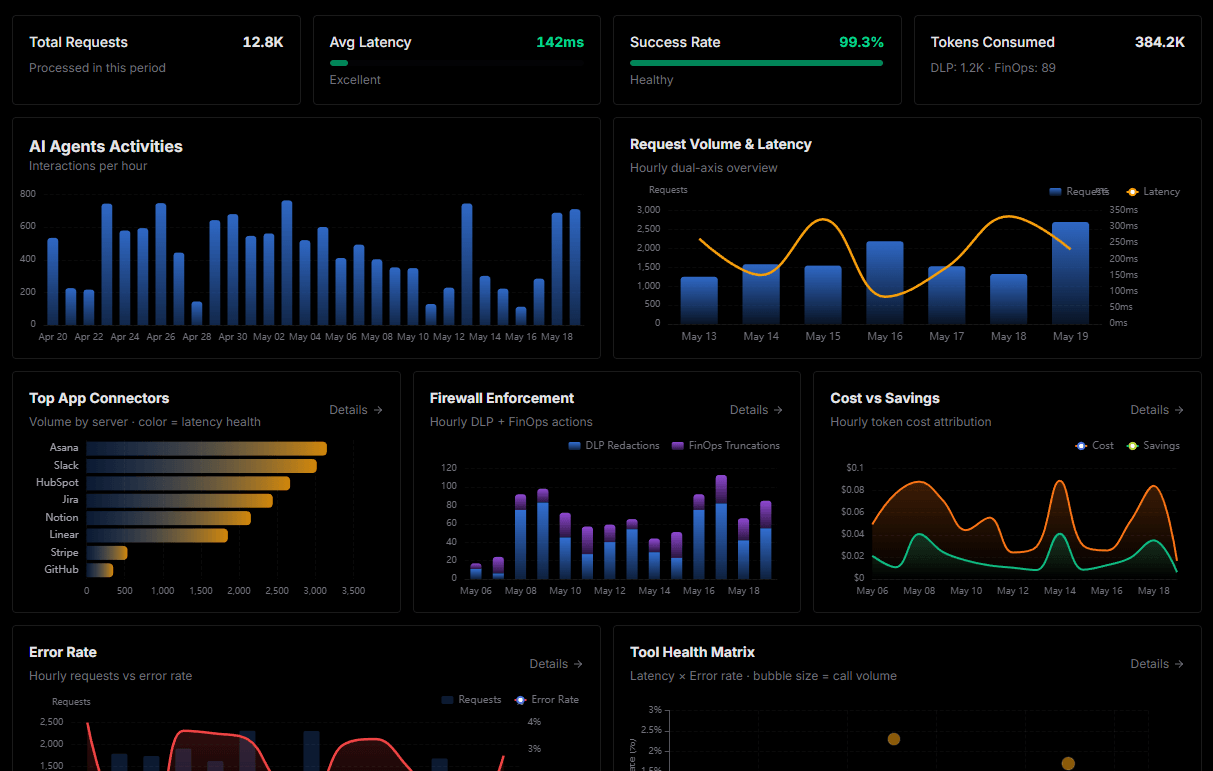
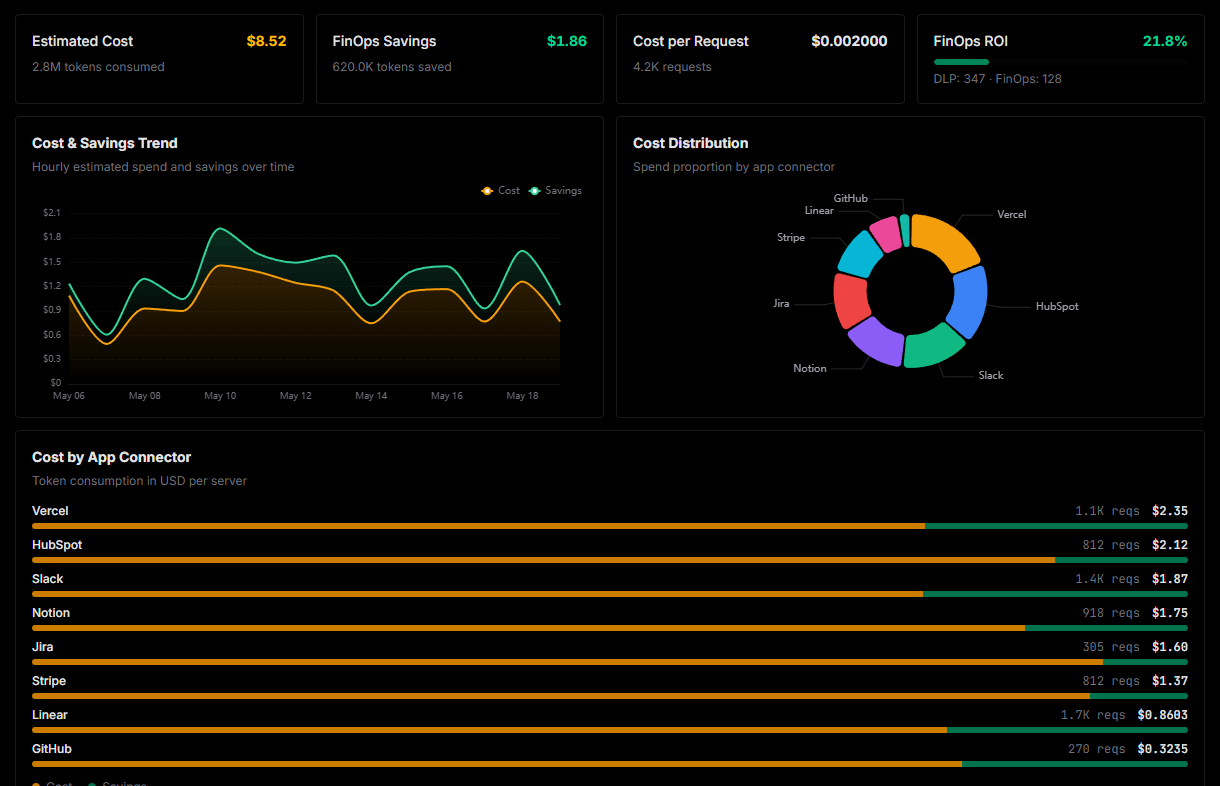
Explore our live AI Agents Analytics dashboard to see it all working
This dashboard is included when you connect Google Home using Vinkius. You will never be left in the dark about what your AI agents are doing with your tools.
Google Home and 4,000+ other AI tools. No hosting, no code, ready to use.
Professionals who connect Google Home to AutoGen through Vinkius don't need to write code, manage servers, or worry about security. Everything is pre-configured, secure, and runs automatically in the background.
Raw MCP | Vinkius | |
|---|---|---|
| Ready-to-use MCPs | Find and configure each manually | 4,000+ MCPs ready to use |
| Connection Setup | Manual coding & server setup | 1-click instant connection |
| Server Hosting | You host it yourself (needs 24/7 uptime) | 100% hosted & managed by Vinkius |
| Security & Privacy | Stored in plaintext config files | Bank-grade encrypted vault |
| Activity Visibility | Blind execution (no logs or tracking) | Live dashboard with real-time logs |
| Cost Control | Runaway AI token spend risk | Automatic budget limits |
| Revoking Access | Must delete files or code to stop | 1-click disconnect button |
How Vinkius secures
Google Home for AutoGen
Every request between AutoGen and Google Home is protected by our secure gateway. We automatically keep your sensitive data private, prevent unauthorized access, and let you disconnect instantly at any time.
Frequently asked questions
What Google Nest devices are supported by this API?
The SDM API supports: Nest Thermostats (Nest Learning Thermostat, Nest Thermostat E, Nest Thermostat 2020), Nest Cameras (legacy, battery, wired, with spotlight), Nest Doorbells (legacy battery, wired, battery), and Nest Hub displays. Each device exposes specific traits (e.g., ThermostatMode, CameraLiveStream) that can be queried and controlled.
How do I get OAuth 2.0 credentials for the Google SDM API?
Visit the Google Device Access console and create a project. You'll receive a Project ID. Then, set up OAuth 2.0 credentials in Google Cloud Console, link them to your Device Access project, and complete the OAuth flow to obtain an access token. The token expires after 1 hour and must be refreshed.
Can I control multiple thermostats in different locations?
Yes! The API returns all devices across all structures and rooms in your project. Use list_devices to see all thermostats with their room assignments, then use each device's unique ID to control them individually. You can set different modes and temperatures for each thermostat.
How long do camera stream URLs last?
Camera stream URLs (both RTSP and WebRTC) are temporary and typically expire after 5 minutes. The stream token returned in the response should be used immediately and the stream should be stopped with stop_camera_stream when no longer needed to free up device resources.
How does AutoGen connect to MCP servers?
Create an MCP tool adapter and assign it to one or more agents in the group chat. AutoGen agents can then call Google Home tools during their conversation turns.
Can different agents have different MCP tool access?
Yes. AutoGen's role-based architecture lets you assign specific MCP tools to specific agents, so a querying agent has different capabilities than a reviewing agent.
Does AutoGen support human approval for tool calls?
Yes. Configure human-in-the-loop mode so agents pause and request approval before executing sensitive MCP tool calls.
McpWorkbench not found
Install: pip install "autogen-ext[mcp]"
Explore More MCP Servers
View all →
User-Agent Parser
1 toolsDecode raw HTTP User-Agent strings instantly. Extract structured Browser, OS, and Device data for accurate IT log analysis.

Expedia Vrbo
10 toolsConnect Expedia Vrbo to any AI agent via MCP.

Adtraction
5 toolsAffiliate marketing network — manage programs, track transactions, and audit performance via AI.

Axle
12 toolsFleet management and logistics automation — track vehicles, manage drivers, and monitor loads via AI.