
Bring Flight Tracking
to AutoGen
Create your Vinkius account to connect Netrows to AutoGen and start using all 12 AI tools in minutes. Fully managed, enterprise secure, and ready to use without writing a single line of code. No hosting, no server setup — just connect and start using.
 GDPR Free for Subscribers
Compatible with every major AI agent and IDE
 Gemini
What is the Netrows MCP Server?
Connect your Netrows Aviation API flight tracking platform to any AI agent and take full control of real-time flight monitoring, aircraft intelligence, airport operations, and airline schedule analysis through natural conversation.
What you can do
- Flight Search — Find active and recent flights by flight number, callsign, or origin-destination airport pair
- Flight Details — Get comprehensive flight information including airports, times, aircraft, and status
- Real-Time Tracking — Monitor live flight positions with coordinates, altitude, speed, and heading
- Aircraft Registry — Look up aircraft specifications, ownership, registration, and fleet details
- Fleet Analysis — Search all aircraft operated by specific airlines or aviation companies
- Airport Intelligence — Query airport static data, codes, locations, and timezone information
- Airport Activity — Monitor all arriving and departing flights at any airport worldwide
- Airport Search — Find all airports serving a specific city or metropolitan area
- Flight Schedules — Access complete flight schedules between any two airports
- Airline Monitoring — Track all active flights by airline with real-time operational data
- Airline Profiles — Get airline company information including fleet size, hubs, and destinations
- Account Usage — Monitor your API credit consumption and remaining quota
How it works
- Subscribe to this server
- Enter your Netrows API key (from the Developer Portal)
- Start tracking global aviation from Claude, Cursor, or any MCP-compatible client
No more navigating flight tracking websites or manually parsing aviation data feeds. Your AI acts as a dedicated aviation analyst and flight operations coordinator.
Who is this for?
- Aviation Enthusiasts — track any flight worldwide, research aircraft details, and explore airline fleets
- Travel Planners — monitor arriving and departing flights for passenger pickup and delay awareness
- Airport Operators — observe real-time airport activity and traffic patterns
- Airline Analysts — track competitor operations, analyze route networks, and monitor fleet utilization
Built-in capabilities (12)
The Netrows API operates on a credit-based system where each API call consumes 1 credit. Essential for monitoring API consumption, budget management, rate limit awareness, and planning integration usage patterns. AI agents should query this when users ask "how many credits do I have left", "what is my API usage this month", or need to monitor their API consumption before running large batch queries. Check your API account usage and remaining credits
g., "N12345" for US-registered, "G-EUUU" for UK). Returns aircraft type (manufacturer and model), registration country, owner/operator information, registration status, year built, engine type (jet, turboprop, piston), number of engines, aircraft age, and category (airline, business jet, private, cargo). Critical for aviation enthusiasts, fleet tracking, aircraft utilization analysis, and private aviation monitoring. AI agents should reference this when users ask "tell me about aircraft N12345", "who owns this tail number", or need aircraft specifications to contextualize flight data. Get registration details and specifications for a specific aircraft
g., "UA" for United, "DL" for Delta, "BA" for British Airways). Returns flight numbers, aircraft registrations and types, origin-destination pairs, scheduled and actual times, and current status for all flights in the airline fleet. Essential for airline operations monitoring, fleet utilization analysis, competitor intelligence, and passenger rebooking during disruptions. AI agents use this when users ask "show me all United flights right now", "what is Delta flying", or need to track an entire airline operational picture in real-time. List all active flights operated by a specific airline
Returns airline name, IATA/ICAO codes, callsign, country of registration, fleet size, destination count, hub airports, and operational status. Essential for airline industry research, competitor analysis, travel planning context, and aviation market intelligence. AI agents should reference this when users ask "tell me about United Airlines", "what is the ICAO code for Delta", or need airline metadata to contextualize flight and fleet data. Get information and details for a specific airline
Returns a comprehensive list of inbound and outbound flights with airline/operator, flight number, aircraft type, origin/destination airports, scheduled and actual times, and current flight status (en-route, landed, scheduled, delayed, cancelled, diverted). Essential for airport operations management, passenger pickup coordination, ground handling planning, and flight activity monitoring. AI agents should reference this when users ask "what flights are at X airport", "show me all activity at Y", or need to monitor airport traffic patterns. List all arriving and departing flights at a specific airport
g., "JFK" or "KJFK" for New York JFK, "LAX" or "KLAX" for Los Angeles International). Returns airport name, location (city, state, country), IATA/ICAO/FAA codes, geographic coordinates (latitude, longitude, elevation), timezone, and operational status. Essential for airport identification, travel planning, flight briefing preparation, and geographic reference. AI agents should use this when users ask "tell me about airport X", "what is the ICAO code for Y", or need airport metadata to contextualize flight queries. Get static information and details for a specific airport
Returns departure and arrival airports with full metadata (IATA/ICAO codes, terminal, gate), scheduled and actual times for departure and arrival, aircraft registration and type, airline/operator details, current flight status, and tracking coordinates if airborne. Critical for passenger travel updates, airline operations coordination, and flight tracking dashboards. AI agents should reference this when users request detailed status for a known flight, including gate assignments, timing comparisons, and aircraft information. Get complete details for a specific flight
Returns all scheduled flights with airline/operator, flight numbers, aircraft types, departure and arrival times, frequency of service, and days of operation. Essential for route planning, travel itinerary preparation, schedule analysis, and aviation market research. AI agents should reference this when users ask "what flights fly from JFK to LAX", "show me the schedule between ORD and DFW", or need to plan travel between specific airport pairs with comprehensive scheduling options. Get scheduled flights between two airports
Returns all registered aircraft in the operator fleet with registration numbers, aircraft types (manufacturer and model), ages, and current operational status. Essential for fleet analysis, aviation industry research, competitor intelligence, and operator profile generation. AI agents use this when users ask "show me all United Airlines aircraft", "what planes does Delta operate", or need to analyze fleet composition for a specific aviation operator. Search for all aircraft operated by a specific airline or company
Returns all airports (major international, regional, and general aviation) associated with the queried city including IATA/ICAO codes, full names, locations, distances from city center, and airport types. Essential for travel planning, multi-airport city analysis, alternate airport identification, and geographic aviation research. AI agents use this when users ask "what airports serve Chicago", "find airports in London", or need to identify all airports in a metropolitan area for comprehensive flight searches. Search for airports by city name or location
The query can be a flight number (e.g., "UAL123"), callsign, or origin-destination airport pair. Returns complete flight identification, airline/operator, aircraft type, departure and arrival airports with IATA/ICAO codes, scheduled and actual times, current position coordinates (latitude, longitude), altitude in feet, ground speed in knots, heading, and flight status (en-route, landed, diverted, cancelled). Essential for real-time flight tracking, passenger pickup coordination, logistics planning, and aviation operations monitoring. AI agents should use this when users ask "where is flight X", "what flights are flying from A to B", or need to track specific flights by number or route. Search for active and recent flights by flight number, callsign, or route
Returns timestamped position data that can be used to visualize flight progress on maps, estimate arrival times, and monitor flight trajectory. Essential for live flight tracking applications, passenger monitoring, operations dashboards, and aviation enthusiast displays. AI agents use this when users ask "track this flight live", "where is this aircraft right now", or need continuous position updates for an airborne flight. Track real-time position and status of a specific flight
Why AutoGen?
AutoGen enables multi-agent conversations where agents negotiate, delegate, and collaboratively use Netrows tools. Connect 12 tools through Vinkius and assign role-based access. a data analyst queries while a reviewer validates, with optional human-in-the-loop approval for sensitive operations.
- —
Multi-agent conversations: multiple AutoGen agents discuss, delegate, and collaboratively use Netrows tools to solve complex tasks
- —
Role-based architecture lets you assign Netrows tool access to specific agents. a data analyst queries while a reviewer validates
- —
Human-in-the-loop support: agents can pause for human approval before executing sensitive Netrows tool calls
- —
Code execution sandbox: AutoGen agents can write and run code that processes Netrows tool responses in an isolated environment
Netrows in AutoGen
Why run Netrows with Vinkius?
The Netrows connection runs on our fully managed, secure cloud infrastructure. We handle the hosting, maintenance, and security so you don't have to deal with servers or code. All 12 tools are ready to work instantly without any complex setup.
You stay in complete control of your data. Your AI only accesses the information you approve, keeping your sensitive passwords and private details completely safe. Plus, with automatic optimizations, your AI works faster and more efficiently.
* Every connection is hosted and maintained by Vinkius. We handle the security, updates, and infrastructure so you don't have to write code or manage servers. See our infrastructure
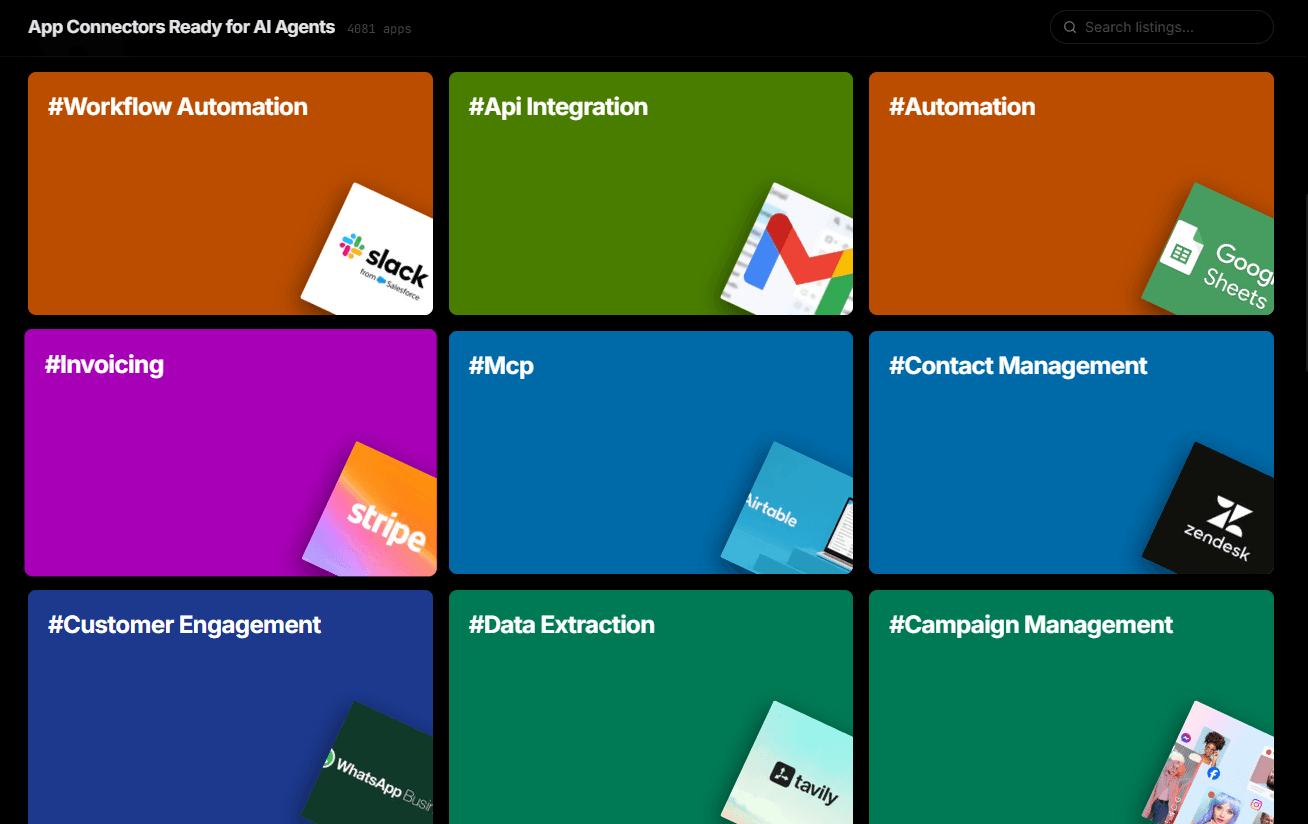
Over 4,000 integrations ready for AI agents
Explore a vast library of pre-built integrations, optimized and ready to deploy.
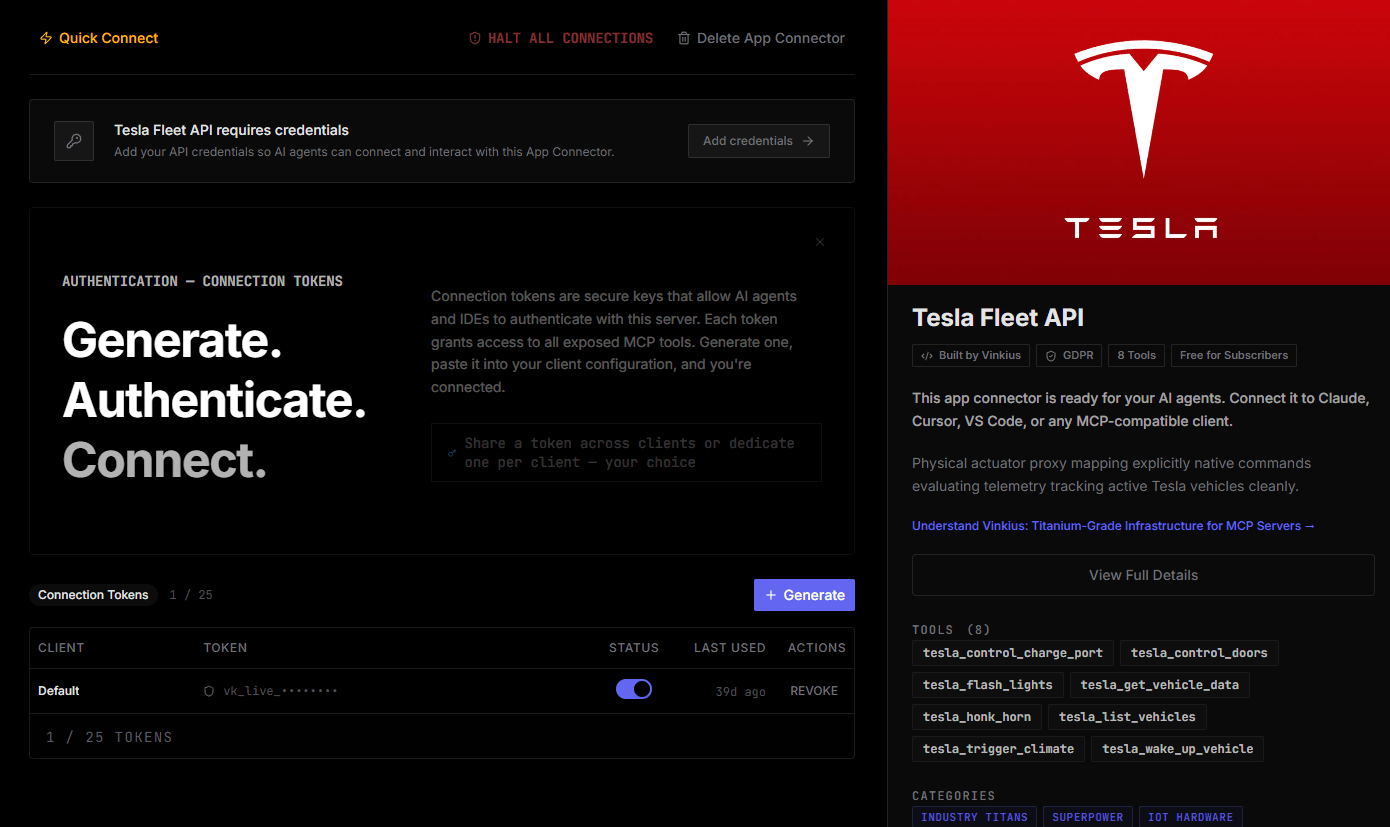
Connect securely in under 30 seconds
Generate tokens to authenticate and link external services in a single step.
Complete visibility into every agent action
Audit live requests, latency, success rates, and active security compliance policies.
Optimize spending and track token ROI
Analyze real-time token consumption and cost metrics detailed by connection.
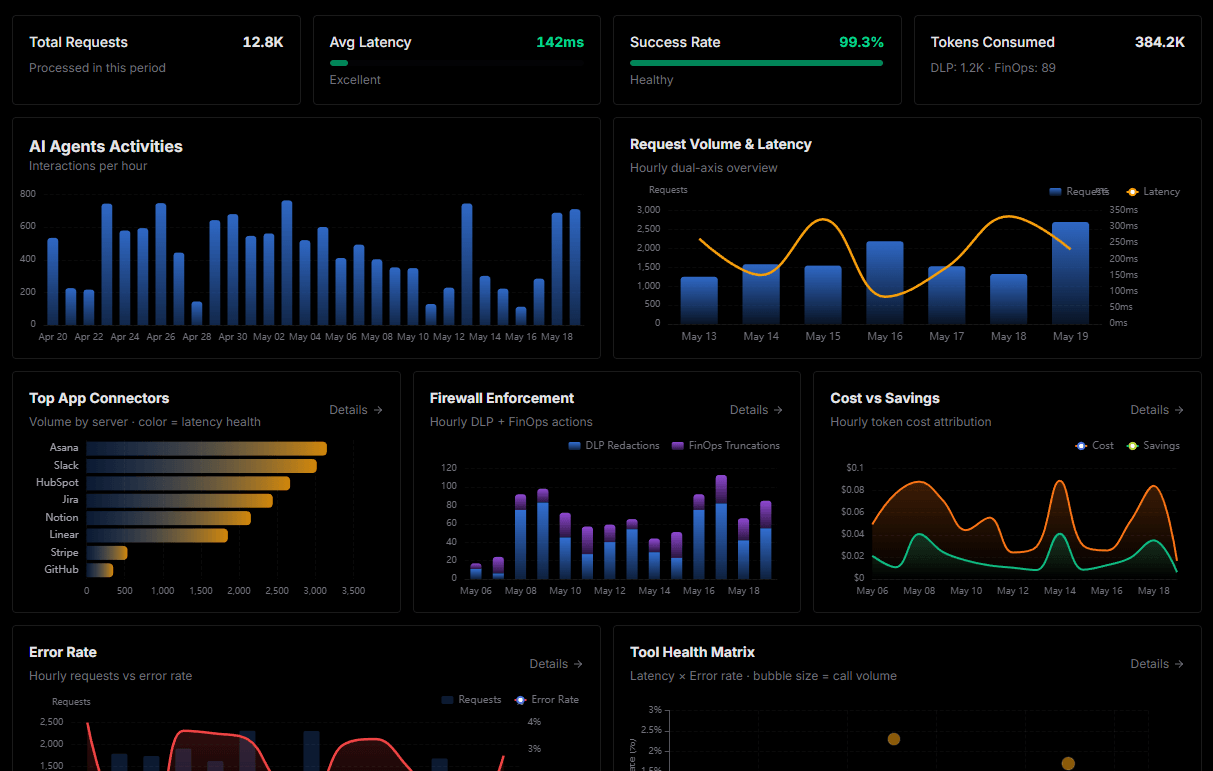
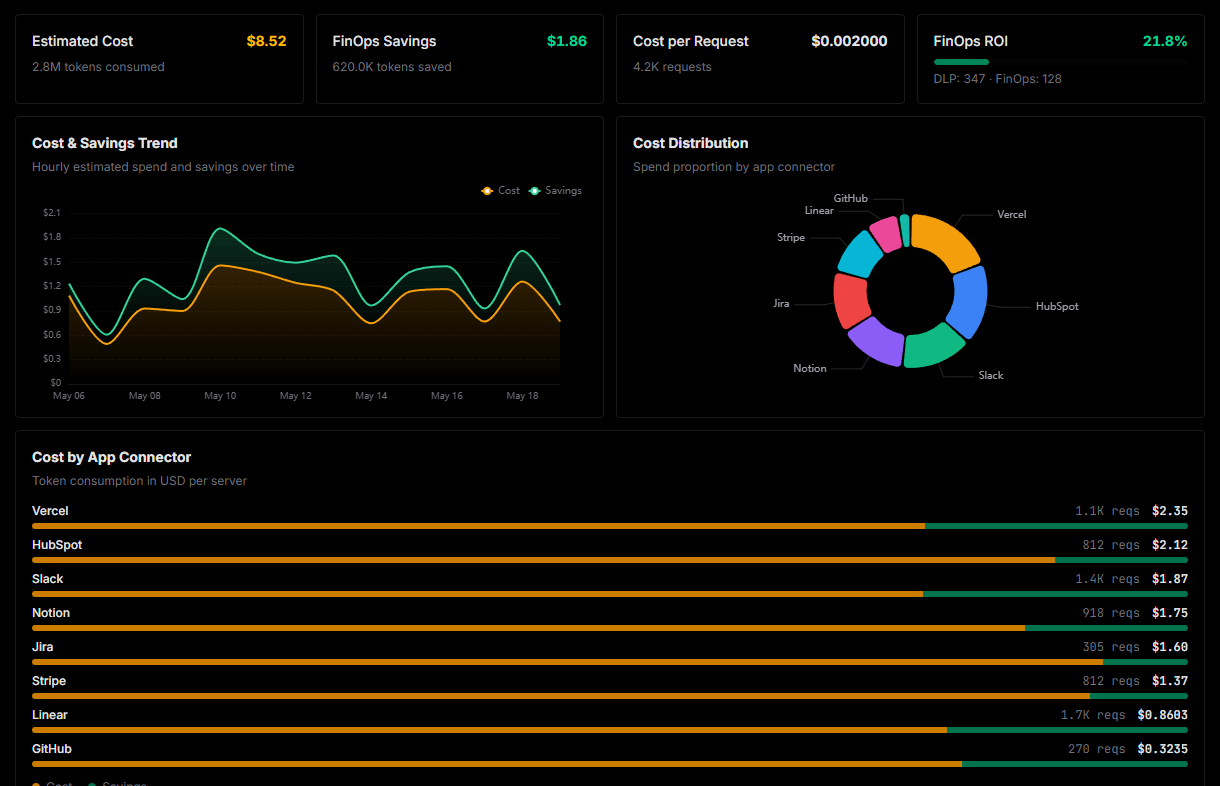
Explore our live AI Agents Analytics dashboard to see it all working
This dashboard is included when you connect Netrows using Vinkius. You will never be left in the dark about what your AI agents are doing with your tools.
Netrows and 4,000+ other AI tools. No hosting, no code, ready to use.
Professionals who connect Netrows to AutoGen through Vinkius don't need to write code, manage servers, or worry about security. Everything is pre-configured, secure, and runs automatically in the background.
Raw MCP | Vinkius | |
|---|---|---|
| Ready-to-use MCPs | Find and configure each manually | 4,000+ MCPs ready to use |
| Connection Setup | Manual coding & server setup | 1-click instant connection |
| Server Hosting | You host it yourself (needs 24/7 uptime) | 100% hosted & managed by Vinkius |
| Security & Privacy | Stored in plaintext config files | Bank-grade encrypted vault |
| Activity Visibility | Blind execution (no logs or tracking) | Live dashboard with real-time logs |
| Cost Control | Runaway AI token spend risk | Automatic budget limits |
| Revoking Access | Must delete files or code to stop | 1-click disconnect button |
How Vinkius secures
Netrows for AutoGen
Every request between AutoGen and Netrows is protected by our secure gateway. We automatically keep your sensitive data private, prevent unauthorized access, and let you disconnect instantly at any time.
Frequently asked questions
Can my AI track a specific flight in real-time and show me its current position, altitude, and speed?
Yes! Use the search_flights tool with the flight number (e.g., "UAL123") to find the active flight, then use track_flight with the flight ID to get real-time position coordinates (latitude, longitude), altitude in feet, ground speed in knots, heading direction, and vertical speed. Your AI agent will respond with the exact location of the aircraft and its current flight parameters. Perfect for passenger pickup coordination and live flight monitoring.
How do I find all flights departing from or arriving at a specific airport?
Simply ask the agent to run the get_airport_flights action with the airport IATA or ICAO code (e.g., "JFK" or "KJFK" for New York JFK). It will return all arriving and departing flights with airline, flight number, aircraft type, origin/destination, scheduled and actual times, and current status. You can also use search_airports first to find the correct airport code if you only know the city name.
Can I look up information about a specific aircraft by its tail number or registration?
Absolutely! Use the get_aircraft_info tool with the aircraft registration/tail number (e.g., "N12345" for US, "G-EUUU" for UK, "D-AIMA" for Germany). Your AI will return the aircraft manufacturer and model, registration country, owner/operator, year built, engine type, number of engines, aircraft age, and category (airline, business jet, private, cargo). You can also use search_aircraft with an operator name to see their entire fleet.
How does AutoGen connect to MCP servers?
Create an MCP tool adapter and assign it to one or more agents in the group chat. AutoGen agents can then call Netrows tools during their conversation turns.
Can different agents have different MCP tool access?
Yes. AutoGen's role-based architecture lets you assign specific MCP tools to specific agents, so a querying agent has different capabilities than a reviewing agent.
Does AutoGen support human approval for tool calls?
Yes. Configure human-in-the-loop mode so agents pause and request approval before executing sensitive MCP tool calls.
McpWorkbench not found
Install: pip install "autogen-ext[mcp]"
Explore More MCP Servers
View all →
CoderPad
8 toolsManage technical interviews and assessments via CoderPad — create pads, track interview events, and audit the question bank directly from any AI agent.

Stadia Maps
10 toolsEquip your AI with advanced geospatial routing and mapping logic. Calculate distances, geocode coordinates, and plot optimized trips securely.

Enspire Commerce
10 toolsEquip your AI agent to manage omni-channel orders, track inventory, and monitor shipments via the Enspire API.

MasterGo
10 toolsCollaborative design platform and UI/UX tool — manage design files, nodes, and comments via AI.