
Bring Supply Chain Security
to AutoGen
Learn how to connect Socket.dev (Dependency Security) to AutoGen and start using 10 AI agent tools in minutes. Fully managed, enterprise secure, and ready to use without writing a single line of code.
 GDPR Free for Subscribers
Compatible with every major AI agent and IDE
 Gemini
What is the Socket.dev (Dependency Security) MCP Server?
Connect Socket.dev to your AI agent to proactively defend against supply chain attacks. This MCP server allows you to analyze open-source packages, scan manifest files, and monitor for malicious dependencies without leaving your development environment.
What you can do
- Package Analysis — Get deep security scores and identify issues for specific packages using PURLs (e.g., npm, PyPI, Go).
- Dependency Scanning — Upload manifest files like
package.jsonorrequirements.txtto create comprehensive security scans. - Report Management — List and retrieve detailed security reports, including policy compliance and alert data.
- Threat Intelligence — Access a real-time feed of malicious packages detected by Socket's analysis engine.
- Organization Oversight — Manage scans across different organizations and monitor your API usage quotas.
How it works
- Subscribe to this server
- Enter your Socket.dev API Token
- Start auditing your dependencies directly from Claude, Cursor, or any MCP-compatible client
Stop guessing if a package is safe. Let your AI agent use Socket's industry-leading telemetry to catch typosquatting, backdoors, and telemetry before they enter your codebase.
Who is this for?
- Security Engineers — Automate the review of new dependencies and monitor organizational security posture.
- Developers — Check package safety scores instantly before running
npm installorpip install. - DevOps Teams — Integrate dependency scanning into the conversation to quickly triage security reports.
Built-in capabilities (10)
Provide manifest files data (e.g., package.json, requirements.txt). Create a new scan by uploading manifest files
Delete a scan
g., pkg:npm/babel). Get issues/alerts for a specific package
g., pkg:npm/babel). Get the security score for a specific package
Check remaining API quota
Get detailed report data
Get scan metadata and status
Access the real-time threat feed
List organizations the token has access to
List reports
Why AutoGen?
AutoGen enables multi-agent conversations where agents negotiate, delegate, and collaboratively use Socket.dev (Dependency Security) tools. Connect 10 tools through Vinkius and assign role-based access. a data analyst queries while a reviewer validates, with optional human-in-the-loop approval for sensitive operations.
- —
Multi-agent conversations: multiple AutoGen agents discuss, delegate, and collaboratively use Socket.dev (Dependency Security) tools to solve complex tasks
- —
Role-based architecture lets you assign Socket.dev (Dependency Security) tool access to specific agents. a data analyst queries while a reviewer validates
- —
Human-in-the-loop support: agents can pause for human approval before executing sensitive Socket.dev (Dependency Security) tool calls
- —
Code execution sandbox: AutoGen agents can write and run code that processes Socket.dev (Dependency Security) tool responses in an isolated environment
Socket.dev (Dependency Security) in AutoGen
Socket.dev (Dependency Security) and 4,000+ other MCP servers. One platform. One governance layer.
Teams that connect Socket.dev (Dependency Security) to AutoGen through Vinkius don't need to source, host, or maintain individual MCP servers. Every tool call runs inside a hardened runtime with credential isolation, DLP, and a signed audit chain.
Raw MCP | Vinkius | |
|---|---|---|
| Server catalog | Find and host yourself | 4,000+ managed |
| Infrastructure | Self-hosted | Sandboxed V8 isolates |
| Credential handling | Plaintext in config | Vault + runtime injection |
| Data loss prevention | None | Configurable DLP policies |
| Kill switch | None | Global instant shutdown |
| Financial circuit breakers | None | Per-server limits + alerts |
| Audit trail | None | Ed25519 signed logs |
| SIEM log streaming | None | Splunk, Datadog, Webhook |
| Honeytokens | None | Canary alerts on leak |
| Custom domains | Not applicable | DNS challenge verified |
| GDPR compliance | Manual effort | Automated purge + export |
Why teams choose Vinkius for Socket.dev (Dependency Security) in AutoGen
The Socket.dev (Dependency Security) MCP Server runs on Vinkius-managed infrastructure inside AWS — a purpose-built runtime with per-request V8 isolates, Ed25519 signed audit chains, and sub-40ms cold starts. All 10 tools execute in hardened sandboxes optimized for native MCP execution.
Your AI agents in AutoGen only access the data you authorize, with DLP that blocks sensitive information from ever reaching the model, kill switch for instant shutdown, and up to 60% token savings. Enterprise-grade infrastructure, zero maintenance.
* Every MCP server runs on Vinkius-managed infrastructure inside AWS - a purpose-built runtime with per-request V8 isolates, Ed25519 signed audit chains, and sub-40ms cold starts optimized for native MCP execution. See our infrastructure
How Vinkius secures
Socket.dev (Dependency Security) for AutoGen
Every tool call from AutoGen to the Socket.dev (Dependency Security) MCP Server is protected by DLP redaction, cryptographic audit chains, V8 sandbox isolation, kill switch, and financial circuit breakers.
Frequently asked questions
How can I check if a specific npm package is safe to use?
You can use the get_package_score tool by providing the Package URL (PURL), such as pkg:npm/lodash. The agent will return a security score and risk assessment.
Can I scan my entire project's dependencies at once?
Yes! Use the create_scan tool and provide the content of your manifest files (like package.json). Socket will analyze all dependencies and generate a report.
How do I see the specific security issues found in a package?
Use the get_package_issues tool with the package's PURL. It will list all alerts, such as telemetry, install scripts, or known vulnerabilities associated with that package.
How does AutoGen connect to MCP servers?
Create an MCP tool adapter and assign it to one or more agents in the group chat. AutoGen agents can then call Socket.dev (Dependency Security) tools during their conversation turns.
Can different agents have different MCP tool access?
Yes. AutoGen's role-based architecture lets you assign specific MCP tools to specific agents, so a querying agent has different capabilities than a reviewing agent.
Does AutoGen support human approval for tool calls?
Yes. Configure human-in-the-loop mode so agents pause and request approval before executing sensitive MCP tool calls.
McpWorkbench not found
Install: pip install "autogen-ext[mcp]"
Explore More MCP Servers
View all →
ActiveCampaign
5 toolsMarketing automation and CRM — manage contacts, deals, lists, and automations via AI.

Flodesk
10 toolsDesign gorgeous email campaigns with intuitive templates that grow your audience and reflect your brand without design skills.
Listen Notes
7 toolsSearch and retrieve podcast and episode metadata via the Listen Notes Podcast API.
Open-Meteo Weather Forecast
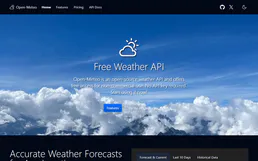
4 toolsGive your AI agent live weather intelligence: 16-day forecasts, current conditions, and hourly breakdowns for any GPS coordinate on Earth — zero API keys required.