
Bring Mcp Server
to Cursor
Create your Vinkius account to connect Alpic to Cursor and start using all 18 AI tools in minutes. Fully managed, enterprise secure, and ready to use without writing a single line of code. No hosting, no server setup — just connect and start using.
 GDPR Free for Subscribers
Compatible with every major AI agent and IDE
 Gemini
What is the Alpic MCP Server?
What you can do
Connect AI agents to the Alpic platform for complete MCP server lifecycle management:
- List and manage teams with member access controls
- Create, update, and delete MCP server projects with git repository linking
- Deploy to multiple environments (dev, staging, production) with one command
- Monitor deployments with real-time status, logs, and analytics
- Manage environment variables securely for each deployment target
- View analytics including request counts, latency, error rates, and usage patterns
- Publish to the MCP registry to make your servers discoverable
- Create development tunnels for local testing before production deployment
How it works
- Get your Alpic API token from team settings > API Keys
- Ask your AI agent to deploy servers, check logs, manage variables, or view analytics
- Natural language commands replace manual Alpic dashboard operations
- Multi-environment deployments with isolated configurations per environment
Who is this for?
Essential for MCP server developers, DevOps engineers, platform teams, AI infrastructure managers, and SaaS companies deploying MCP servers. Let AI agents handle continuous deployments, environment variable management, deployment debugging, and infrastructure monitoring. Perfect for teams managing 5+ MCP server environments who want to eliminate manual deployment steps, accelerate iteration cycles, and enable AI-driven infrastructure operations.
Built-in capabilities (18)
Use this to set API keys, database URLs, feature flags, or any configuration needed by your MCP server. Requires project ID, environment ID, variable key, and value. Variable values are stored securely. Add a new environment variable to an Alpic environment
Requires environment name and project ID. Optionally set initial variables and configuration. Each environment gets a unique URL for MCP client connections. Returns the created environment details. Create a new deployment environment (dev, staging, prod) for an Alpic project
Requires project name and team ID. Optionally set description, repository URL, and initial configuration. Returns the created project details including the new project ID needed for subsequent operations. Create a new MCP server project in Alpic
This action cannot be undone. Use with caution. Requires the project ID. Confirm with the user before proceeding. Delete an Alpic MCP server project
Use this to clean up unused configuration keys. Requires project ID, environment ID, and variable key. Delete an environment variable from an Alpic environment
The deployment runs asynchronously. Returns the deployment ID which can be used with get_deployment to check status. Use this to push new MCP server versions to dev, staging, or production environments. Trigger a new deployment for a specific Alpic environment
Requires the deployment ID. Use this to check if a deployment succeeded, review deployment history, or debug failed deployments. Get detailed status and metadata for a specific Alpic deployment
Useful for debugging failed deployments, understanding build output, or verifying successful startup of the MCP server. Requires project ID and environment ID. Get deployment logs for a specific Alpic environment
Requires the project ID from list_projects results. Use this to review project settings before making updates or triggering deployments. Get detailed information about a specific Alpic MCP server project
Requires the project ID. Use this to monitor MCP server health, identify performance trends, and troubleshoot issues. Get analytics and usage data for a specific Alpic project
Use this to verify which MCP tools are exposed and confirm the server is running correctly. Get server information and status for a specific Alpic project
Returns the tunnel URL and ticket token. Use this during development to test your MCP server before deploying to a production environment. Get a tunnel ticket for local development and testing of an MCP server
Each environment has its own URL, variables, and deployment status. Returns environment IDs, names, URLs, and current deployment state. Use this to identify which environment to deploy to or manage variables for. List all environments (dev, staging, prod) for a specific Alpic project
Returns project IDs, names, descriptions, associated teams, deployment status, and environment counts. Use this to overview your entire MCP infrastructure before managing specific projects or triggering deployments. List all MCP server projects in your Alpic account
Each team contains projects and environments for deploying MCP servers. Returns team IDs, names, and member counts. Use this first to identify which team to manage projects under. List all teams associated with your Alpic account
Variable values are masked for security. Returns variable keys and metadata. Use this to audit environment configuration before deploying or adding new variables. List all environment variables configured for an Alpic environment
Requires project ID and optionally a server description and category. Use this to make your MCP server publicly available. Publish an MCP server to the official MCP registry via Alpic
Only pass the fields you want to change. Requires the project ID from list_projects results. Use this to rename projects, update descriptions, or point to a new repository branch. Update an existing Alpic MCP server project configuration
Why Cursor?
Cursor's Agent mode turns Alpic into an in-editor superpower. Ask Cursor to generate code using live data from Alpic and it fetches, processes, and writes. all in a single agentic loop. 18 tools appear alongside file editing and terminal access, creating a unified development environment grounded in real-time information.
- —
Agent mode turns Cursor into an autonomous coding assistant that can read files, run commands, and call MCP tools without switching context
- —
Cursor's Composer feature can generate entire files using real-time data fetched through MCP. no copy-pasting from external dashboards
- —
MCP tools appear alongside built-in tools like file reading and terminal access, creating a unified agentic environment
- —
VS Code extension compatibility means your existing workflow, keybindings, and extensions all work alongside MCP tools
Alpic in Cursor
Why run Alpic with Vinkius?
The Alpic connection runs on our fully managed, secure cloud infrastructure. We handle the hosting, maintenance, and security so you don't have to deal with servers or code. All 18 tools are ready to work instantly without any complex setup.
You stay in complete control of your data. Your AI only accesses the information you approve, keeping your sensitive passwords and private details completely safe. Plus, with automatic optimizations, your AI works faster and more efficiently.
* Every connection is hosted and maintained by Vinkius. We handle the security, updates, and infrastructure so you don't have to write code or manage servers. See our infrastructure
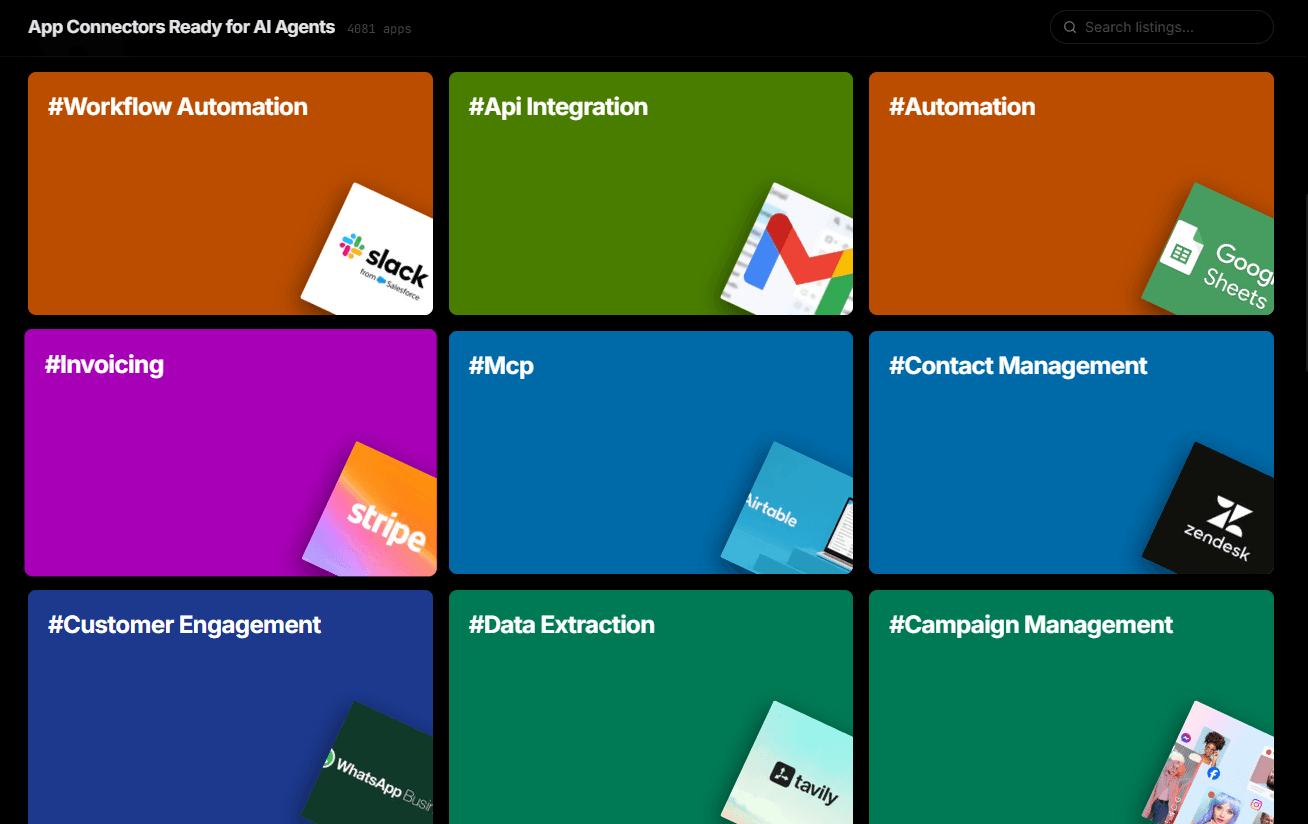
Over 4,000 integrations ready for AI agents
Explore a vast library of pre-built integrations, optimized and ready to deploy.
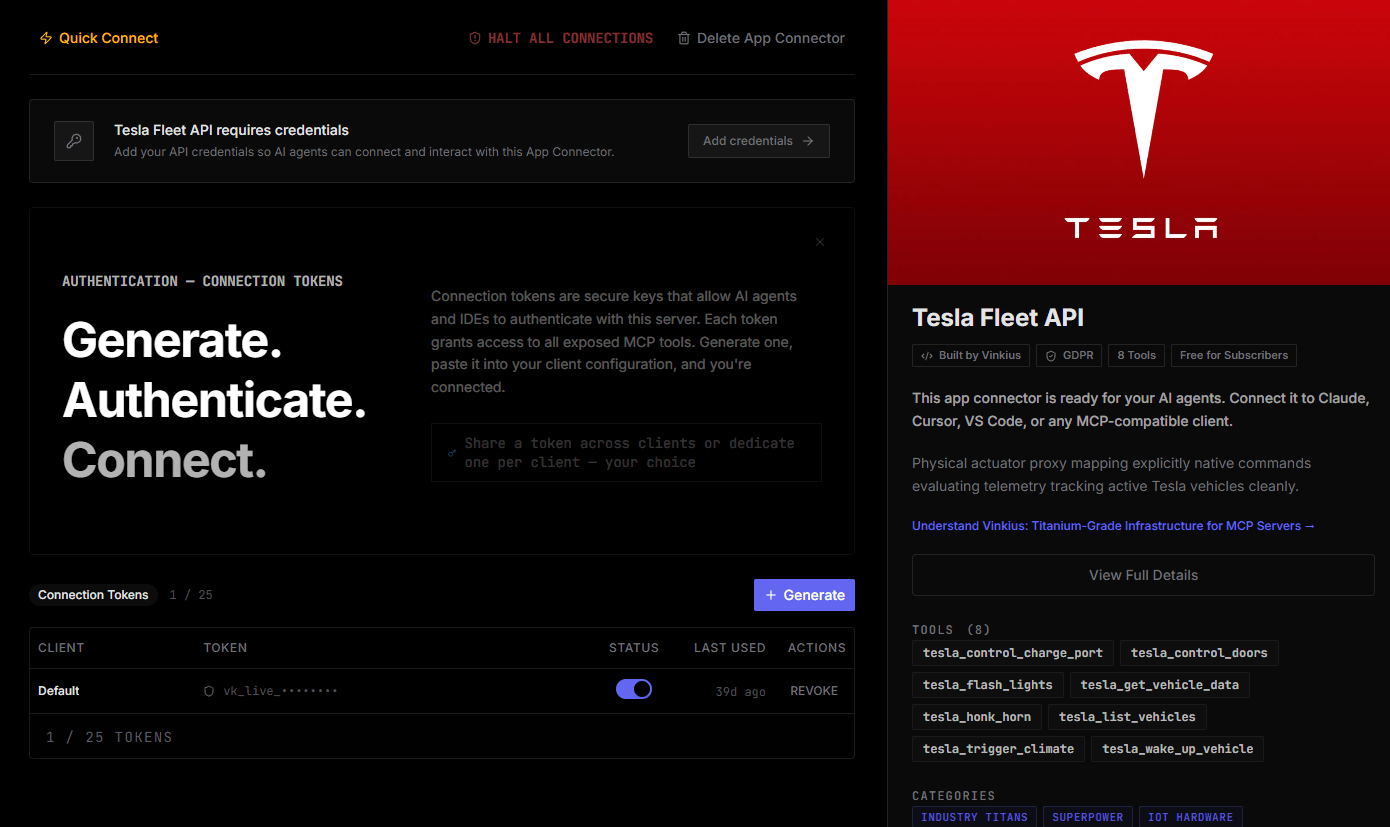
Connect securely in under 30 seconds
Generate tokens to authenticate and link external services in a single step.
Complete visibility into every agent action
Audit live requests, latency, success rates, and active security compliance policies.
Optimize spending and track token ROI
Analyze real-time token consumption and cost metrics detailed by connection.
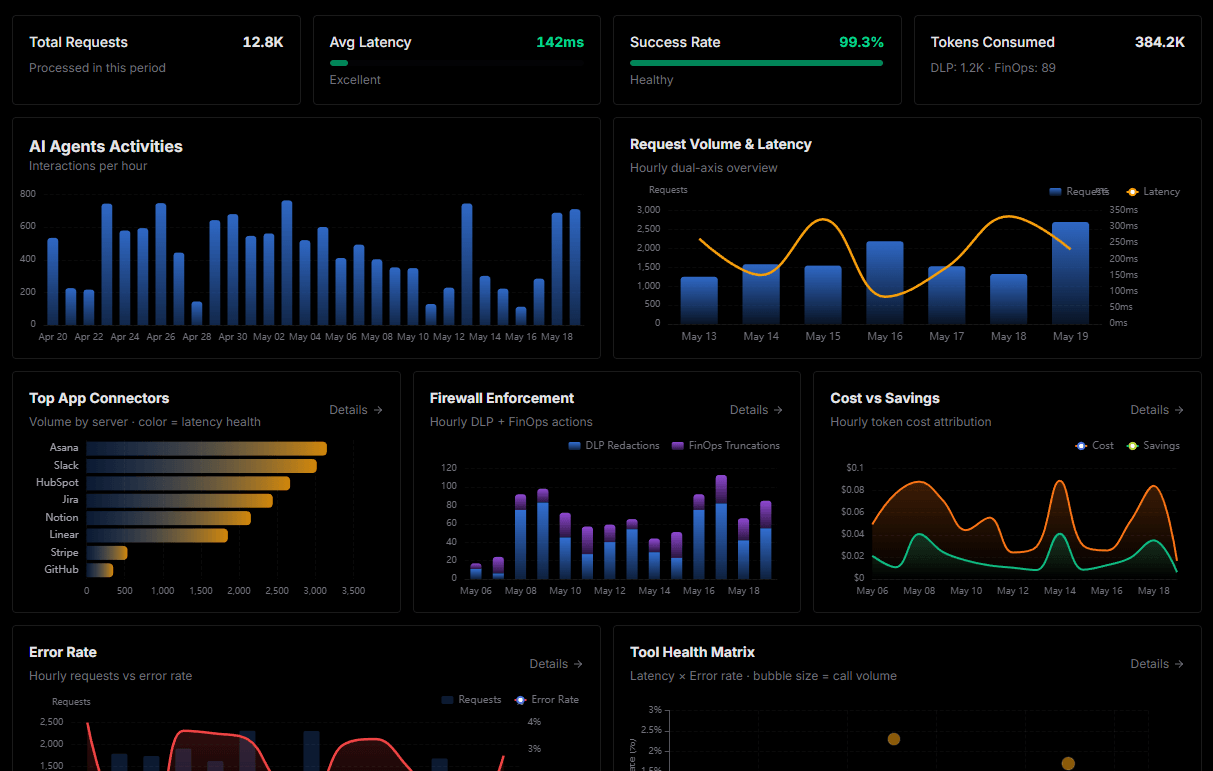
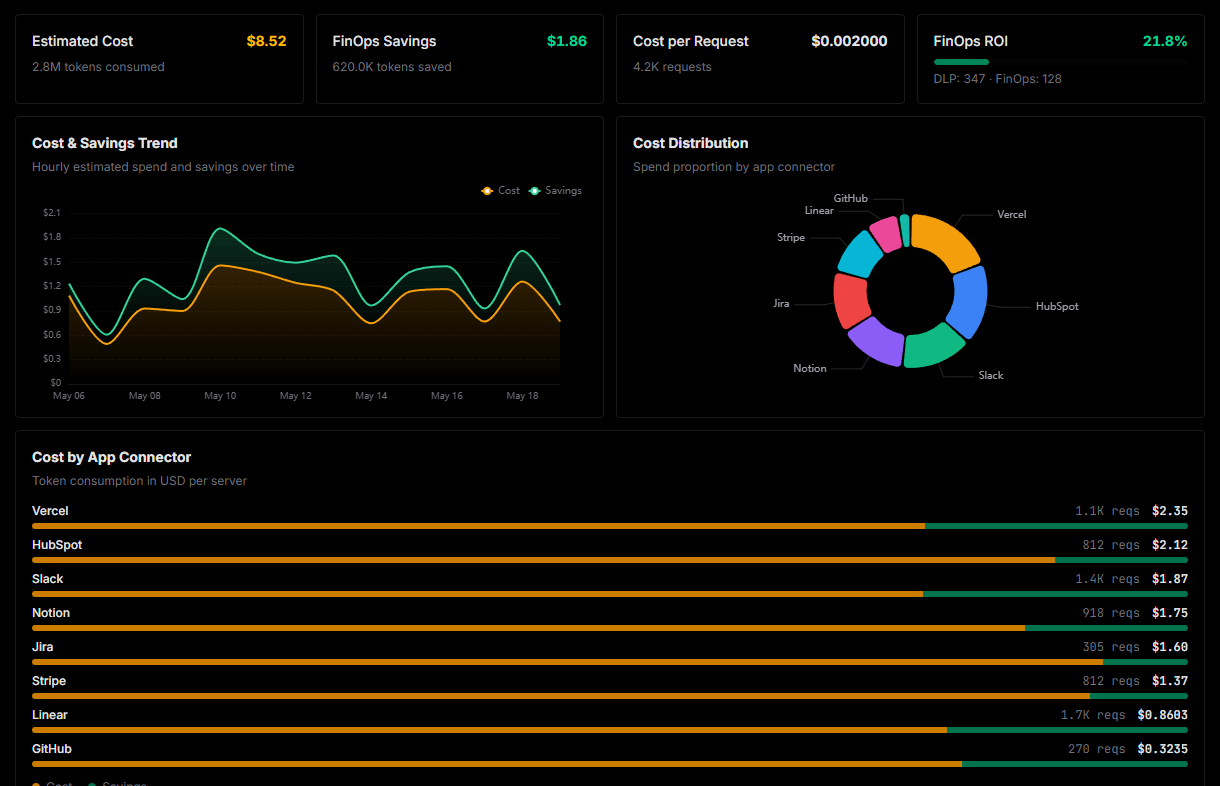
Explore our live AI Agents Analytics dashboard to see it all working
This dashboard is included when you connect Alpic using Vinkius. You will never be left in the dark about what your AI agents are doing with your tools.
Alpic and 4,000+ other AI tools. No hosting, no code, ready to use.
Professionals who connect Alpic to Cursor through Vinkius don't need to write code, manage servers, or worry about security. Everything is pre-configured, secure, and runs automatically in the background.
Raw MCP | Vinkius | |
|---|---|---|
| Ready-to-use MCPs | Find and configure each manually | 4,000+ MCPs ready to use |
| Connection Setup | Manual coding & server setup | 1-click instant connection |
| Server Hosting | You host it yourself (needs 24/7 uptime) | 100% hosted & managed by Vinkius |
| Security & Privacy | Stored in plaintext config files | Bank-grade encrypted vault |
| Activity Visibility | Blind execution (no logs or tracking) | Live dashboard with real-time logs |
| Cost Control | Runaway AI token spend risk | Automatic budget limits |
| Revoking Access | Must delete files or code to stop | 1-click disconnect button |
How Vinkius secures
Alpic for Cursor
Every request between Cursor and Alpic is protected by our secure gateway. We automatically keep your sensitive data private, prevent unauthorized access, and let you disconnect instantly at any time.
Frequently asked questions
Can I deploy environments from specific Git branches directly from the terminal?
Yes! You can operate create_environment mapping parameters matching your active branches, then instruct your agent to trigger the deploy_environment sync.
Are environment variables secured during deployment processes?
Absolutely. You can invoke add_variable providing exact tokens without storing them in repositories. They remain encrypted at rest and dynamically injected upon startup.
Can I test server configuration before final production merges?
Yes. Request your AI agent to trigger get_tunnel_ticket enabling you to natively tunnel local host environments through Alpic before pushing any true integration commits.
What is Agent mode and why does it matter for MCP?
Agent mode is Cursor's autonomous execution mode where the AI can perform multi-step tasks: reading files, editing code, running terminal commands, and calling MCP tools. Without Agent mode, Cursor operates in a simpler ask-and-answer mode that doesn't support tool calling. Always ensure you're in Agent mode when working with MCP servers.
Where does Cursor store MCP configuration?
Cursor looks for MCP server configurations in a mcp.json file. You can configure servers at the project level (.cursor/mcp.json in your project root) or globally (~/.cursor/mcp.json). Project-level configs take precedence.
Can Cursor use MCP tools in inline edits?
No. MCP tools are only available in Agent mode through the chat panel. Inline completions and Tab suggestions do not trigger MCP tool calls. This is by design. tool calls require user visibility and approval.
How do I verify MCP tools are loaded?
Open Settings → Features → MCP and look for your server name. A green indicator means the server is connected. You can also check Agent mode's available tools by clicking the tools dropdown in the chat panel.
Tools not appearing in Cursor
Ensure you are in Agent mode (not Ask mode). MCP tools only work in Agent mode.
Server shows as disconnected
Check Settings → Features → MCP and verify the server status. Try clicking the refresh button.
Explore More MCP Servers
View all →
Stammer.ai
11 toolsManage white-label AI chatbots, knowledge bases, and sub-accounts on Stammer.ai with AI agents.

SEC EDGAR
3 toolsOfficial US corporate filings database — access 10-K, 10-Q, and financial data via AI.
Bear
10 toolsManage your Bear notes via AI — search, create, and organize your markdown knowledge base autonomously.

Google Drive
12 toolsManage your files — search, create, share, and organize your Google Drive via AI.