
Bring Container Orchestration
to Cursor
Create your Vinkius account to connect Dokku to Cursor and start using all 10 AI tools in minutes. Fully managed, enterprise secure, and ready to use without writing a single line of code. No hosting, no server setup — just connect and start using.
 GDPR Free for Subscribers
Compatible with every major AI agent and IDE
 Gemini
What is the Dokku MCP Server?
Connect your Dokku instance to any AI agent and take full control of your self-hosted PaaS and container orchestration through natural conversation.
What you can do
- Application Lifecycle — List all managed apps and retrieve the overarching directory of deployments on your own infrastructure bypassing standard PaaS fees
- Provisioning & Deallocation — Barely instantiate new application repositories or irreversibly dismantle all bound containers and DNS routing records
- Environment Auditing — Retrieve the exact
.envdictionary bound dynamically via the config plugin to observe runtime inputs and SQL credentials - Configuration Mutation — Inject or remove sensitive environment variables securely, triggering rolling app deployments natively across your cluster
- Process Scaling — Manipulate explicit replica counts dynamically, determining whether web or worker containers spool up to meet demand
- Live Log Streaming — Pull precise system execution tails to investigate explicit request stack traces and crashing node backtraces without SSH
- One-off Executions — Launch raw commands inside ephemeral isolated containers for maintenance tasks like DB migrations or custom scripts
How it works
- Subscribe to this server
- Enter your Dokku Host URL and API Token (obtained from your Dokku Pro instance or REST API plugin)
- Start managing your private cloud from Claude, Cursor, or any MCP-compatible client
Who is this for?
- Indie Hackers & Founders — manage your self-hosted apps and deploy new versions using natural language
- DevOps Engineers — monitor process scales and application health across multiple server nodes
- SysAdmins — audit environment variables and verify system logs without manual SSH access
- Full-stack Developers — trigger restarts, scale web processes, and run migrations directly from the chat
Built-in capabilities (10)
Performs the structural network allocations setting up reverse-proxy hooks (Nginx/Traefik) preceding the actual codebase transfer. Provision a root App boundary wrapper on the Dokku VM
Instantly shuts down bound running docker containers orchestrating web/worker traffic, detaches volumes seamlessly, and removes explicit DNS routing records from the local VHOST mappings. Deallocate an App and dismantle all bound containers completely
Bypasses SSH to investigate explicit request stack traces, crashing node backtraces, or slow SQL queries happening inside the closed containers. Stream Dokku Application Docker stdout and stderr logs
Determines exactly which Docker containers are orchestrated internally by Dokku Core scaling plugins. List self-hosted Git-push Apps deployed via Dokku
env` or `ENV` dictionary bound dynamically via the `dokku config` plugin. Used strictly to observe runtime inputs (SQL credentials, external REST API tokens, Node_ENV bindings) governing app execution. Extract internal Environment variables loaded into the App
Dokku tears down old running docker processes spanning the App UUID, allocating updated dynamic ports tied via standard proxies (Nginx), ensuring zero downtime deploys if multiple replicas are alive. Bounce the application container dynamically
Determines whether the "web" container spins zero replicas (suspension), or if "worker" background tasks spool up to 10 endpoints. Scale structural internal application containers
Boots a brand new isolated Docker container cloning the production image layers for a single execution cycle. Useful for running `rake db:migrate`, `npm run script` safely disconnected from web traffic. Launch a raw one-off command inside an ephemeral container
Triggers a mandatory rolling app deployment unless the `--no-restart` daemon flag applies natively to the process. Critical for updating expired API auth tokens. Inject Environment Variables into a running Dokku Application
Immediately triggers the executing Docker cluster to orchestrate a rapid replacement cycle to strip out the revoked value. Removes stale credentials safely. Remove sensitive Environment Variables disrupting App config
Why Cursor?
Cursor's Agent mode turns Dokku into an in-editor superpower. Ask Cursor to generate code using live data from Dokku and it fetches, processes, and writes. all in a single agentic loop. 10 tools appear alongside file editing and terminal access, creating a unified development environment grounded in real-time information.
- —
Agent mode turns Cursor into an autonomous coding assistant that can read files, run commands, and call MCP tools without switching context
- —
Cursor's Composer feature can generate entire files using real-time data fetched through MCP. no copy-pasting from external dashboards
- —
MCP tools appear alongside built-in tools like file reading and terminal access, creating a unified agentic environment
- —
VS Code extension compatibility means your existing workflow, keybindings, and extensions all work alongside MCP tools
Dokku in Cursor
Why run Dokku with Vinkius?
The Dokku connection runs on our fully managed, secure cloud infrastructure. We handle the hosting, maintenance, and security so you don't have to deal with servers or code. All 10 tools are ready to work instantly without any complex setup.
You stay in complete control of your data. Your AI only accesses the information you approve, keeping your sensitive passwords and private details completely safe. Plus, with automatic optimizations, your AI works faster and more efficiently.
* Every connection is hosted and maintained by Vinkius. We handle the security, updates, and infrastructure so you don't have to write code or manage servers. See our infrastructure
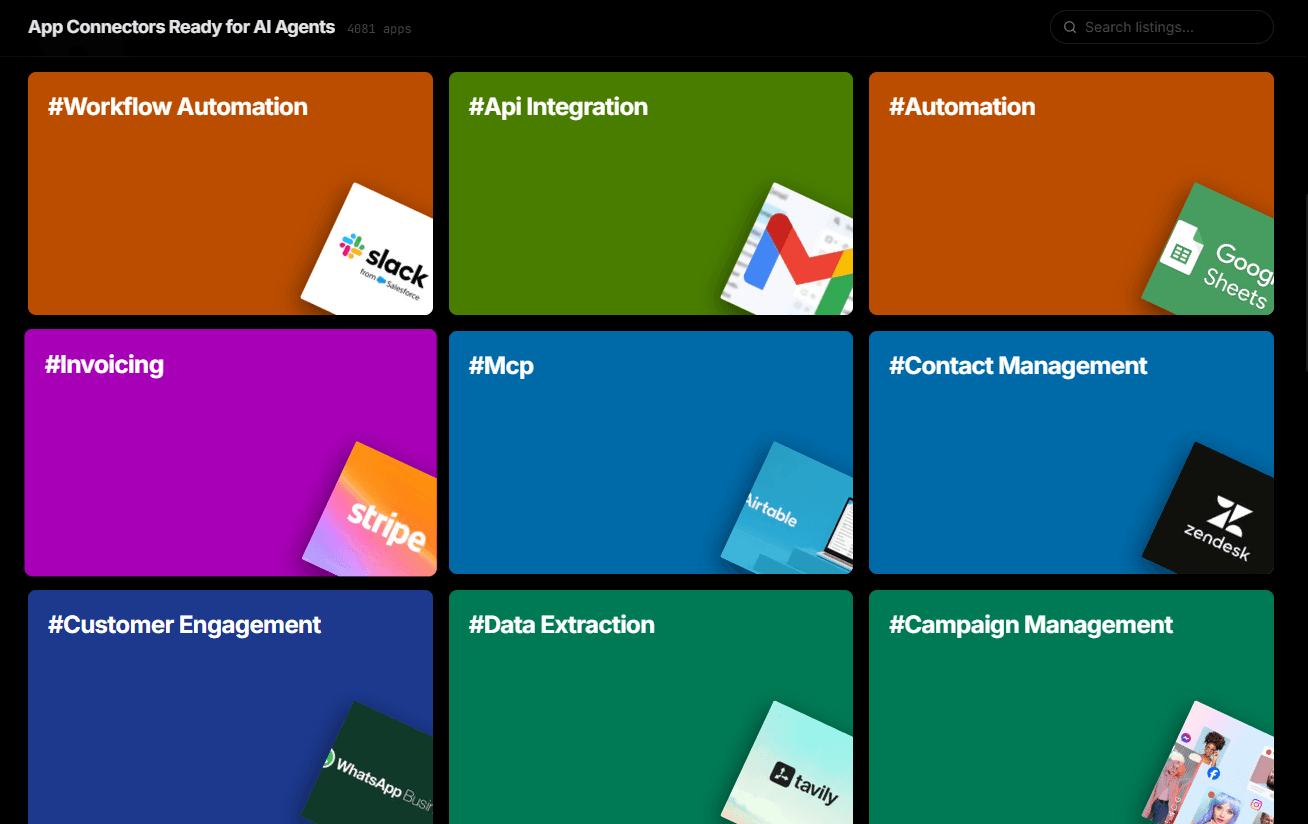
Over 4,000 integrations ready for AI agents
Explore a vast library of pre-built integrations, optimized and ready to deploy.
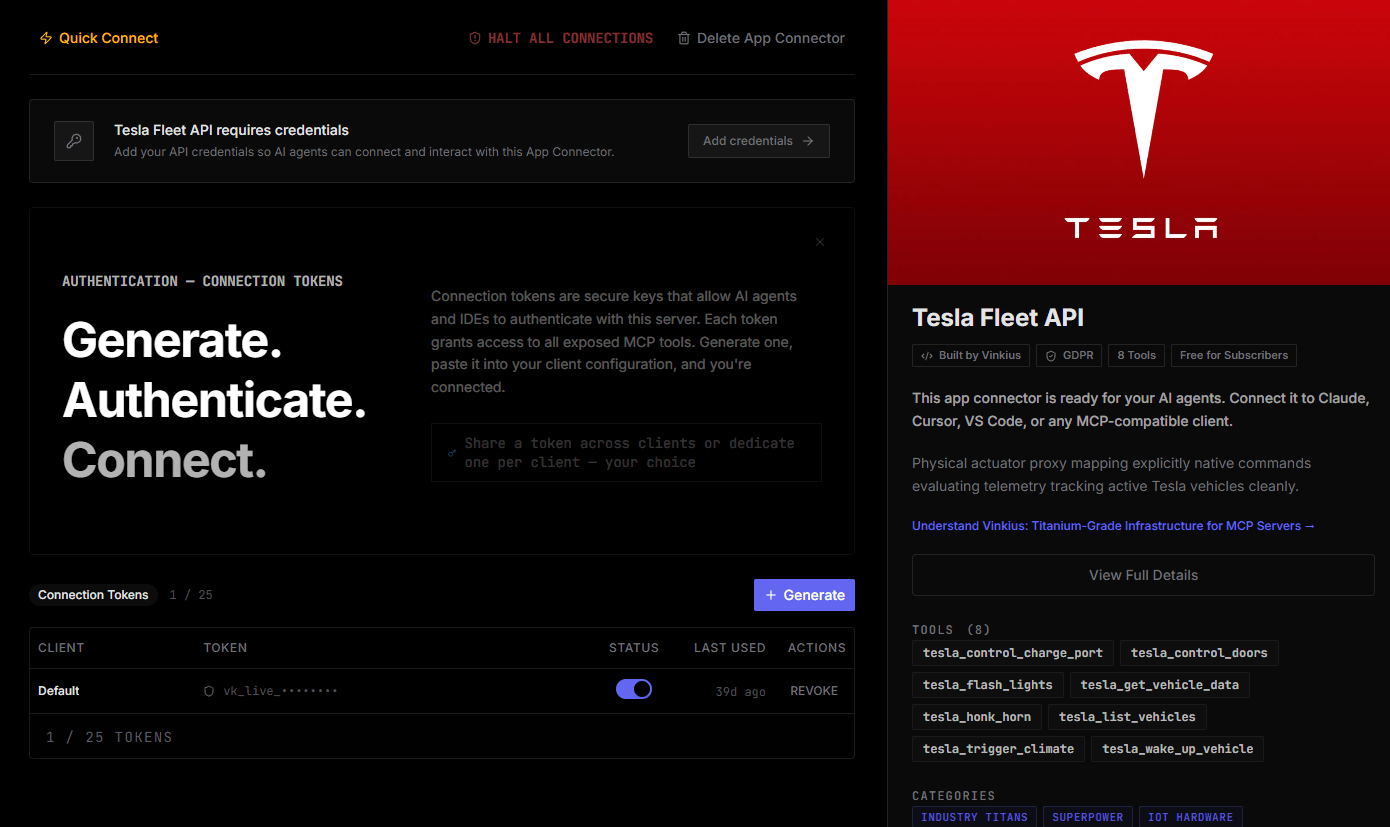
Connect securely in under 30 seconds
Generate tokens to authenticate and link external services in a single step.
Complete visibility into every agent action
Audit live requests, latency, success rates, and active security compliance policies.
Optimize spending and track token ROI
Analyze real-time token consumption and cost metrics detailed by connection.
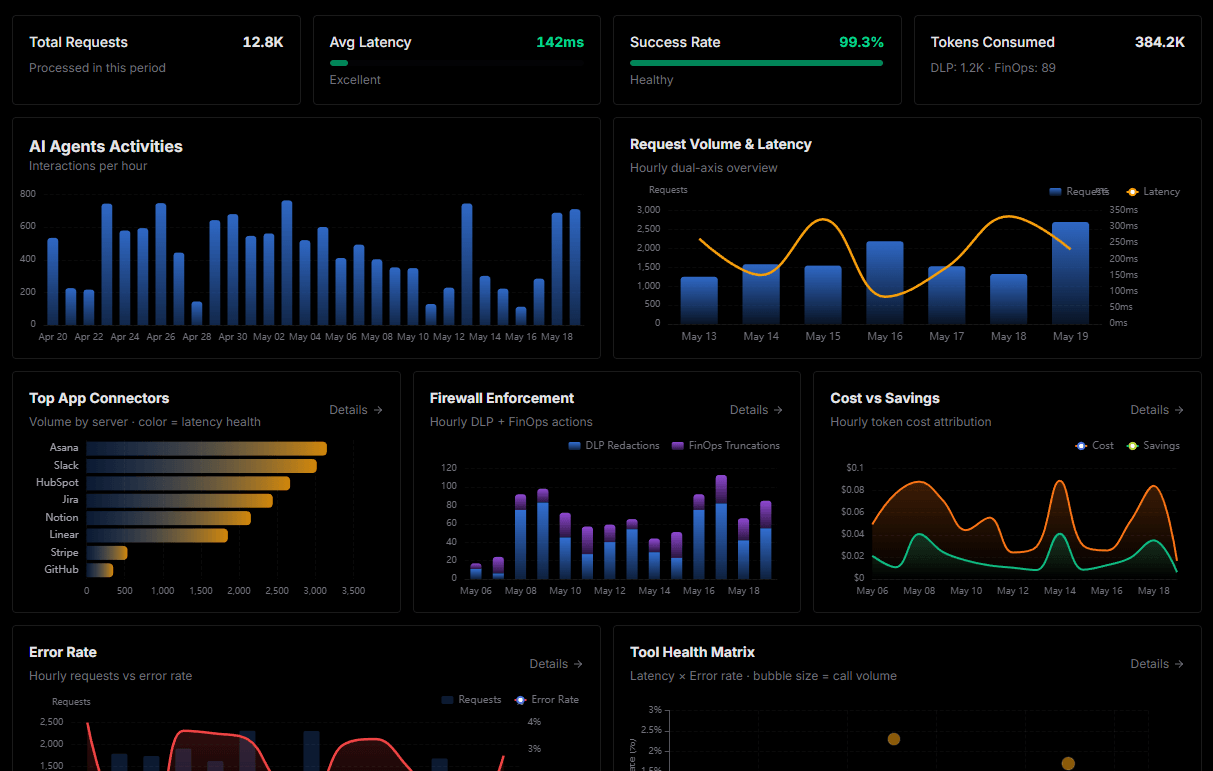
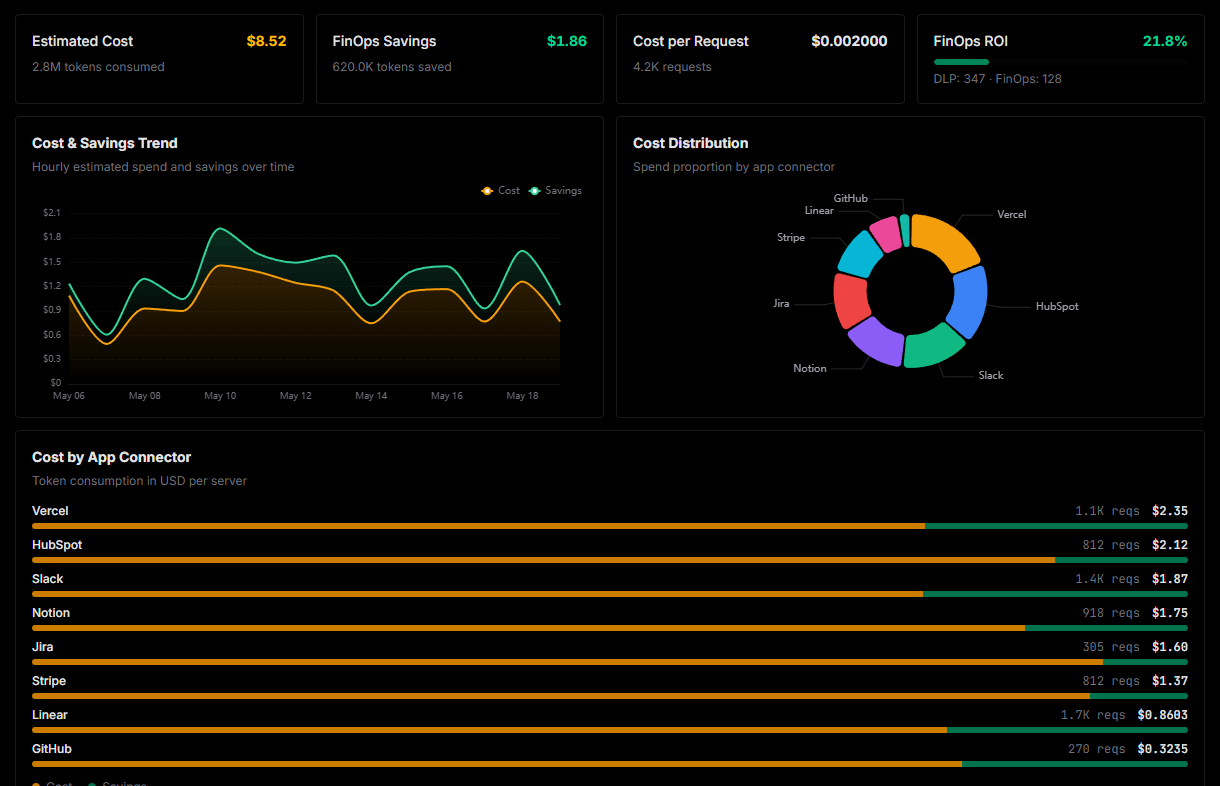
Explore our live AI Agents Analytics dashboard to see it all working
This dashboard is included when you connect Dokku using Vinkius. You will never be left in the dark about what your AI agents are doing with your tools.
Dokku and 4,000+ other AI tools. No hosting, no code, ready to use.
Professionals who connect Dokku to Cursor through Vinkius don't need to write code, manage servers, or worry about security. Everything is pre-configured, secure, and runs automatically in the background.
Raw MCP | Vinkius | |
|---|---|---|
| Ready-to-use MCPs | Find and configure each manually | 4,000+ MCPs ready to use |
| Connection Setup | Manual coding & server setup | 1-click instant connection |
| Server Hosting | You host it yourself (needs 24/7 uptime) | 100% hosted & managed by Vinkius |
| Security & Privacy | Stored in plaintext config files | Bank-grade encrypted vault |
| Activity Visibility | Blind execution (no logs or tracking) | Live dashboard with real-time logs |
| Cost Control | Runaway AI token spend risk | Automatic budget limits |
| Revoking Access | Must delete files or code to stop | 1-click disconnect button |
How Vinkius secures
Dokku for Cursor
Every request between Cursor and Dokku is protected by our secure gateway. We automatically keep your sensitive data private, prevent unauthorized access, and let you disconnect instantly at any time.
Frequently asked questions
Can my agent scale my Dokku processes automatically?
Yes. Use the 'ps_scale' tool. You can specify the application name and the target replica count for processes like 'web' or 'worker'. The agent will manipulate the explicit counts within your Dokku cluster instantly.
How do I update environment variables via chat?
Use the 'set_config' tool. Provide the app name, key, and value. The agent will inject the pair into the Docker environment mapping, which typically triggers a rolling deployment to apply the new configuration safely.
Can I run database migrations through the agent?
Absolutely. Use the 'run_command' tool. It boots an ephemeral isolated container cloning your production image, allowing you to run maintenance commands like 'rake db:migrate' or custom scripts without affecting live traffic.
What is Agent mode and why does it matter for MCP?
Agent mode is Cursor's autonomous execution mode where the AI can perform multi-step tasks: reading files, editing code, running terminal commands, and calling MCP tools. Without Agent mode, Cursor operates in a simpler ask-and-answer mode that doesn't support tool calling. Always ensure you're in Agent mode when working with MCP servers.
Where does Cursor store MCP configuration?
Cursor looks for MCP server configurations in a mcp.json file. You can configure servers at the project level (.cursor/mcp.json in your project root) or globally (~/.cursor/mcp.json). Project-level configs take precedence.
Can Cursor use MCP tools in inline edits?
No. MCP tools are only available in Agent mode through the chat panel. Inline completions and Tab suggestions do not trigger MCP tool calls. This is by design. tool calls require user visibility and approval.
How do I verify MCP tools are loaded?
Open Settings → Features → MCP and look for your server name. A green indicator means the server is connected. You can also check Agent mode's available tools by clicking the tools dropdown in the chat panel.
Tools not appearing in Cursor
Ensure you are in Agent mode (not Ask mode). MCP tools only work in Agent mode.
Server shows as disconnected
Check Settings → Features → MCP and verify the server status. Try clicking the refresh button.
Explore More MCP Servers
View all →
Readwise
16 toolsConnect your AI agents to Readwise to manage books, highlights, tags, and spaced repetition reviews directly through natural language.

Cloudbeds
10 toolsManage hotel reservations, guests, rooms, housekeeping, availability, and revenue dashboard for your Cloudbeds property through natural conversation.
Timekit
11 toolsEmbed scheduling into your product with a white-label booking API that handles availability, time zones, and calendar sync.
ClientSuccess
6 toolsReduce churn and grow accounts with health scoring, engagement tracking, and success playbooks built for customer success teams.