
Bring Document Automation
to Cursor
Create your Vinkius account to connect HotDocs to Cursor and start using all 14 AI tools in minutes. Fully managed, enterprise secure, and ready to use without writing a single line of code. No hosting, no server setup — just connect and start using.
 GDPR Free for Subscribers
Compatible with every major AI agent and IDE
 Gemini
What is the HotDocs MCP Server?
Connect your HotDocs Advance tenancy to any AI agent and take full control of your document automation workflows through natural conversation.
What you can do
- Template Discovery — List all template packages and their versions available in your HotDocs tenancy
- Work Item Management — Create, inspect, and manage work items that hold interview data and assembled documents
- Interview Sessions — Initialize interview sessions programmatically for interactive data collection
- Automated Document Assembly — Inject answers via XML and trigger document generation without manual UI interaction
- Document Retrieval — List and download assembled documents (PDFs, Word docs) directly from the agent
- Validation & Auditing — Check unanswered variables, list work items by date range or user, and audit assembly history
How it works
- Subscribe to this server
- Enter your HotDocs Advance tenancy, API client name, service principal name, and password
- Start automating your document workflows from Claude, Cursor, or any MCP-compatible client
No more repetitive clicking through the HotDocs web interface. Your AI acts as a dedicated document automation specialist.
Who is this for?
- Legal Teams — instantly generate contracts, agreements, and legal forms by providing case details in natural language
- HR Departments — automate offer letters, employment contracts, and policy documents at scale
- Financial Services — assemble loan applications, compliance forms, and client onboarding documents rapidly
- Operations & Compliance — batch-generate standardized documents and audit interview completeness across teams
Built-in capabilities (14)
This processes all collected answers and assembles the final documents based on the template configuration. After calling this, the assembled documents become available for download via list_documents and get_document_content. You must have already created a work item, created a version/session, and provided answers (via interview or update_answers). The workItemId and versionId must match an existing work item and its version. Complete document assembly for a work item version
This endpoint prepares the system to collect answers for the template variables. The response contains interview data needed to render the HotDocs interview UI. Use this before displaying the interview to the user or before assembling documents. The versionId should be unique for each interview session (e.g., v1, v2, or a UUID). Create a new interview session for a work item
A work item is associated with a specific template package and holds answers provided during interviews. You must provide a unique workItemId (alphanumeric identifier you choose) and optionally a templatePackageId. The workItemId becomes the reference for all subsequent operations (interview, assembly, download). IMPORTANT: workItemId must be unique and URL-safe (letters, numbers, hyphens only). Create a new work item in HotDocs Advance
This is primarily a utility function for debugging authentication issues. The token is used internally by all other tools automatically. If other tools fail with auth errors, verify your credentials are correct. Get a fresh HotDocs API access token
Use this to download the final generated document (PDF, Word, etc.) after assembly is complete. You need the workItemId and the documentId (obtained from list_documents). The response includes the document content and a download URL for direct access. Download/get content of an assembled document
Use the template package ID obtained from list_template_packages. This helps understand the template structure before creating work items. Get details of a specific template package
This shows which template variables were not provided answers during the interview process. Useful for validating interview completeness before or after document assembly. Requires the workItemId and documentId (from list_documents). The response includes the list of unanswered variables and assembly results. Get unanswered variables from an assembled document
Use this to inspect a work item before or after conducting interviews or assembling documents. The workItemId is the unique identifier you assigned when creating the work item. Get details of a specific work item
After completing assembly, this shows all generated documents with their IDs, names, and metadata. Use the document IDs returned here to download individual documents via get_document_content. Each document entry includes filename, creation date, and assembly results information. List all assembled documents for a work item
Template packages define the structure of documents that can be assembled. Each package contains interview questions and document output configurations. Use this to discover what templates are available for document assembly. The response includes package IDs which are required for creating work items. List all available template packages in HotDocs Advance
Each template can have multiple versions over time. This shows version history and helps identify which version is currently live/active. Use the package_id from list_template_packages to query versions. List all versions of a template package
You can filter by user ID and/or date range to find specific work items. Leave all parameters empty to list all work items. This is useful for auditing, tracking progress, or finding existing work items to continue working on. Date format should be ISO 8601 (e.g., 2024-01-15 or 2024-01-15T10:30:00). List work items with optional filters
This is optimized for date-based filtering and auditing. Both fromDate and toDate are required for this tool. Use ISO 8601 date format (e.g., 2024-01-01 or 2024-01-01T00:00:00 for datetime). This is useful for generating reports on document assembly activity over time periods. List work items filtered by a specific date range
The answer_xml parameter must contain valid HotDocs answer XML format that matches the template variables. This is useful for automated/batch document assembly where you already have the data. You can call this multiple times to incrementally add answers. Answer XML format example: <AnswerSet><A v="VariableName"><V>Answer Value</V></A></AnswerSet> Update answers for a work item using XML answer format
Why Cursor?
Cursor's Agent mode turns HotDocs into an in-editor superpower. Ask Cursor to generate code using live data from HotDocs and it fetches, processes, and writes. all in a single agentic loop. 14 tools appear alongside file editing and terminal access, creating a unified development environment grounded in real-time information.
- —
Agent mode turns Cursor into an autonomous coding assistant that can read files, run commands, and call MCP tools without switching context
- —
Cursor's Composer feature can generate entire files using real-time data fetched through MCP. no copy-pasting from external dashboards
- —
MCP tools appear alongside built-in tools like file reading and terminal access, creating a unified agentic environment
- —
VS Code extension compatibility means your existing workflow, keybindings, and extensions all work alongside MCP tools
HotDocs in Cursor
Why run HotDocs with Vinkius?
The HotDocs connection runs on our fully managed, secure cloud infrastructure. We handle the hosting, maintenance, and security so you don't have to deal with servers or code. All 14 tools are ready to work instantly without any complex setup.
You stay in complete control of your data. Your AI only accesses the information you approve, keeping your sensitive passwords and private details completely safe. Plus, with automatic optimizations, your AI works faster and more efficiently.
* Every connection is hosted and maintained by Vinkius. We handle the security, updates, and infrastructure so you don't have to write code or manage servers. See our infrastructure
Over 4,000 integrations ready for AI agents
Explore a vast library of pre-built integrations, optimized and ready to deploy.
Connect securely in under 30 seconds
Generate tokens to authenticate and link external services in a single step.
Complete visibility into every agent action
Audit live requests, latency, success rates, and active security compliance policies.
Optimize spending and track token ROI
Analyze real-time token consumption and cost metrics detailed by connection.
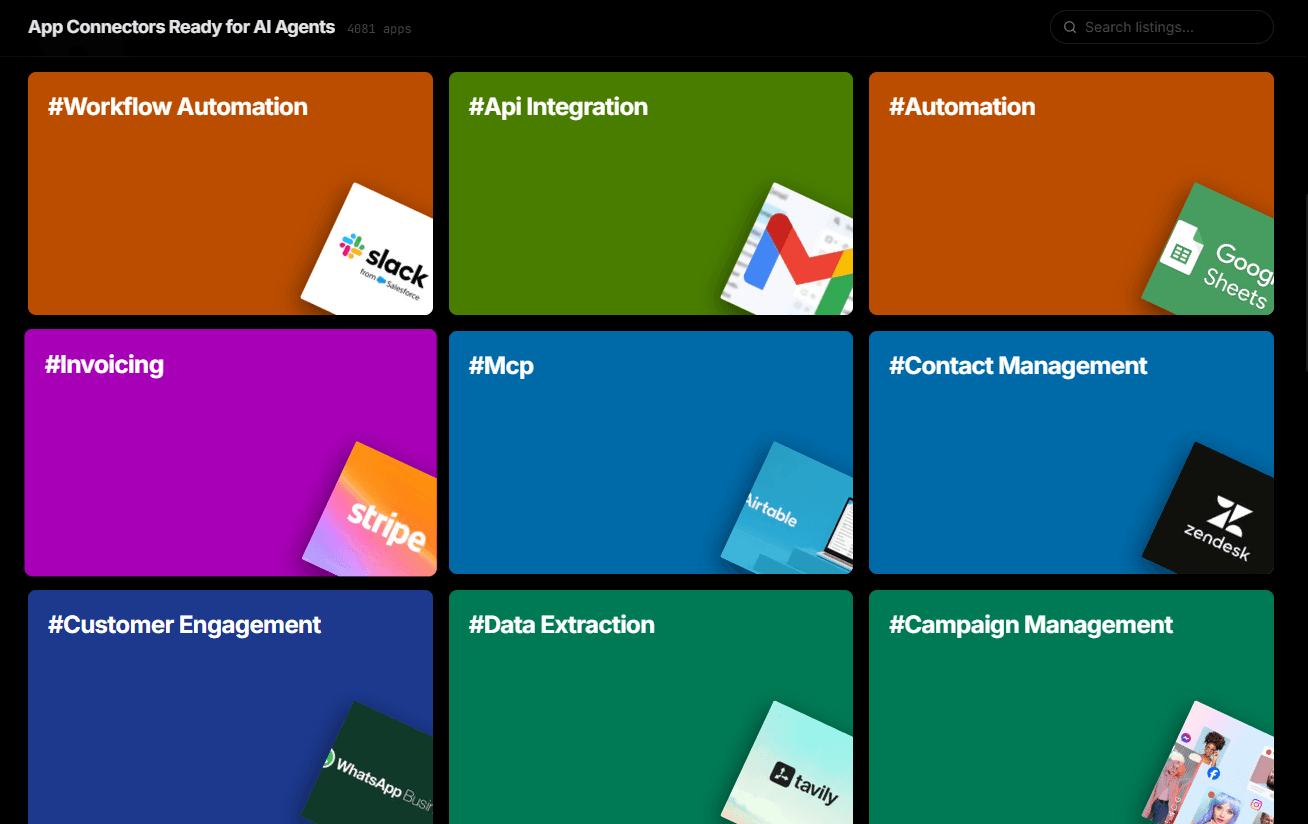
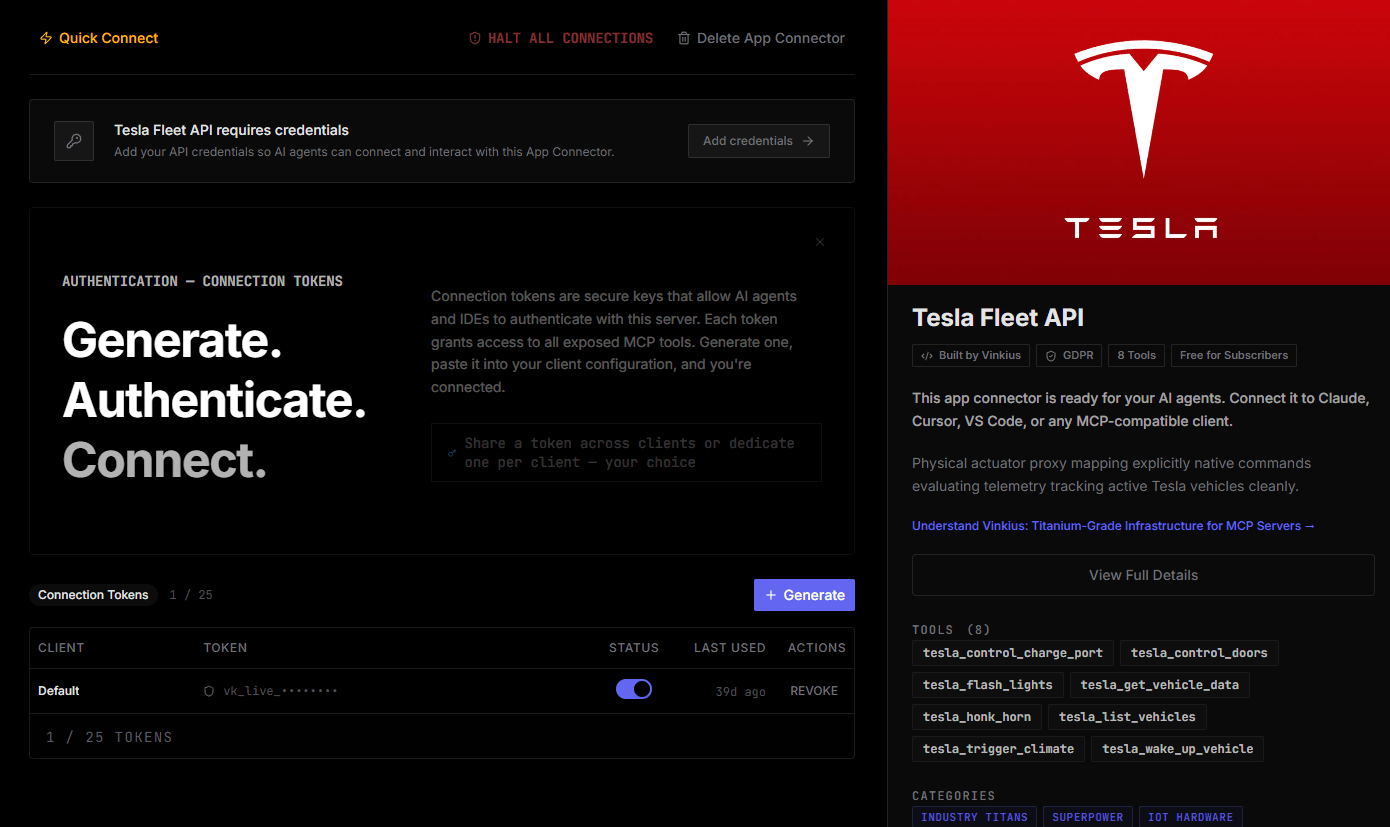
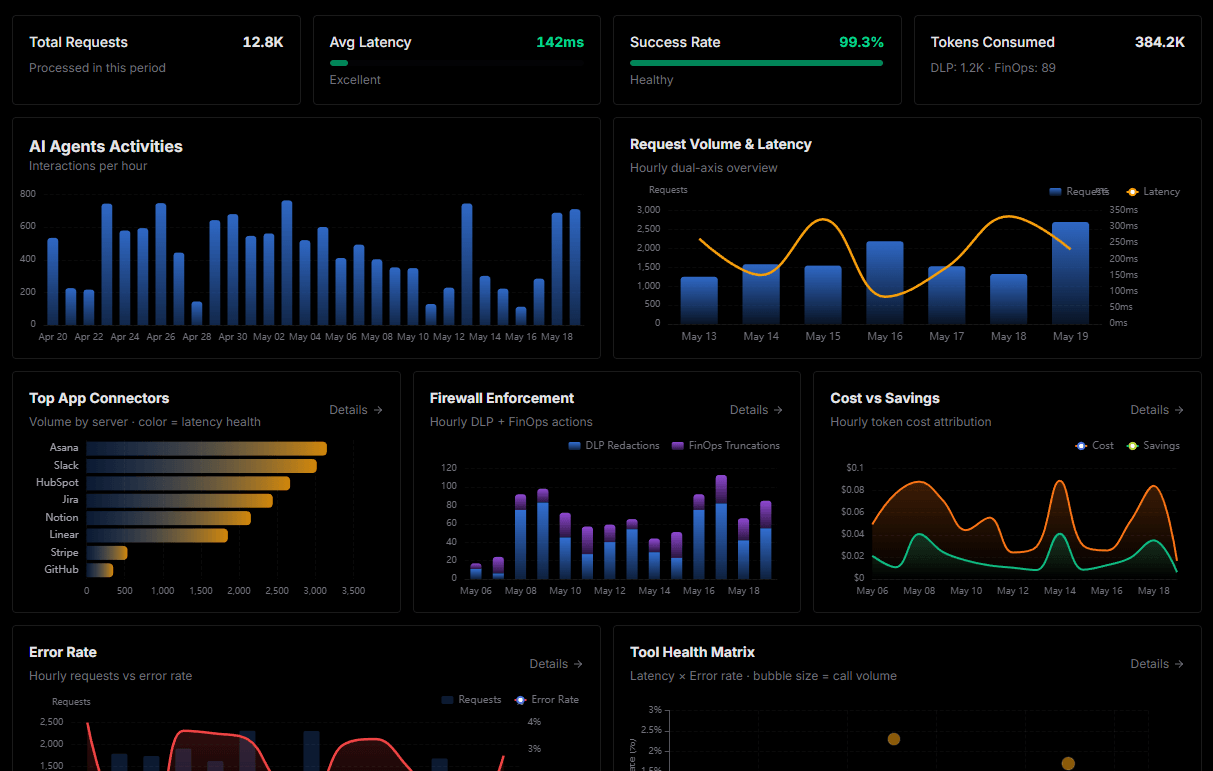
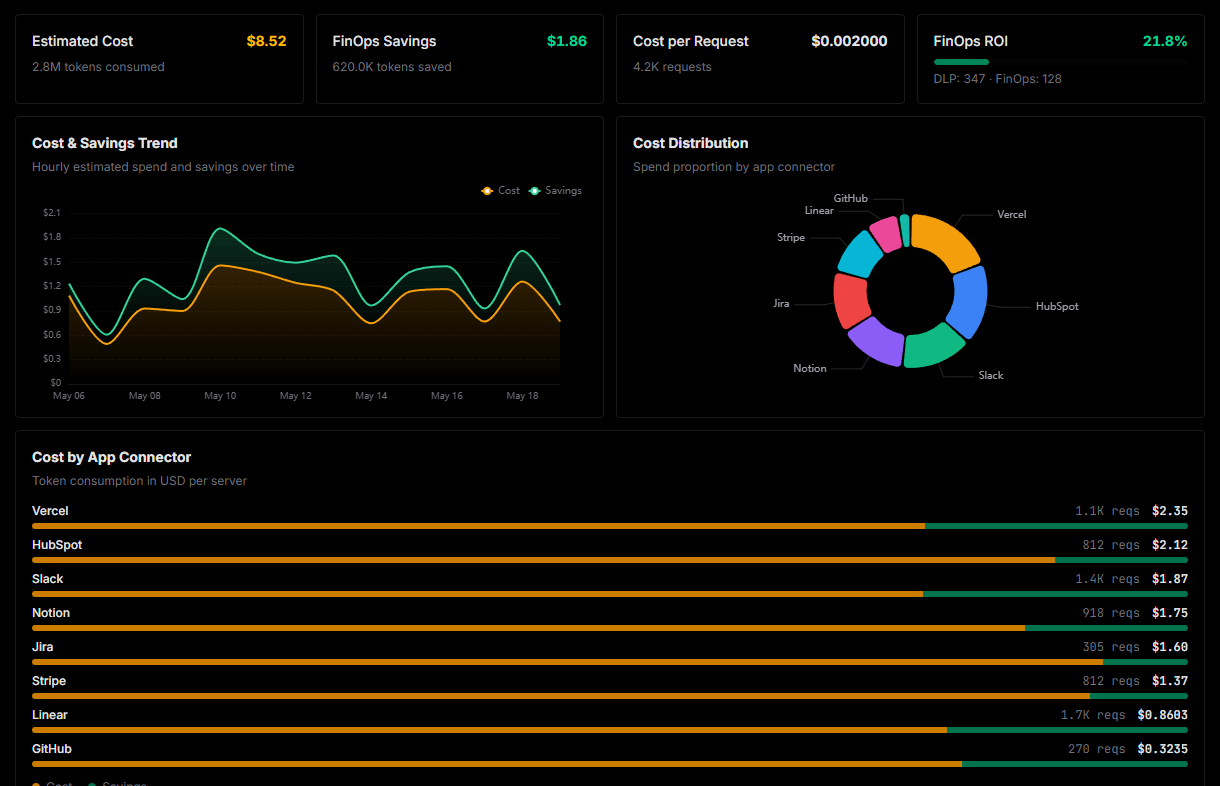
Explore our live AI Agents Analytics dashboard to see it all working
This dashboard is included when you connect HotDocs using Vinkius. You will never be left in the dark about what your AI agents are doing with your tools.
HotDocs and 4,000+ other AI tools. No hosting, no code, ready to use.
Professionals who connect HotDocs to Cursor through Vinkius don't need to write code, manage servers, or worry about security. Everything is pre-configured, secure, and runs automatically in the background.
Raw MCP | Vinkius | |
|---|---|---|
| Ready-to-use MCPs | Find and configure each manually | 4,000+ MCPs ready to use |
| Connection Setup | Manual coding & server setup | 1-click instant connection |
| Server Hosting | You host it yourself (needs 24/7 uptime) | 100% hosted & managed by Vinkius |
| Security & Privacy | Stored in plaintext config files | Bank-grade encrypted vault |
| Activity Visibility | Blind execution (no logs or tracking) | Live dashboard with real-time logs |
| Cost Control | Runaway AI token spend risk | Automatic budget limits |
| Revoking Access | Must delete files or code to stop | 1-click disconnect button |
How Vinkius secures
HotDocs for Cursor
Every request between Cursor and HotDocs is protected by our secure gateway. We automatically keep your sensitive data private, prevent unauthorized access, and let you disconnect instantly at any time.
Frequently asked questions
What credentials do I need to connect HotDocs Advance to this MCP server?
You need four pieces of information: (1) your Tenancy Moniker (the subdomain in your HotDocs URL, e.g., 'mycompany' from mycompany.hotdocsadvance.com), (2) the API Client Display Name you created in Manage API Credentials, (3) the Service Principal Name you added to that client, and (4) the Service Principal Password (which is shown only once during creation). All of these are obtained from the HotDocs Advance Auth portal.
Can I assemble documents automatically without going through the interview UI?
Yes! Use the create_work_item tool to initialize a work item, then use update_answers to inject your data as HotDocs answer XML, and finally call complete_assembly to trigger document generation. This fully automated bypasses the interactive interview UI entirely, perfect for batch processing or integrating with external data sources.
How do I find and download documents that have already been assembled?
Use the list_documents tool with your workItemId to see all assembled documents and their IDs. Then use get_document_content with the workItemId and documentId to retrieve the actual file content. The response includes both the raw content and a direct download URL for easy access to your PDFs or Word documents.
What is a work item and why is it important?
A work item is a unique container in HotDocs Advance that holds interview answers, template associations, and assembled documents for a specific case. Think of it as a 'file folder' for each document automation request. It's identified by a unique ID you assign (like 'contract-john-doe-2024') and persists all data so you can revisit, update, and reassemble documents at any time.
What is Agent mode and why does it matter for MCP?
Agent mode is Cursor's autonomous execution mode where the AI can perform multi-step tasks: reading files, editing code, running terminal commands, and calling MCP tools. Without Agent mode, Cursor operates in a simpler ask-and-answer mode that doesn't support tool calling. Always ensure you're in Agent mode when working with MCP servers.
Where does Cursor store MCP configuration?
Cursor looks for MCP server configurations in a mcp.json file. You can configure servers at the project level (.cursor/mcp.json in your project root) or globally (~/.cursor/mcp.json). Project-level configs take precedence.
Can Cursor use MCP tools in inline edits?
No. MCP tools are only available in Agent mode through the chat panel. Inline completions and Tab suggestions do not trigger MCP tool calls. This is by design. tool calls require user visibility and approval.
How do I verify MCP tools are loaded?
Open Settings → Features → MCP and look for your server name. A green indicator means the server is connected. You can also check Agent mode's available tools by clicking the tools dropdown in the chat panel.
Tools not appearing in Cursor
Ensure you are in Agent mode (not Ask mode). MCP tools only work in Agent mode.
Server shows as disconnected
Check Settings → Features → MCP and verify the server status. Try clicking the refresh button.
Explore More MCP Servers
View all →
FieldAware
12 toolsConnect FieldAware to automate field service management — manage jobs, customers, and invoices directly from your AI agent.

OpenDota
18 toolsExplore Dota 2 match data, player stats, heroes, teams and leagues — no API key required for basic access.

Winevybe
10 toolsAutomate sommelier intelligence via Winevybe — search global wine catalogs, check vineyard ratings, and manage virtual cellars directly from any AI agent.

Text Readability Scorer
1 toolsCalculate mathematically accurate readability metrics (Flesch-Kincaid, Gunning Fog, SMOG) for any text. Stop relying on AI 'feelings' — get exact US grade levels for SEO and compliance.