
Bring Traffic Data
to Cursor
Create your Vinkius account to connect Road511 to Cursor and start using all 8 AI tools in minutes. Fully managed, enterprise secure, and ready to use without writing a single line of code. No hosting, no server setup — just connect and start using.
 GDPR Free for Subscribers
Compatible with every major AI agent and IDE
 Gemini
What is the Road511 MCP Server?
Connect your Road511 real-time traffic data API to any AI agent and take full control of North American traffic monitoring, incident tracking, infrastructure awareness, and operational analytics through natural conversation.
What you can do
- Traffic Incidents — Track real-time incidents, construction, closures, special events, and weather advisories across all 50 US states and 13 Canadian provinces
- Traffic Cameras — Access live traffic camera feeds for visual traffic monitoring across North America
- Road Conditions — Check current road conditions, surface status, and weather impacts on roadways
- EV Charging — Find electric vehicle charging stations across the US and Canada for trip planning
- Rest Areas — Locate rest areas, weigh stations, and ferry terminals along major corridors
- Weather Stations — Access road-side weather station data for weather-aware routing
- Geospatial Mapping — Get all data in GeoJSON format for direct mapping and GIS integration
- Incident Analytics — Analyze traffic incident trends, resolution times, and operational metrics
- System Health — Monitor API health and data source status across 65 jurisdictions
How it works
- Subscribe to this server
- Enter your Road511 API key (free 14-day trial available)
- Start monitoring North American traffic from Claude, Cursor, or any MCP-compatible client
No more navigating multiple state 511 websites or manually checking traffic cameras. Your AI acts as a dedicated traffic analyst and route planning assistant.
Who is this for?
- Fleet Operators — monitor incidents, plan routes, and track road conditions for logistics optimization
- Daily Commuters — check traffic incidents and construction before heading out
- EV Drivers — find charging stations and plan electric vehicle trips
- Traffic Analysts — study incident trends, resolution metrics, and traffic pattern analytics
Built-in capabilities (8)
Returns average resolution times by incident type, severity, jurisdiction, and time period. Essential for operational efficiency analysis, resource planning, performance benchmarking, and understanding how quickly traffic incidents are resolved in different regions. AI agents should use this when users ask "what is the median resolution time for incidents in California", "how long do major incidents take to clear in Texas", or need performance metrics for traffic incident management analysis. Get incident resolution time metrics (P50/P95) for operational analysis
Returns event type, severity (minor, moderate, major, critical, info), jurisdiction, road affected, start and end times, lifecycle status, geometry (line/point), and detailed descriptions. Supports filtering by jurisdiction (e.g., CA), type (incidents, construction, closures, events, advisories), severity, road name, status, and geographic area (bbox, lat/lon/radius). Essential for real-time traffic awareness, route planning, delivery logistics, and commuter decision-making. AI agents should use this when users ask "what incidents are on I-405", "show construction in California", or need traffic event data for route optimization. Get traffic incidents, construction, closures, and events across US and Canada
Each feature contains event properties (type, severity, jurisdiction, road, times, status, descriptions) in the properties object and point/line geometry in the geometry object. Supports all the same filtering parameters as get_events. Essential for mapping applications, spatial analysis, GIS integration, and visualization dashboards. AI agents should use this when users need to plot traffic events on a map, perform spatial queries, or integrate with GeoJSON-based mapping tools. Get traffic events in GeoJSON format for mapping and spatial analysis
Returns type, jurisdiction, coordinates, status, and feature-specific details. Use when users ask about traffic cameras, EV chargers, rest areas, road conditions, or need infrastructure data for mapping. Get road infrastructure features including cameras, road conditions, weather stations, and more
Each feature includes properties (type, jurisdiction, status, camera URL, road condition, weather data, EV charger info) and point geometry. Supports all the same filtering parameters. Essential for mapping applications, GIS workflows, spatial databases, and visualization dashboards. AI agents should reference this when users need to plot infrastructure features on a map, integrate with GeoJSON tools, or perform spatial analysis on road infrastructure. Get road infrastructure features in GeoJSON format for mapping and GIS integration
Returns API availability, response times, data source connectivity (per jurisdiction), last update timestamps, and system alerts. Essential for monitoring API reliability, verifying data freshness, troubleshooting integration issues, and ensuring production system uptime. AI agents should use this as a diagnostic tool when users report missing data, when debugging integration issues, or as a periodic health check before making complex traffic data queries. Check API health and data source status
Returns event counts by type and severity, active camera counts, data source status (healthy, degraded, down), refresh rates, and data freshness indicators. Essential for data quality monitoring, system health checks, understanding data coverage by region, and verifying API reliability before production use. AI agents should use this when users ask "how many active incidents are there nationwide", "is the California data source healthy", or need a system-wide overview of Road511 data quality and coverage. Get summary statistics and data source health across all jurisdictions
Returns incident counts over time, severity distributions, trend directions (increasing, decreasing, stable), peak incident times, and comparative analysis between regions. Essential for traffic pattern analysis, operational planning, resource allocation, and understanding temporal traffic safety trends. AI agents should use this when users ask "are incidents increasing in Texas this week", "show me traffic incident trends for the past month", or need analytical data for traffic safety reporting. Get traffic incident trends and time-series analytics
Why Cursor?
Cursor's Agent mode turns Road511 into an in-editor superpower. Ask Cursor to generate code using live data from Road511 and it fetches, processes, and writes. all in a single agentic loop. 8 tools appear alongside file editing and terminal access, creating a unified development environment grounded in real-time information.
- —
Agent mode turns Cursor into an autonomous coding assistant that can read files, run commands, and call MCP tools without switching context
- —
Cursor's Composer feature can generate entire files using real-time data fetched through MCP. no copy-pasting from external dashboards
- —
MCP tools appear alongside built-in tools like file reading and terminal access, creating a unified agentic environment
- —
VS Code extension compatibility means your existing workflow, keybindings, and extensions all work alongside MCP tools
Road511 in Cursor
Why run Road511 with Vinkius?
The Road511 connection runs on our fully managed, secure cloud infrastructure. We handle the hosting, maintenance, and security so you don't have to deal with servers or code. All 8 tools are ready to work instantly without any complex setup.
You stay in complete control of your data. Your AI only accesses the information you approve, keeping your sensitive passwords and private details completely safe. Plus, with automatic optimizations, your AI works faster and more efficiently.
* Every connection is hosted and maintained by Vinkius. We handle the security, updates, and infrastructure so you don't have to write code or manage servers. See our infrastructure
Over 4,000 integrations ready for AI agents
Explore a vast library of pre-built integrations, optimized and ready to deploy.
Connect securely in under 30 seconds
Generate tokens to authenticate and link external services in a single step.
Complete visibility into every agent action
Audit live requests, latency, success rates, and active security compliance policies.
Optimize spending and track token ROI
Analyze real-time token consumption and cost metrics detailed by connection.
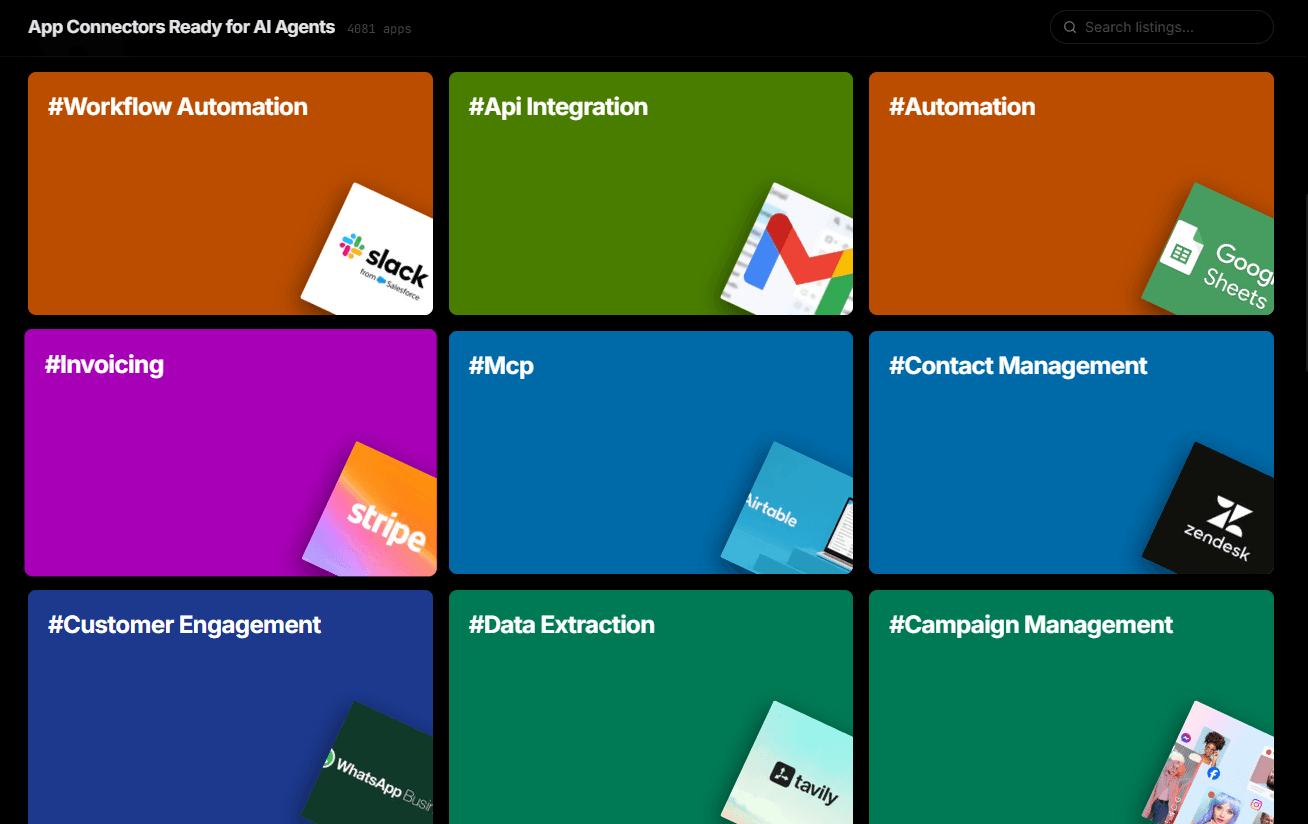
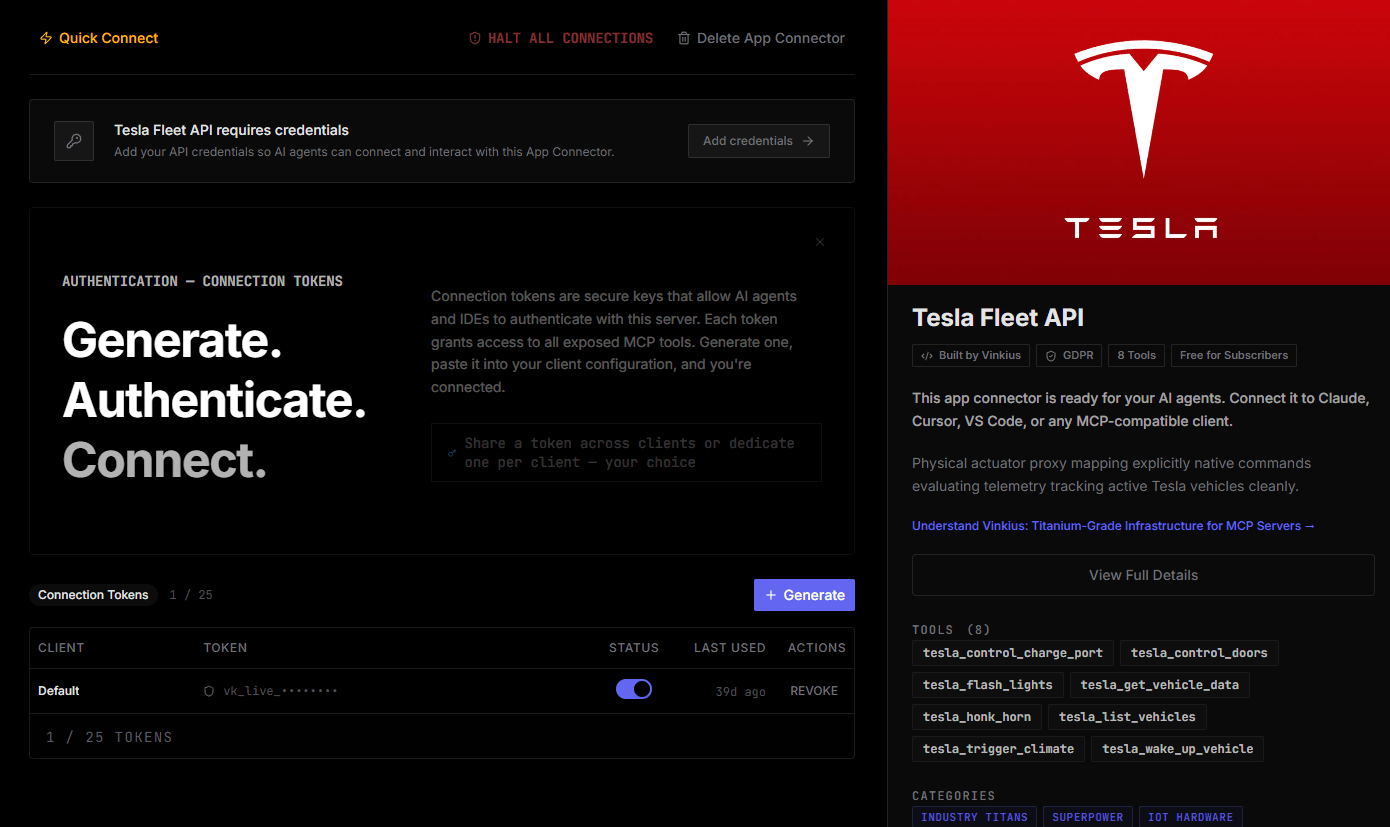
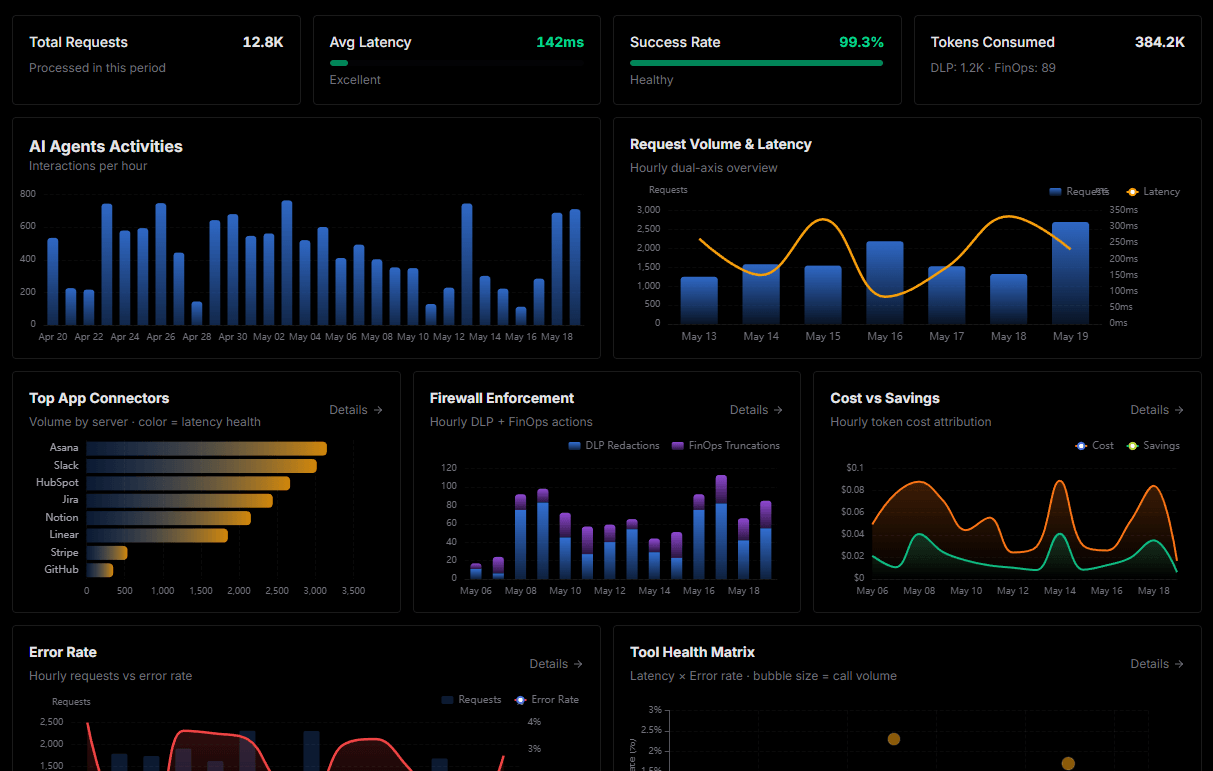
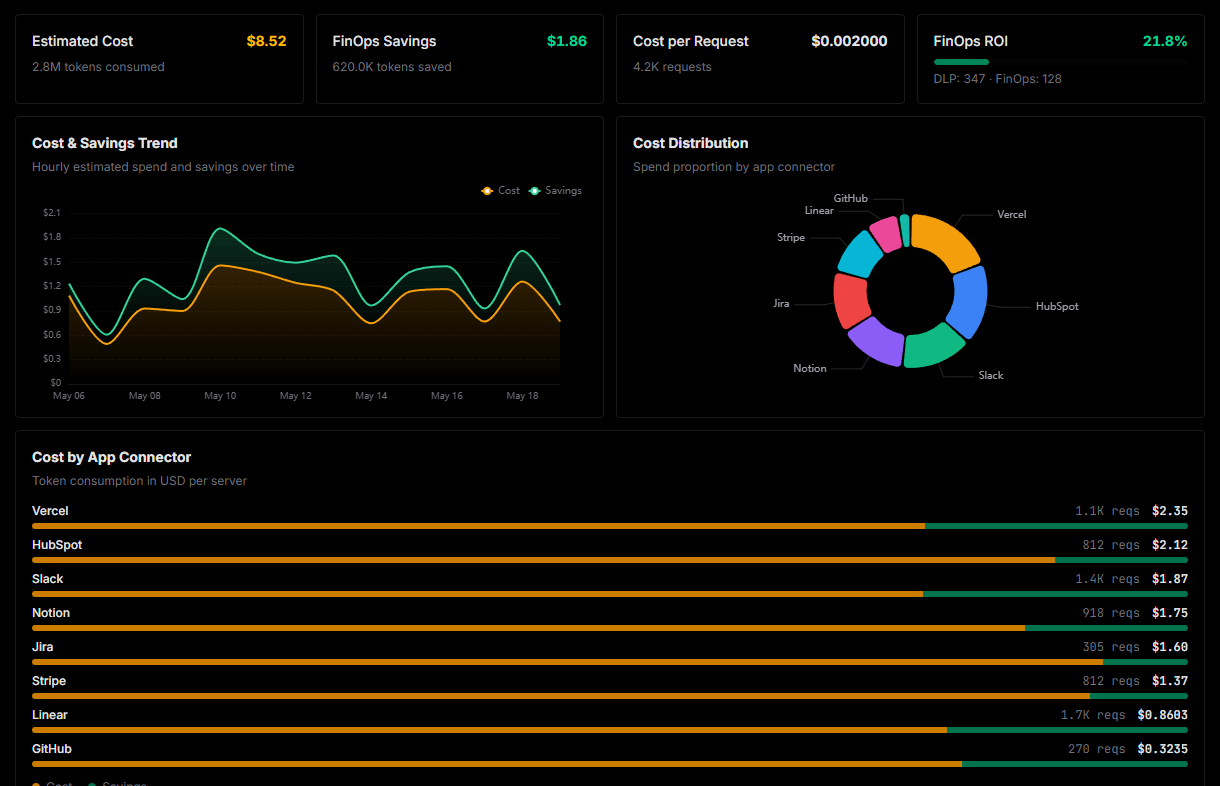
Explore our live AI Agents Analytics dashboard to see it all working
This dashboard is included when you connect Road511 using Vinkius. You will never be left in the dark about what your AI agents are doing with your tools.
Road511 and 4,000+ other AI tools. No hosting, no code, ready to use.
Professionals who connect Road511 to Cursor through Vinkius don't need to write code, manage servers, or worry about security. Everything is pre-configured, secure, and runs automatically in the background.
Raw MCP | Vinkius | |
|---|---|---|
| Ready-to-use MCPs | Find and configure each manually | 4,000+ MCPs ready to use |
| Connection Setup | Manual coding & server setup | 1-click instant connection |
| Server Hosting | You host it yourself (needs 24/7 uptime) | 100% hosted & managed by Vinkius |
| Security & Privacy | Stored in plaintext config files | Bank-grade encrypted vault |
| Activity Visibility | Blind execution (no logs or tracking) | Live dashboard with real-time logs |
| Cost Control | Runaway AI token spend risk | Automatic budget limits |
| Revoking Access | Must delete files or code to stop | 1-click disconnect button |
How Vinkius secures
Road511 for Cursor
Every request between Cursor and Road511 is protected by our secure gateway. We automatically keep your sensitive data private, prevent unauthorized access, and let you disconnect instantly at any time.
Frequently asked questions
Can my AI check for traffic incidents on a specific highway like I-405 in California?
Yes! Use the get_events tool with road=I-405 and jurisdiction=CA to filter incidents specifically on that highway. You can further filter by type (incidents, construction, closures) and severity (minor, moderate, major, critical). The results include incident descriptions, affected lanes, estimated clearance times, and alternate route suggestions. For mapping visualization, use get_events_geojson to get the same data in GeoJSON format ready for Mapbox or Leaflet.
How do I find traffic cameras and EV charging stations along my route?
Use the get_features tool with type=cameras to find all traffic cameras in a jurisdiction, or type=ev_chargers for EV charging stations. You can filter by bounding box (bbox) or by radius from a lat/lon point. For mapping applications, use get_features_geojson which returns data in GeoJSON format ready for direct integration with mapping libraries. Camera features include live stream URLs and road conditions include surface status and weather impacts.
Can I analyze traffic incident trends to understand if traffic is getting worse in my state?
Absolutely! Use get_trends with your jurisdiction code (e.g., jurisdiction=CA for California) to get time-series incident data showing whether incidents are increasing, decreasing, or stable over time. Use get_clearance to understand how quickly incidents are being resolved (P50 median and P95 resolution times). Combined with get_summary for current snapshot data, you can build comprehensive traffic safety and efficiency reports. This is perfect for transportation planning, resource allocation, and operational performance benchmarking.
What is Agent mode and why does it matter for MCP?
Agent mode is Cursor's autonomous execution mode where the AI can perform multi-step tasks: reading files, editing code, running terminal commands, and calling MCP tools. Without Agent mode, Cursor operates in a simpler ask-and-answer mode that doesn't support tool calling. Always ensure you're in Agent mode when working with MCP servers.
Where does Cursor store MCP configuration?
Cursor looks for MCP server configurations in a mcp.json file. You can configure servers at the project level (.cursor/mcp.json in your project root) or globally (~/.cursor/mcp.json). Project-level configs take precedence.
Can Cursor use MCP tools in inline edits?
No. MCP tools are only available in Agent mode through the chat panel. Inline completions and Tab suggestions do not trigger MCP tool calls. This is by design. tool calls require user visibility and approval.
How do I verify MCP tools are loaded?
Open Settings → Features → MCP and look for your server name. A green indicator means the server is connected. You can also check Agent mode's available tools by clicking the tools dropdown in the chat panel.
Tools not appearing in Cursor
Ensure you are in Agent mode (not Ask mode). MCP tools only work in Agent mode.
Server shows as disconnected
Check Settings → Features → MCP and verify the server status. Try clicking the refresh button.
Explore More MCP Servers
View all →
TeleSign
10 toolsVerify user identities with phone number intelligence, SMS verification, and risk scoring that prevents fraud at sign-up.

Zenodo
14 toolsManage scientific research and datasets on Zenodo—create depositions, upload files, and search records directly from your AI agent.

Iterable
10 toolsManage cross-channel marketing campaigns, users, and templates via Iterable API.

New Relic
10 toolsMonitor and query your entire stack via New Relic NerdGraph — track entities, NRQL, and alerts directly from your AI agent.