
Bring Carbon Accounting
to Cursor
Create your Vinkius account to connect Watershed Climate to Cursor and start using all 16 AI tools in minutes. Fully managed, enterprise secure, and ready to use without writing a single line of code. No hosting, no server setup — just connect and start using.
 GDPR Free for Subscribers
Compatible with every major AI agent and IDE
 Gemini
What is the Watershed Climate MCP Server?
Connect your Watershed Climate organization to any AI agent and take full control of your carbon measurement, reporting, and reduction workflows through natural conversation.
What you can do
- Data Uploads — Create upload containers, add activity data records (electricity, travel, shipping), and validate data quality
- Batch Data Ingestion — Upload multiple activity records in batch with proper formatting and emission factor mapping
- GHG Inventories — List and inspect greenhouse gas inventories with Scope 1, 2, and 3 emissions breakdowns
- Emissions Measurements — Query calculated carbon footprint measurements filtered by inventory or year
- Processing Tasks — Monitor async processing tasks from upload submissions with real-time status checks
- Reports & Disclosures — List and access generated sustainability reports (CDP, TCFD, custom formats)
- Reduction Targets — View configured emissions reduction targets aligned with SBTi and net-zero commitments
How it works
- Subscribe to this server
- Enter your Watershed API Key from dashboard.watershedclimate.com
- Start managing your climate program from Claude, Cursor, or any MCP-compatible client
No more manual CSV uploads or navigating complex dashboards. Your AI acts as a dedicated sustainability analyst or carbon accounting specialist.
Who is this for?
- Sustainability Teams — instantly upload activity data, validate uploads, and check inventory results without opening the Watershed dashboard
- ESG Analysts — query emissions measurements and reduction targets directly to generate carbon footprint insights
- Operations & Supply Chain — automate batch data ingestion for electricity, travel, and logistics emissions tracking
- Climate Leads — monitor processing tasks and report generation status across multiple organizational inventories
Built-in capabilities (16)
An upload is required before you can add data records to Watershed. After creating an upload, you add data records to it, validate the data, and then submit it for processing. The upload acts as a batch grouping mechanism for related activity data. You can optionally provide a name and description to identify the upload purpose. Create a new data upload container in Watershed
Use this to remove incorrect or unwanted data before validating and submitting the upload. This action cannot be undone. The record_id is obtained from list_upload_data_records. Delete a specific data record from an upload
Use the inventory_id from list_inventories to inspect detailed carbon footprint results and understand your organization's emissions composition. Get detailed information about a specific GHG inventory
Use the report_id from list_reports to access the full report details including generated files, disclosure frameworks covered, and emissions data summarized. Reports are typically generated after inventories are complete and validated. Get detailed information about a specific report
When you submit an upload for processing, a task is created and returns a task_id. Use this tool to check if the processing is complete, still in progress, or failed. Task status is useful for monitoring large data submissions that may take time to process. Check status of a processing task (e.g., upload submission)
Use the upload_id from list_uploads to inspect details before adding data or submitting for validation. Get details of a specific data upload
An inventory represents your organization's carbon footprint measurement for a specific year, containing Scope 1 (direct), Scope 2 (energy), and Scope 3 (value chain) emissions data. Each inventory has a year, status, and total emissions calculated from submitted activity data. List all GHG inventories in your Watershed organization
Measurements represent the actual carbon footprint values derived from your uploaded activity data. You can filter by inventory_id to see measurements for a specific year's inventory, or by year to see measurements across all inventories for that year. Each measurement includes the activity type, emission factor used, and calculated CO2e value. List emissions measurements with optional filters
Reduction targets define your organization's goals for decreasing emissions over time, often aligned with Science Based Targets initiative (SBTi) or net-zero commitments. Each target includes baseline year, target year, reduction percentage, and progress tracking. List all emissions reduction targets configured in your organization
Reports are formatted outputs of your climate data for disclosure, analysis, or internal review. Reports can include CDP disclosures, TCFD reports, or custom carbon footprint summaries. Each report has metadata about its type, generation date, and scope. List all available reports in your Watershed organization
Each record contains the activity data that will be processed into emissions measurements. Use this to review the data before validating and submitting the upload. List all data records in a specific upload
Uploads are containers for activity data that will be validated and processed into emissions measurements. Each upload can contain multiple data records representing activities like electricity usage, flights, or shipping. Use this to see all existing uploads and their IDs before adding data or submitting for processing. List all data uploads in your Watershed organization
This triggers Watershed's calculation engine to convert activity data into emissions measurements using appropriate emission factors. The upload must be validated successfully before submission. The response includes a task_id that can be used to track processing status via get_task_status. Processing may take some time depending on data volume. Submit a validated upload for emissions processing
Use this to correct errors or modify activity data before validation and submission. The record_id is obtained from list_upload_data_records. The body should contain the complete updated record object with all required fields. Update a specific data record in an upload
Each record represents an activity that generates emissions (e.g., electricity consumption, business travel, shipping). Records should follow Watershed's data format with fields like: activity_type, quantity, unit, start_date, end_date, location, etc. You can upload a single record or multiple records in a batch by providing an array of objects. Example record: { "activity_type": "electricity", "quantity": 1500, "unit": "kWh", "start_date": "2024-01-01", "end_date": "2024-01-31" } Upload activity data records to an existing upload container
Validation ensures data quality and prevents rejection during the submission phase. The response includes validation results with any errors or warnings that need to be addressed. Always validate before submitting to ensure successful processing. Validate data in an upload before submission
Why Cursor?
Cursor's Agent mode turns Watershed Climate into an in-editor superpower. Ask Cursor to generate code using live data from Watershed Climate and it fetches, processes, and writes. all in a single agentic loop. 16 tools appear alongside file editing and terminal access, creating a unified development environment grounded in real-time information.
- —
Agent mode turns Cursor into an autonomous coding assistant that can read files, run commands, and call MCP tools without switching context
- —
Cursor's Composer feature can generate entire files using real-time data fetched through MCP. no copy-pasting from external dashboards
- —
MCP tools appear alongside built-in tools like file reading and terminal access, creating a unified agentic environment
- —
VS Code extension compatibility means your existing workflow, keybindings, and extensions all work alongside MCP tools
Watershed Climate in Cursor
Why run Watershed Climate with Vinkius?
The Watershed Climate connection runs on our fully managed, secure cloud infrastructure. We handle the hosting, maintenance, and security so you don't have to deal with servers or code. All 16 tools are ready to work instantly without any complex setup.
You stay in complete control of your data. Your AI only accesses the information you approve, keeping your sensitive passwords and private details completely safe. Plus, with automatic optimizations, your AI works faster and more efficiently.
* Every connection is hosted and maintained by Vinkius. We handle the security, updates, and infrastructure so you don't have to write code or manage servers. See our infrastructure
Over 4,000 integrations ready for AI agents
Explore a vast library of pre-built integrations, optimized and ready to deploy.
Connect securely in under 30 seconds
Generate tokens to authenticate and link external services in a single step.
Complete visibility into every agent action
Audit live requests, latency, success rates, and active security compliance policies.
Optimize spending and track token ROI
Analyze real-time token consumption and cost metrics detailed by connection.
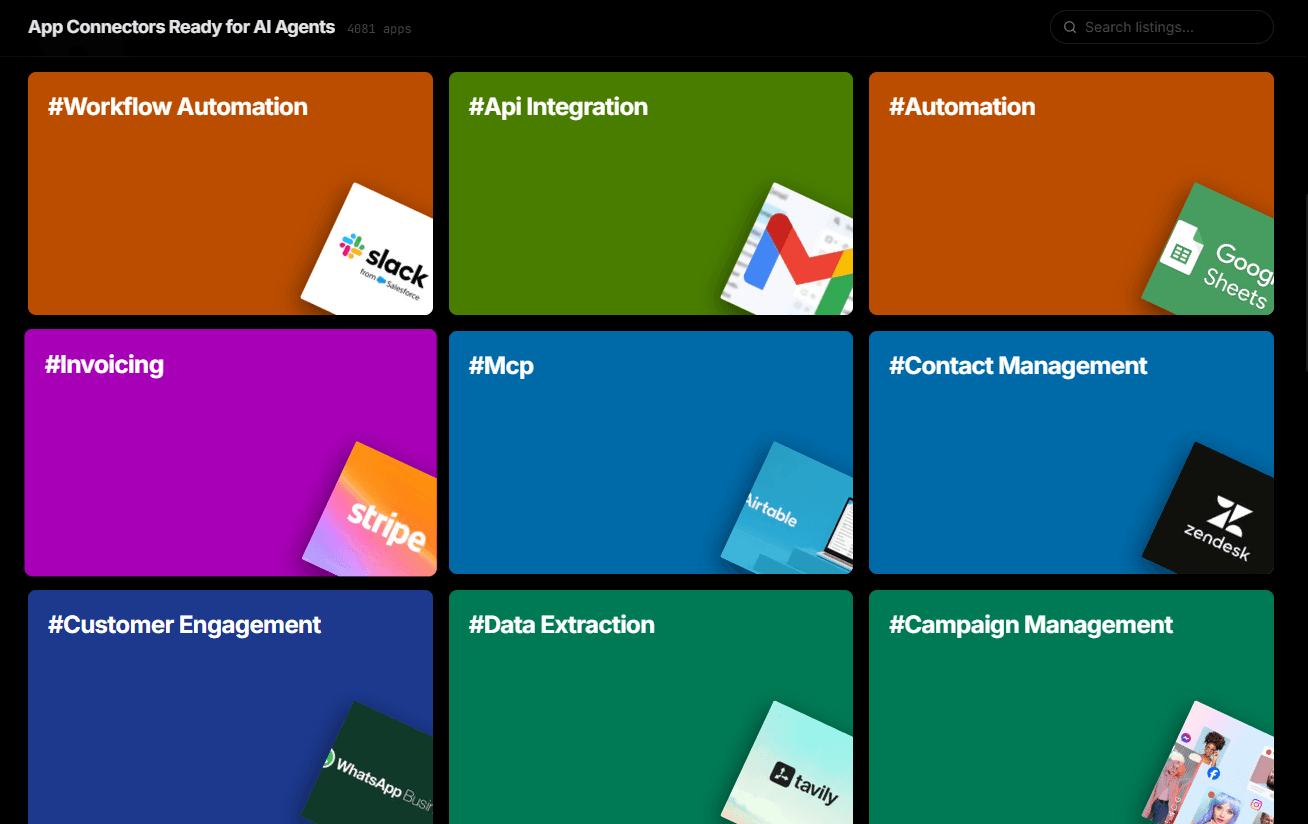
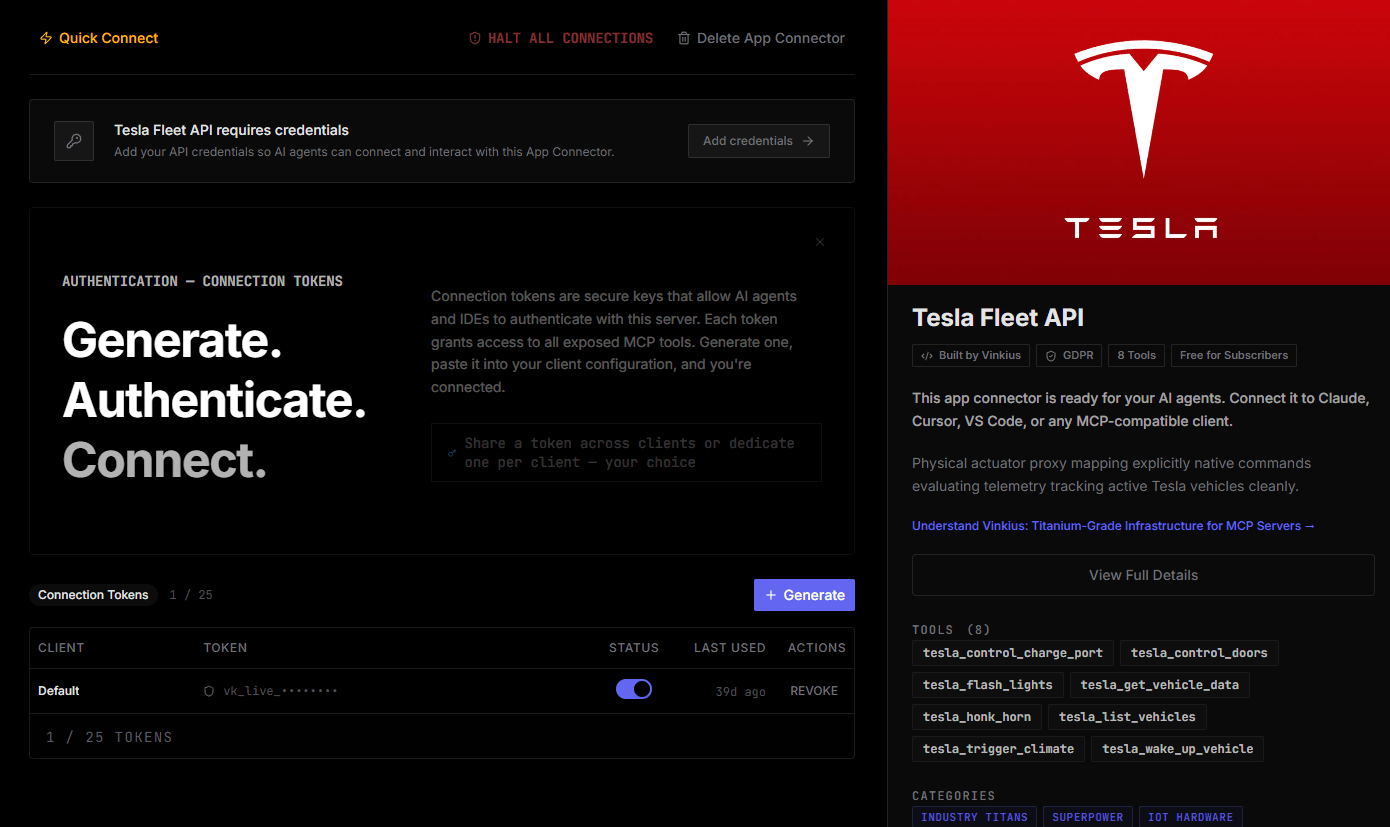
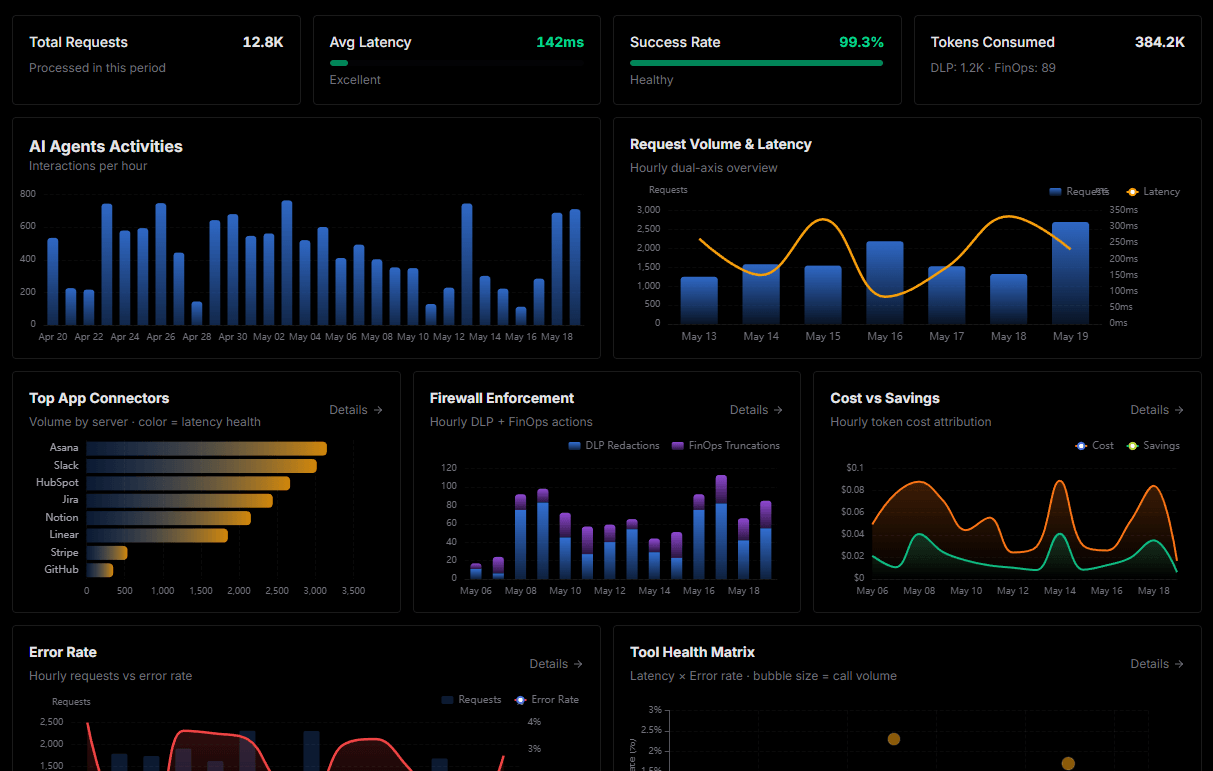
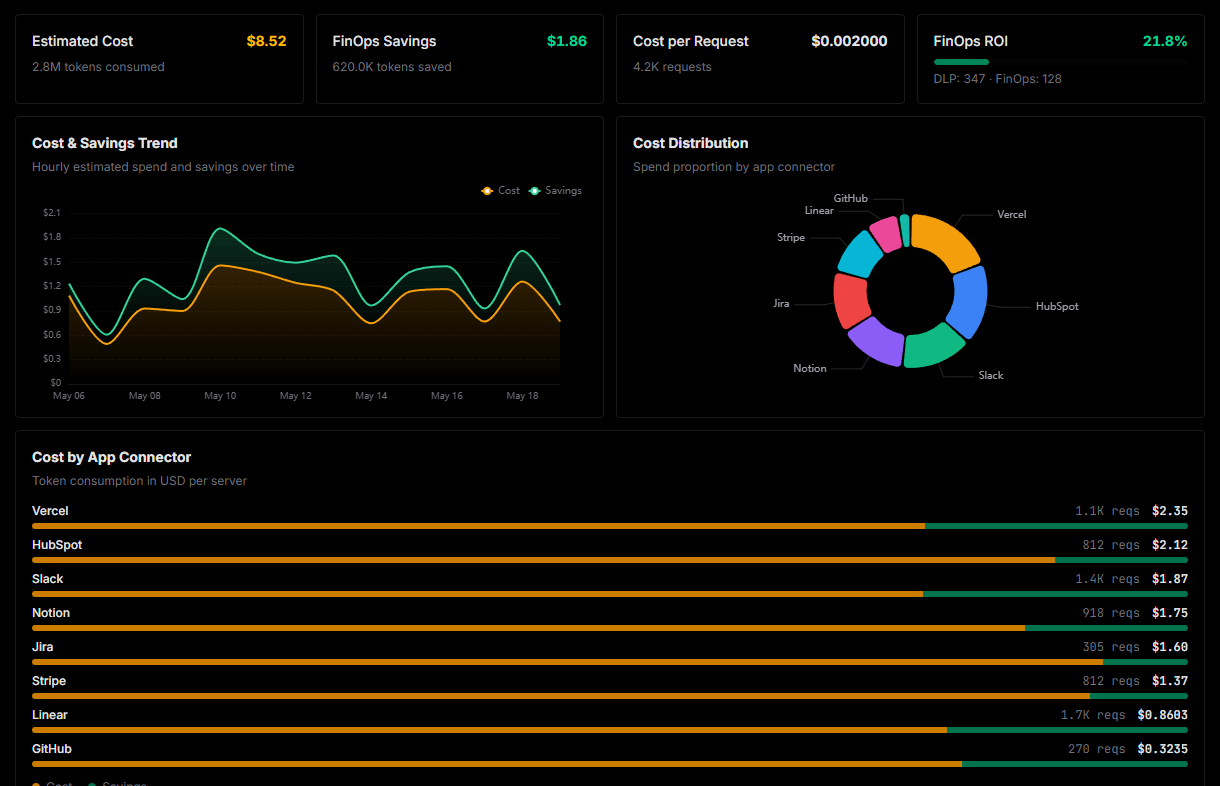
Explore our live AI Agents Analytics dashboard to see it all working
This dashboard is included when you connect Watershed Climate using Vinkius. You will never be left in the dark about what your AI agents are doing with your tools.
Watershed Climate and 4,000+ other AI tools. No hosting, no code, ready to use.
Professionals who connect Watershed Climate to Cursor through Vinkius don't need to write code, manage servers, or worry about security. Everything is pre-configured, secure, and runs automatically in the background.
Raw MCP | Vinkius | |
|---|---|---|
| Ready-to-use MCPs | Find and configure each manually | 4,000+ MCPs ready to use |
| Connection Setup | Manual coding & server setup | 1-click instant connection |
| Server Hosting | You host it yourself (needs 24/7 uptime) | 100% hosted & managed by Vinkius |
| Security & Privacy | Stored in plaintext config files | Bank-grade encrypted vault |
| Activity Visibility | Blind execution (no logs or tracking) | Live dashboard with real-time logs |
| Cost Control | Runaway AI token spend risk | Automatic budget limits |
| Revoking Access | Must delete files or code to stop | 1-click disconnect button |
How Vinkius secures
Watershed Climate for Cursor
Every request between Cursor and Watershed Climate is protected by our secure gateway. We automatically keep your sensitive data private, prevent unauthorized access, and let you disconnect instantly at any time.
Frequently asked questions
What is the workflow to upload activity data and get emissions calculated in Watershed?
The complete workflow is: (1) Use create_upload to create an upload container, (2) Use upload_data_records to add your activity data records (electricity, flights, shipping, etc.), (3) Use validate_upload to check data quality and fix any errors, (4) Use submit_upload to send data for emissions calculation, (5) Use get_task_status with the returned task_id to monitor processing. Once complete, your measurements appear in the inventory.
Can I check my organization's total carbon footprint for a specific year?
Yes! Use list_inventories to find your organization's GHG inventories by year. Then use get_inventory with the specific inventory_id to see the complete emissions breakdown by Scope 1 (direct), Scope 2 (energy), and Scope 3 (value chain). You can also use list_measurements with the year filter to see individual measurement details across all inventories.
Where do I find my Watershed API key and how do I generate one?
Log in to your Watershed dashboard at dashboard.watershedclimate.com, navigate to Organization Settings in the left menu, then go to the API section. Click to generate a new API key. Copy and save this key immediately — it won't be shown again. The key typically starts with wh_. Keep it secure as it provides full access to your organization's climate data.
What types of activity data can I upload to Watershed?
Watershed accepts a wide range of activity data including: electricity and energy consumption (kWh, therms), business travel (flights, hotels, rental cars), employee commuting, freight and shipping (ton-miles, kg-km), waste generated, water usage, and purchased goods/services. Each record needs fields like activity_type, quantity, unit, start_date, end_date, and optionally location and spend_amount for accurate emissions calculation.
What is Agent mode and why does it matter for MCP?
Agent mode is Cursor's autonomous execution mode where the AI can perform multi-step tasks: reading files, editing code, running terminal commands, and calling MCP tools. Without Agent mode, Cursor operates in a simpler ask-and-answer mode that doesn't support tool calling. Always ensure you're in Agent mode when working with MCP servers.
Where does Cursor store MCP configuration?
Cursor looks for MCP server configurations in a mcp.json file. You can configure servers at the project level (.cursor/mcp.json in your project root) or globally (~/.cursor/mcp.json). Project-level configs take precedence.
Can Cursor use MCP tools in inline edits?
No. MCP tools are only available in Agent mode through the chat panel. Inline completions and Tab suggestions do not trigger MCP tool calls. This is by design. tool calls require user visibility and approval.
How do I verify MCP tools are loaded?
Open Settings → Features → MCP and look for your server name. A green indicator means the server is connected. You can also check Agent mode's available tools by clicking the tools dropdown in the chat panel.
Tools not appearing in Cursor
Ensure you are in Agent mode (not Ask mode). MCP tools only work in Agent mode.
Server shows as disconnected
Check Settings → Features → MCP and verify the server status. Try clicking the refresh button.
Explore More MCP Servers
View all →
DeepL
14 toolsTranslate text between 30+ languages with neural machine translation that captures nuance and tone better than generic engines.

Notion
10 toolsUnified AI interface for your Notion workspace — search pages, query databases, and manage blocks via AI.
New Relic
10 toolsMonitor and query your entire stack via New Relic NerdGraph — track entities, NRQL, and alerts directly from your AI agent.

ScreenshotAPI
12 toolsCapture full-page website screenshots programmatically with custom viewport sizes, delays, and rendering options via a simple API.