
Bring Web3
to Google ADK
Learn how to connect QuickNode to Google ADK and start using 18 AI agent tools in minutes. Fully managed, enterprise secure, and ready to use without writing a single line of code.
 GDPR Free for Subscribers
Compatible with every major AI agent and IDE
 Gemini
What is the QuickNode MCP Server?
Connect your QuickNode account to any AI agent to orchestrate Web3 infrastructure through natural language. This server provides a comprehensive suite of tools to manage high-performance blockchain data pipelines and queries.
What you can do
- Streams Management — Create, list, and update real-time data streams for historical and live blockchain ingestion using
create_streamandlist_streams. - Webhooks — Deploy webhooks from templates (like EVM wallet filters or contract events) to deliver real-time events to your HTTP endpoints via
create_webhook. - KV Store — Manage key-value pairs and lists to power advanced server-side filtering logic for your streams using
create_kv_listandcreate_kv_set. - Core RPC — Access fundamental blockchain data, such as retrieving the most recent block number using
rpc_eth_blocknumber.
How it works
- Subscribe to this server
- Provide your QuickNode API Key and RPC URL
- Start building and monitoring your Web3 infrastructure from Claude, Cursor, or any MCP client
Who is this for?
- Web3 Developers — Rapidly prototype and manage data pipelines without leaving the terminal or IDE.
- Data Engineers — Orchestrate complex blockchain data ingestion workflows using natural language commands.
- DevOps Teams — Monitor and update infrastructure configurations, webhooks, and streams on the fly.
Built-in capabilities (18)
Create a new KV Store list
Create a KV Store key-value pair
Create a new QuickNode stream
Create a webhook from a template
Delete a KV Store key-value pair
Delete a QuickNode stream
Delete a QuickNode webhook
Retrieve items from a KV Store list
Retrieve a value from KV Store sets
Retrieve details of a specific QuickNode stream
List all active QuickNode streams
Retrieve all QuickNode webhooks
Returns the number of the most recent block
Executes a new message call immediately without creating a transaction
Returns an array of all logs matching a given filter object
Returns the receipt of a transaction by hash
Add or remove items from a KV Store list
Update an existing QuickNode stream
Why Google ADK?
Google ADK natively supports QuickNode as an MCP tool provider. declare Vinkius Edge URL and the framework handles discovery, validation, and execution automatically. Combine 18 tools with Gemini's long-context reasoning for complex multi-tool workflows, with production-ready session management and evaluation built in.
- —
Google ADK natively supports MCP tool servers. declare a tool provider and the framework handles discovery, validation, and execution
- —
Built on Gemini models, ADK provides long-context reasoning ideal for complex multi-tool workflows with QuickNode
- —
Production-ready features like session management, evaluation, and deployment come built-in. not bolted on
- —
Seamless integration with Google Cloud services means you can combine QuickNode tools with BigQuery, Vertex AI, and Cloud Functions
QuickNode in Google ADK
QuickNode and 4,000+ other MCP servers. One platform. One governance layer.
Teams that connect QuickNode to Google ADK through Vinkius don't need to source, host, or maintain individual MCP servers. Every tool call runs inside a hardened runtime with credential isolation, DLP, and a signed audit chain.
Raw MCP | Vinkius | |
|---|---|---|
| Server catalog | Find and host yourself | 4,000+ managed |
| Infrastructure | Self-hosted | Sandboxed V8 isolates |
| Credential handling | Plaintext in config | Vault + runtime injection |
| Data loss prevention | None | Configurable DLP policies |
| Kill switch | None | Global instant shutdown |
| Financial circuit breakers | None | Per-server limits + alerts |
| Audit trail | None | Ed25519 signed logs |
| SIEM log streaming | None | Splunk, Datadog, Webhook |
| Honeytokens | None | Canary alerts on leak |
| Custom domains | Not applicable | DNS challenge verified |
| GDPR compliance | Manual effort | Automated purge + export |
Why teams choose Vinkius for QuickNode in Google ADK
The QuickNode MCP Server runs on Vinkius-managed infrastructure inside AWS — a purpose-built runtime with per-request V8 isolates, Ed25519 signed audit chains, and sub-40ms cold starts. All 18 tools execute in hardened sandboxes optimized for native MCP execution.
Your AI agents in Google ADK only access the data you authorize, with DLP that blocks sensitive information from ever reaching the model, kill switch for instant shutdown, and up to 60% token savings. Enterprise-grade infrastructure, zero maintenance.
* Every MCP server runs on Vinkius-managed infrastructure inside AWS - a purpose-built runtime with per-request V8 isolates, Ed25519 signed audit chains, and sub-40ms cold starts optimized for native MCP execution. See our infrastructure
How Vinkius secures
QuickNode for Google ADK
Every tool call from Google ADK to the QuickNode MCP Server is protected by DLP redaction, cryptographic audit chains, V8 sandbox isolation, kill switch, and financial circuit breakers.
Frequently asked questions
How do I check the current block height on Ethereum?
You can use the rpc_eth_blocknumber tool. It will return the most recent block number from the blockchain network connected to your RPC URL.
Can I create a stream to monitor specific blockchain datasets?
Yes, use the create_stream tool. You can specify the dataset (e.g., 'block', 'traces') and the destination (e.g., 'webhook', 's3') to start ingesting data immediately.
How do I manage lists for my stream filters?
Use the create_kv_list tool to initialize a list and update_kv_list to add or remove items. These lists can be referenced in your Streams JavaScript filter functions.
How does Google ADK connect to MCP servers?
Import the MCP toolset class and pass the server URL. ADK discovers and registers all tools automatically, making them available to your agent's tool-use loop.
Can ADK agents use multiple MCP servers?
Yes. Declare multiple MCP tool providers in your agent configuration. ADK merges all tool schemas and the agent can call tools from any server in a single turn.
Which Gemini models work best with MCP tools?
Gemini 2.0 Flash and Pro models both support function calling required for MCP tools. Flash is recommended for latency-sensitive use cases, Pro for complex reasoning.
McpToolset not found
Update: pip install --upgrade google-adk
Explore More MCP Servers
View all →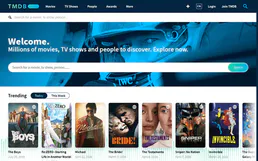
The Movie Database (TMDb)
15 toolsSearch movies, TV shows, people, get details, cast, trailers, and discover content via TMDb API.
Temu Seller Hub
12 toolsAutomate cross-border e-commerce ops via Temu — manage orders, track fulfillment, sync inventory, and process returns natively from any AI agent.
JD Cloud Infrastructure
11 toolsManage JD Cloud supply-chain infrastructure from your AI. Control VMs, disks, databases, and monitor resource metrics.
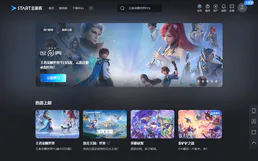
Tencent START
11 toolsOrchestrate Tencent START Cloud Gaming (GS) — manage server sessions, monitor workers, and scale capacity directly from any AI agent.