
Bring Cross Validation
to LangChain
Learn how to connect K-Fold Split Engine to LangChain and start using 1 AI agent tools in minutes. Fully managed, enterprise secure, and ready to use without writing a single line of code.
 GDPR Free for Subscribers
Compatible with every major AI agent and IDE
 Gemini
What is the K-Fold Split Engine MCP Server?
Data leakage is the silent killer of predictive models. Entrusting an LLM to randomly partition large arrays into training and testing sets is highly inefficient and risky due to context limitations. This dedicated split engine deterministically generates exact K-Fold cross-validation indices. By handling the intensive shuffling and partitioning logic natively, it ensures your data remains completely untainted and mathematically robust, providing a safe foundation for automated model validation.
Built-in capabilities (1)
Generates exact K-Fold cross-validation indices for train/test splits
Why LangChain?
LangChain's ecosystem of 500+ components combines seamlessly with K-Fold Split Engine through native MCP adapters. Connect 1 tools via Vinkius and use ReAct agents, Plan-and-Execute strategies, or custom agent architectures. with LangSmith tracing giving full visibility into every tool call, latency, and token cost.
- —
The largest ecosystem of integrations, chains, and agents. combine K-Fold Split Engine MCP tools with 500+ LangChain components
- —
Agent architecture supports ReAct, Plan-and-Execute, and custom strategies with full MCP tool access at every step
- —
LangSmith tracing gives you complete visibility into tool calls, latencies, and token usage for production debugging
- —
Memory and conversation persistence let agents maintain context across K-Fold Split Engine queries for multi-turn workflows
K-Fold Split Engine in LangChain
K-Fold Split Engine and 4,000+ other MCP servers. One platform. One governance layer.
Teams that connect K-Fold Split Engine to LangChain through Vinkius don't need to source, host, or maintain individual MCP servers. Every tool call runs inside a hardened runtime with credential isolation, DLP, and a signed audit chain.
Raw MCP | Vinkius | |
|---|---|---|
| Server catalog | Find and host yourself | 4,000+ managed |
| Infrastructure | Self-hosted | Sandboxed V8 isolates |
| Credential handling | Plaintext in config | Vault + runtime injection |
| Data loss prevention | None | Configurable DLP policies |
| Kill switch | None | Global instant shutdown |
| Financial circuit breakers | None | Per-server limits + alerts |
| Audit trail | None | Ed25519 signed logs |
| SIEM log streaming | None | Splunk, Datadog, Webhook |
| Honeytokens | None | Canary alerts on leak |
| Custom domains | Not applicable | DNS challenge verified |
| GDPR compliance | Manual effort | Automated purge + export |
Why teams choose Vinkius for K-Fold Split Engine in LangChain
The K-Fold Split Engine MCP Server runs on Vinkius-managed infrastructure inside AWS — a purpose-built runtime with per-request V8 isolates, Ed25519 signed audit chains, and sub-40ms cold starts. All 1 tools execute in hardened sandboxes optimized for native MCP execution.
Your AI agents in LangChain only access the data you authorize, with DLP that blocks sensitive information from ever reaching the model, kill switch for instant shutdown, and up to 60% token savings. Enterprise-grade infrastructure, zero maintenance.
* Every MCP server runs on Vinkius-managed infrastructure inside AWS - a purpose-built runtime with per-request V8 isolates, Ed25519 signed audit chains, and sub-40ms cold starts optimized for native MCP execution. See our infrastructure
How Vinkius secures
K-Fold Split Engine for LangChain
Every tool call from LangChain to the K-Fold Split Engine MCP Server is protected by DLP redaction, cryptographic audit chains, V8 sandbox isolation, kill switch, and financial circuit breakers.
Frequently asked questions
Why does it return indices instead of data?
Passing massive data payloads back and forth wastes LLM tokens. Returning lightweight index arrays is incredibly fast and resource-efficient.
Does it guarantee randomized fairness?
Yes, advanced internal shuffling mechanisms guarantee that your K partitions are entirely unbiased before the split occurs.
Can it handle chronological time-series?
Absolutely. Simply disable the shuffling parameter, and the engine will slice the data linearly, perfectly respecting time-based ordering.
How does LangChain connect to MCP servers?
Use langchain-mcp-adapters to create an MCP client. LangChain discovers all tools and wraps them as native LangChain tools compatible with any agent type.
Which LangChain agent types work with MCP?
All agent types including ReAct, OpenAI Functions, and custom agents work with MCP tools. The tools appear as standard LangChain tools after the adapter wraps them.
Can I trace MCP tool calls in LangSmith?
Yes. All MCP tool invocations appear as traced steps in LangSmith, showing input parameters, response payloads, latency, and token usage.
MultiServerMCPClient not found
Install: pip install langchain-mcp-adapters
Explore More MCP Servers
View all →
Five9
11 toolsMonitor agents, manage call states, and track real-time contact center stats via AI agents with Five9.
Chattermill
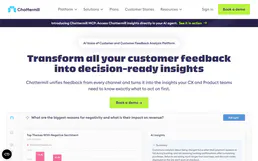
11 toolsAnalyze customer feedback and sentiment via Chattermill — track AI-powered themes, monitor NPS and CSAT, and unify feedback from every channel directly from any AI agent.

Tradier
13 toolsTrade equities and options, fetch real-time market data, and manage your brokerage accounts directly through any AI agent.

Headscale (Tailscale Alternative)
18 toolsManage your private Tailscale network via Headscale — control users, nodes, and pre-auth keys directly from your AI agent.