
Bring Pdb
to Mastra AI
Learn how to connect EBI PDBe to Mastra AI and start using 16 AI agent tools in minutes. Fully managed, enterprise secure, and ready to use without writing a single line of code.
 GDPR Free for Subscribers
Compatible with every major AI agent and IDE
 Gemini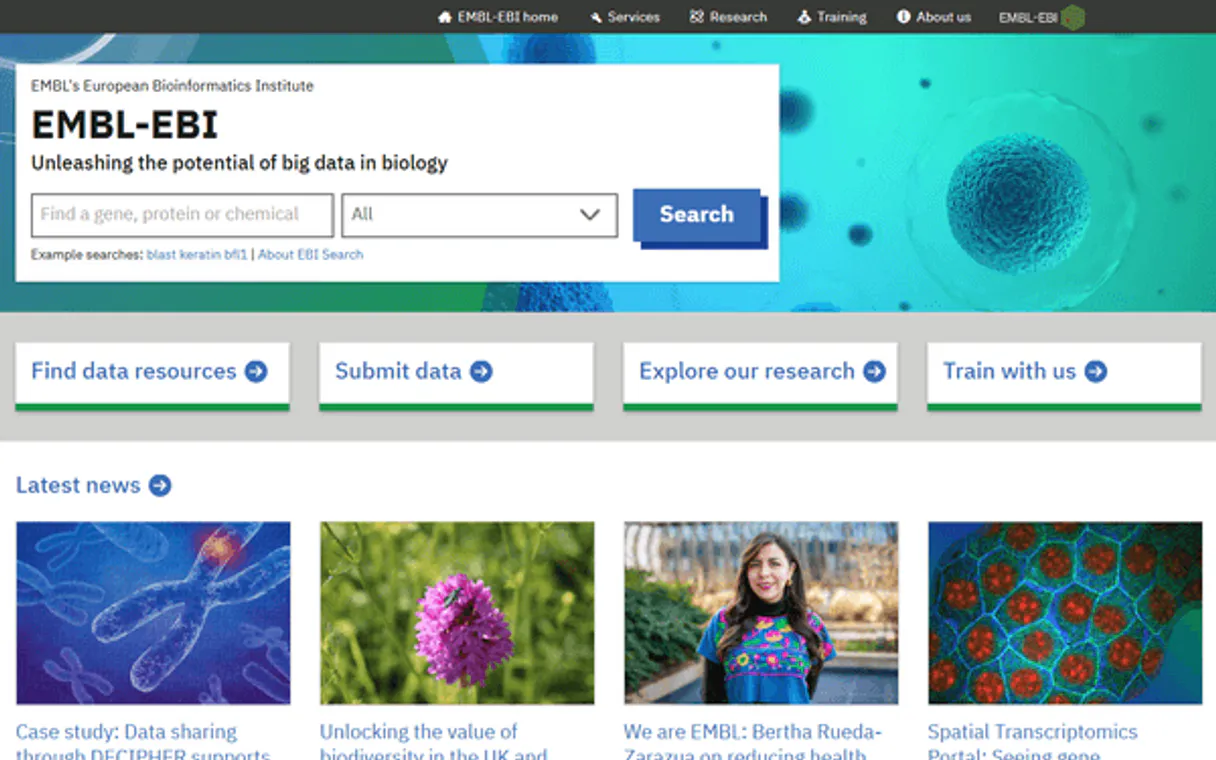
What is the EBI PDBe MCP Server?
Connect to the PDBe (Protein Data Bank in Europe) API and access the world's most comprehensive repository of experimentally determined 3D macromolecular structures.
What you can do
- Structure Summaries — Get titles, authors, deposition dates, resolution, and experimental methods for any PDB entry
- Molecular Entities — Retrieve protein chains, nucleic acids, ligands, their sequences, source organisms, and gene names
- Binding Sites & Ligands — Access ligand binding pocket residues, small molecule ligands with formulas and weights
- Quality Assessment — Check resolution, R-factors, and overall quality scores for structure reliability
- UniProt Mappings — Map between UniProt sequence positions and PDB residue numbers
- Biological Assemblies — Understand quaternary structure — monomer, dimer, tetramer, or higher-order complexes
- Structure Search — Full-text Solr search across 200+ PDB metadata fields
- Publications — Find primary citations, PubMed IDs, and related structural studies
How it works
- Subscribe to this server
- No API key required — the PDBe API is fully public
- Start querying 3D structures from Claude, Cursor, or any MCP-compatible client
Your AI agent becomes a structural biology research assistant with direct access to every experimentally determined protein structure. All data is sourced from the official PDBe REST API maintained by EMBL-EBI.
Who is this for?
- Structural Biologists — retrieve structure metadata, quality assessments, and experimental parameters without downloading coordinate files
- Drug Discovery Scientists — identify binding sites, ligand interactions, and cofactors for rational drug design
- Bioinformaticians — cross-reference sequence data with 3D structural annotations via UniProt mappings
- Educators & Students — explore real macromolecular structures for teaching protein chemistry and structural biology
Built-in capabilities (16)
Returns assembly IDs, composition (which entities and how many copies), preferred assembly flag, and form description. Critical for understanding whether a protein functions as a monomer, dimer, tetramer, or higher-order complex. Get biological assembly information (quaternary structure)
Critical for drug discovery, molecular docking, and understanding protein-ligand interactions. Get ligand binding site residues and interactions
Cofactors like heme, NAD+, FAD, and metal ions are essential for enzyme catalysis and protein function. Get cofactor and prosthetic group annotations
Get experimental method details for a structure
Returns chemical component IDs, names, molecular formulas, molecular weights, and their chain/residue positions. Essential for drug discovery and understanding protein-small molecule interactions. Get small molecule ligands bound in the structure
Shows the parent compound ID and modification name. Get non-standard amino acids and nucleotides
Returns entity IDs, molecule types, names, chain assignments, sequence lengths, molecular weights, source organisms, and gene names. Get molecular entities (chains, polymers) in a structure
Shows the original residue, mutated residue, chain, and position. Essential for understanding how the crystallized construct differs from the native protein. Get engineered mutations vs. wild-type sequence
Useful for finding the primary citation and methodology papers for a structure. Get associated journal publications and PubMed IDs
The first thing a structural biologist checks when evaluating a structure for reliability. Get global quality metrics for a structure
Useful for discovering alternative conformations, mutants, or complexes of the same protein that have been structurally characterized. Get related PDB entries citing the same publications
Shows residue names, numbers (both PDB and author numbering), organized by entity and chain. Returns a sample of the first 20 residues per chain for efficiency. Get full residue-level inventory per chain
Shows the count of helices and strands per chain, organized by molecular entity. Essential for understanding protein fold topology. Get helix, sheet, and coil assignments per residue
Use a 4-character PDB ID such as 1cbs, 4hhb, 6lu7. Get PDB entry summary with title, authors, and resolution
Returns UniProt accessions, chain assignments, and start/end position mappings. Essential for cross-referencing between protein sequence databases and 3D structural data. Get UniProt to PDB residue mappings
Use natural language queries like "insulin receptor kinase", "SARS-CoV-2 spike protein", "cryo-EM resolution<3", or specific organism names. Returns PDB IDs, titles, methods, resolutions, and organisms. Search PDB structures with full-text queries
Why Mastra AI?
Mastra's agent abstraction provides a clean separation between LLM logic and EBI PDBe tool infrastructure. Connect 16 tools through Vinkius and use Mastra's built-in workflow engine to chain tool calls with conditional logic, retries, and parallel execution. deployable to any Node.js host in one command.
- —
Mastra's agent abstraction provides a clean separation between LLM logic and tool infrastructure. add EBI PDBe without touching business code
- —
Built-in workflow engine chains MCP tool calls with conditional logic, retries, and parallel execution for complex automation
- —
TypeScript-native: full type inference for every EBI PDBe tool response with IDE autocomplete and compile-time checks
- —
One-command deployment to any Node.js host. Vercel, Railway, Fly.io, or your own infrastructure
EBI PDBe in Mastra AI
EBI PDBe and 4,000+ other MCP servers. One platform. One governance layer.
Teams that connect EBI PDBe to Mastra AI through Vinkius don't need to source, host, or maintain individual MCP servers. Every tool call runs inside a hardened runtime with credential isolation, DLP, and a signed audit chain.
Raw MCP | Vinkius | |
|---|---|---|
| Server catalog | Find and host yourself | 4,000+ managed |
| Infrastructure | Self-hosted | Sandboxed V8 isolates |
| Credential handling | Plaintext in config | Vault + runtime injection |
| Data loss prevention | None | Configurable DLP policies |
| Kill switch | None | Global instant shutdown |
| Financial circuit breakers | None | Per-server limits + alerts |
| Audit trail | None | Ed25519 signed logs |
| SIEM log streaming | None | Splunk, Datadog, Webhook |
| Honeytokens | None | Canary alerts on leak |
| Custom domains | Not applicable | DNS challenge verified |
| GDPR compliance | Manual effort | Automated purge + export |
Why teams choose Vinkius for EBI PDBe in Mastra AI
The EBI PDBe MCP Server runs on Vinkius-managed infrastructure inside AWS — a purpose-built runtime with per-request V8 isolates, Ed25519 signed audit chains, and sub-40ms cold starts. All 16 tools execute in hardened sandboxes optimized for native MCP execution.
Your AI agents in Mastra AI only access the data you authorize, with DLP that blocks sensitive information from ever reaching the model, kill switch for instant shutdown, and up to 60% token savings. Enterprise-grade infrastructure, zero maintenance.
* Every MCP server runs on Vinkius-managed infrastructure inside AWS - a purpose-built runtime with per-request V8 isolates, Ed25519 signed audit chains, and sub-40ms cold starts optimized for native MCP execution. See our infrastructure
How Vinkius secures
EBI PDBe for Mastra AI
Every tool call from Mastra AI to the EBI PDBe MCP Server is protected by DLP redaction, cryptographic audit chains, V8 sandbox isolation, kill switch, and financial circuit breakers.
Frequently asked questions
Do I need an API key?
No. The PDBe API is completely public and requires no authentication. Enter any placeholder value in the API key field to activate the server immediately.
What types of structures are available?
The PDBe contains over 200,000 experimentally determined 3D structures of proteins, nucleic acids, and complex assemblies. Structures are determined by X-ray crystallography, cryo-electron microscopy (cryo-EM), NMR spectroscopy, and other methods. This includes enzymes, receptors, antibodies, viral proteins, ribosomes, and drug-target complexes.
Can I find drug binding sites?
Yes. Use get_binding_sites to retrieve all annotated ligand binding pockets with their constituent residues. Combine with get_ligand_monomers to identify the small molecules bound in the structure, and get_cofactors for prosthetic groups. This workflow is essential for structure-based drug design and virtual screening target preparation.
How does Mastra AI connect to MCP servers?
Create an MCPClient with the server URL and pass it to your agent. Mastra discovers all tools and makes them available with full TypeScript types.
Can Mastra agents use tools from multiple servers?
Yes. Pass multiple MCP clients to the agent constructor. Mastra merges all tool schemas and the agent can call any tool from any server.
Does Mastra support workflow orchestration?
Yes. Mastra has a built-in workflow engine that lets you chain MCP tool calls with branching logic, error handling, and parallel execution.
createMCPClient not exported
Install: npm install @mastra/mcp
Explore More MCP Servers
View all →
ByteNite
10 toolsManage distributed video encoding via ByteNite — track jobs, use encoding templates, and monitor performance directly from any AI agent.

Withings
10 toolsAccess comprehensive health and fitness data — track weight, blood pressure, sleep cycles, steps, workouts, and heart rate directly from Withings devices.

CoinMarketCap
8 toolsEnable your AI agent to query crypto prices, market rankings, and currency conversions via the CoinMarketCap API.

Coupa
10 toolsManage purchase orders, invoices, suppliers, and procurement workflows on Coupa — the enterprise procurement platform.