
Bring Iam
to OpenAI Agents SDK
Create your Vinkius account to connect Auth0 to OpenAI Agents SDK and start using all 10 AI tools in minutes. Fully managed, enterprise secure, and ready to use without writing a single line of code. No hosting, no server setup — just connect and start using.
 GDPR Free for Subscribers
Compatible with every major AI agent and IDE
 Gemini
What is the Auth0 MCP Server?
Connect your Auth0 tenant to any AI agent and empower it to become a master Identity and Access Management (IAM) operator. Handle sophisticated user operations and global security queries directly through natural conversation.
What you can do
- User Management — List all users, search profiles, view connected social identities, and explicitly delete user data for right-to-be-forgotten requests
- Client & IdP Connections — Inspect configured Auth0 applications (SPAs, M2M APIs) and identity provider connections configured within your hub
- RBAC & Actions — Query global authorization roles and deployed Actions logic (serverless pipeline triggers) seamlessly
- Tenant Logs — Retrieve the system-level chronology of all actions, identifying blocked anomalous logins, tripped rate limits, and configuration changes instantly
How it works
- Subscribe to this secure MCP Server
- Supply your Auth0 Domain and Management API Token
- Talk to Auth0 securely through Claude, Cursor, or any compatible AI client
Your AI agent eliminates the need to navigate the verbose Auth0 dashboard while debugging identity flows.
Who is this for?
- Security & IAM Engineers — quickly query detailed tenant logs or blocked login IPs purely from chat without manually searching tables
- App Developers — inspect User ID schemas, check OAuth app boundaries (Clients), and verify metadata mappings instantly during development
- Compliance Officers — guarantee swift PII user deletions and review global connection mappings in a conversational format
Built-in capabilities (10)
Vaporizes all bound external identity links, MFA setups, and locally-held database credentials instantly, ensuring complete privacy compliance during active right-to-be-forgotten regulatory requests. Permanently delete a user profile directly from Auth0
0 and OIDC configuration defined on an Auth0 application. Details allowable JWT token lifetimes, explicit allowed web origins/callbacks that defeat CSRF/Open Redirects, and mandatory encryption specifications enforcing end-to-end payload security. Detailed OIDC properties configured for a single Client
Use this to audit parameters specifying explicit password strength validations, linked metadata attributes, or specialized enterprise-domain auto-routing triggers assigned uniquely to this specific strategy. View details and strategies of a single authentication connection
Use to view highly-sensitive identifiers, user_metadata (preference tracking editable by end user), and arrays mapping every linked external identity currently bound exclusively to this single unified account. Retrieve the unified JSON profile for a specific Auth0 user
Actions alter authorization flows in real-time, block rogue logins, push enriched profiling into CRM, or force impromptu physical MFA checks. List serverless Javascript logic executing dynamically in pipelines
Crucial for auditing grant types enforced globally on specific app boundaries. List all logical applications/clients spanning this Auth0 tenant
Shows configurations targeting pure Auth0 Databases, external Google/Facebook Social wrappers, and rigid AD/LDAP infrastructure synced behind restrictive corporate firewalls. List all Identity Provider (IdP) connections attached to Auth0
Captures successful logings, failed JWT validations, aggressive rate limits tripped, silent user migrations executed, and administrative mutations made continuously within the console dashboard. Retrieve the chronological stream of all executed Auth0 tenant logs
Used to securely decouple authorization scopes from standard authentication, allowing APIs to restrict backend mutations securely via verified RBAC permission tokens attached intrinsically into emitted JWTs. List RBAC roles defined intrinsically within the Auth0 Core Engine
Includes core Auth0 attributes, creation timestamps, and customized app_metadata mappings securely controlled globally by the backend. List all users registered in the Auth0 tenant
Why OpenAI Agents SDK?
The OpenAI Agents SDK auto-discovers all 10 tools from Auth0 through native MCP integration. Build agents with built-in guardrails, tracing, and handoff patterns. chain multiple agents where one queries Auth0, another analyzes results, and a third generates reports, all orchestrated through Vinkius.
- —
Native MCP integration via
MCPServerSse, pass the URL and the SDK auto-discovers all tools with full type safety - —
Built-in guardrails, tracing, and handoff patterns let you build production-grade agents without reinventing safety infrastructure
- —
Lightweight and composable: chain multiple agents and MCP servers in a single pipeline with minimal boilerplate
- —
First-party OpenAI support ensures optimal compatibility with GPT models for tool calling and structured output
Auth0 in OpenAI Agents SDK
Why run Auth0 with Vinkius?
The Auth0 connection runs on our fully managed, secure cloud infrastructure. We handle the hosting, maintenance, and security so you don't have to deal with servers or code. All 10 tools are ready to work instantly without any complex setup.
You stay in complete control of your data. Your AI only accesses the information you approve, keeping your sensitive passwords and private details completely safe. Plus, with automatic optimizations, your AI works faster and more efficiently.
* Every connection is hosted and maintained by Vinkius. We handle the security, updates, and infrastructure so you don't have to write code or manage servers. See our infrastructure
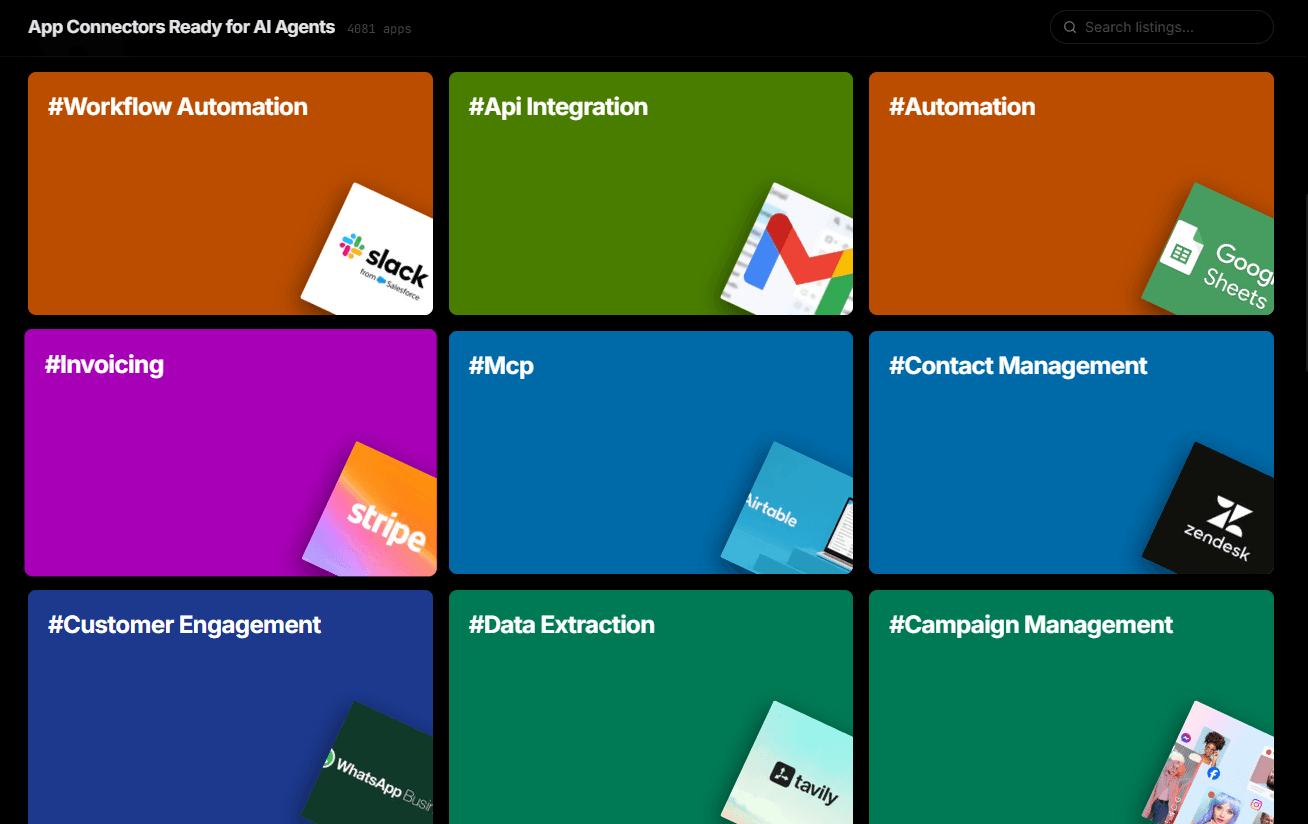
Over 4,000 integrations ready for AI agents
Explore a vast library of pre-built integrations, optimized and ready to deploy.
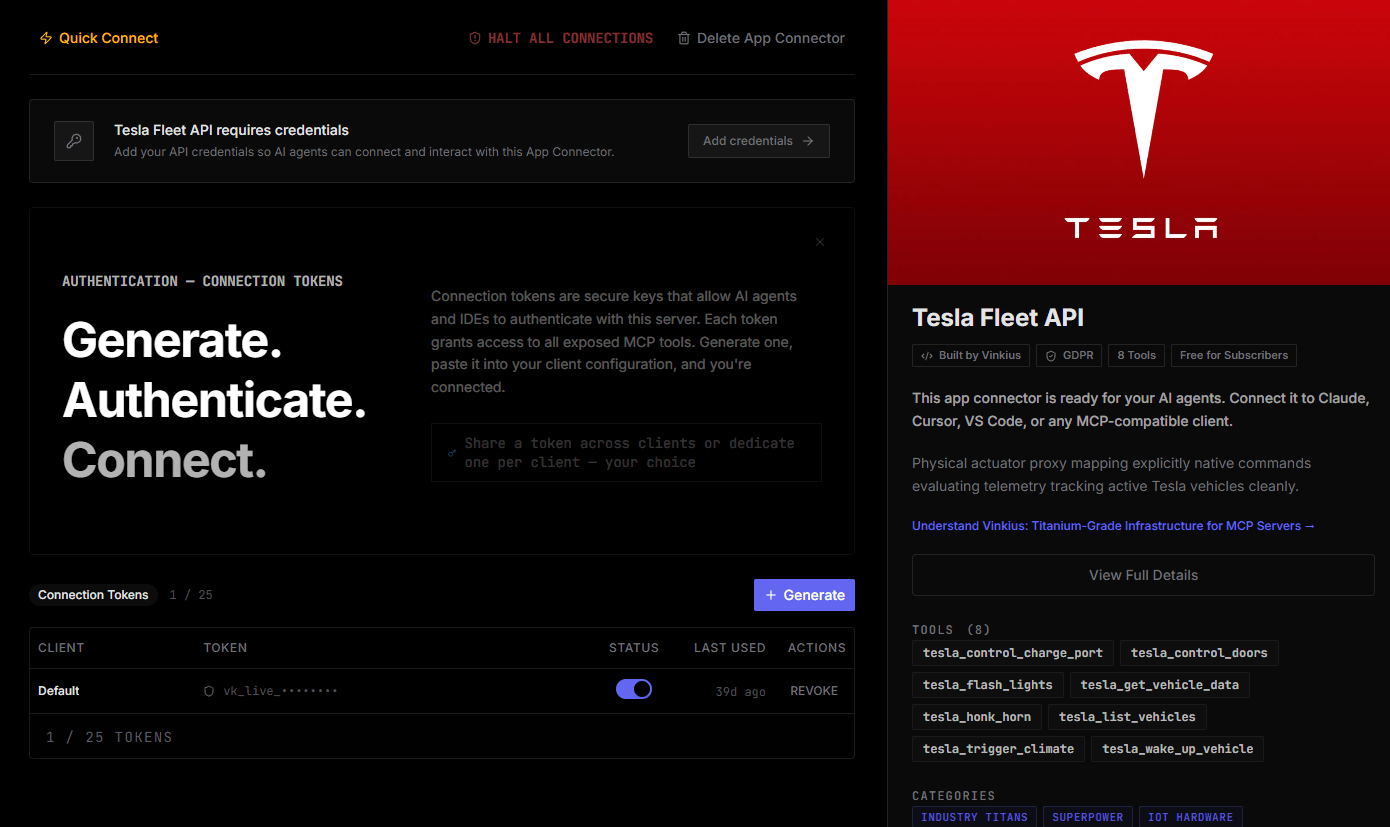
Connect securely in under 30 seconds
Generate tokens to authenticate and link external services in a single step.
Complete visibility into every agent action
Audit live requests, latency, success rates, and active security compliance policies.
Optimize spending and track token ROI
Analyze real-time token consumption and cost metrics detailed by connection.
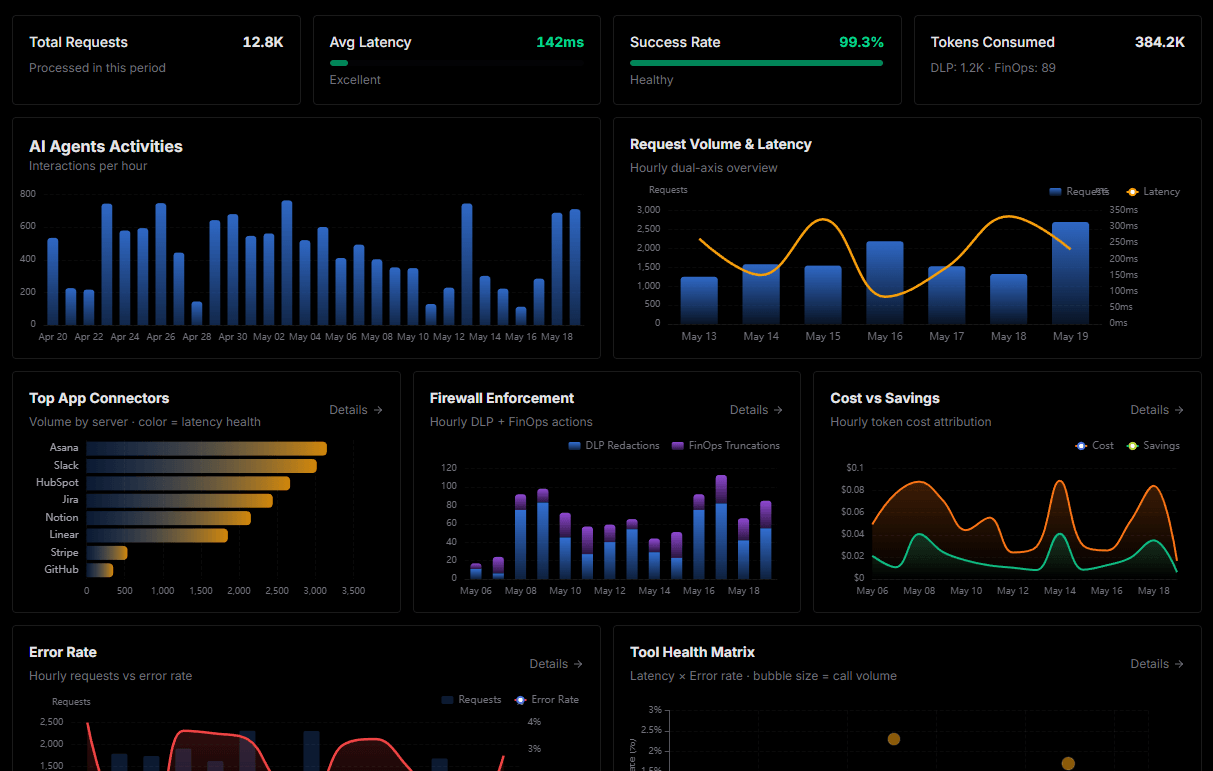
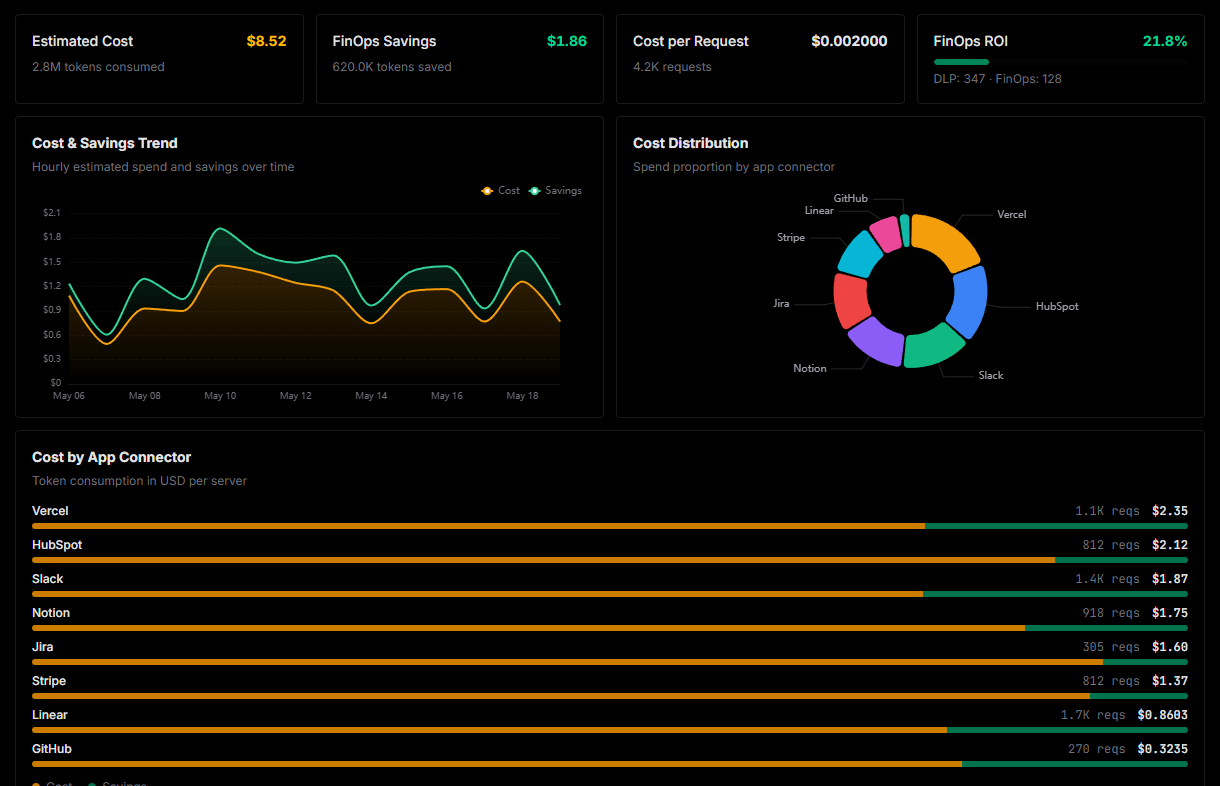
Explore our live AI Agents Analytics dashboard to see it all working
This dashboard is included when you connect Auth0 using Vinkius. You will never be left in the dark about what your AI agents are doing with your tools.
Auth0 and 4,000+ other AI tools. No hosting, no code, ready to use.
Professionals who connect Auth0 to OpenAI Agents SDK through Vinkius don't need to write code, manage servers, or worry about security. Everything is pre-configured, secure, and runs automatically in the background.
Raw MCP | Vinkius | |
|---|---|---|
| Ready-to-use MCPs | Find and configure each manually | 4,000+ MCPs ready to use |
| Connection Setup | Manual coding & server setup | 1-click instant connection |
| Server Hosting | You host it yourself (needs 24/7 uptime) | 100% hosted & managed by Vinkius |
| Security & Privacy | Stored in plaintext config files | Bank-grade encrypted vault |
| Activity Visibility | Blind execution (no logs or tracking) | Live dashboard with real-time logs |
| Cost Control | Runaway AI token spend risk | Automatic budget limits |
| Revoking Access | Must delete files or code to stop | 1-click disconnect button |
How Vinkius secures
Auth0 for OpenAI Agents SDK
Every request between OpenAI Agents SDK and Auth0 is protected by our secure gateway. We automatically keep your sensitive data private, prevent unauthorized access, and let you disconnect instantly at any time.
Frequently asked questions
Can the agent show me the exact cause of a user's failed login attempt?
Absolutely. By asking the agent to search the tenant logs for the user's specific interactions, you receive exact JSON artifacts mapping the failure trigger—whether it was a brute-force IP rate limitation or an explicitly thrown error from a deployed Custom Action pipeline.
Are user passwords exposed or compromised through this integration?
Never. The Auth0 Management API strictly strips raw authentication secrets and passwords from all JSON payloads by default. The agent can only interpret profile structures (metadata, log times, associated connections), ensuring top-tier infrastructure security.
Does it support identifying all connections tied to one user (Social + DB)?
Yes. When retrieving a single user's profile, the agent parses the identities array object. This object arrays each distinct identity provider mapping—meaning you can see if the user signed in natively, merged to a Google account later, and the precise times of those connection lifecycle updates.
How does the OpenAI Agents SDK connect to MCP?
Use MCPServerSse(url=...) to create a server connection. The SDK auto-discovers all tools and makes them available to your agent with full type information.
Can I use multiple MCP servers in one agent?
Yes. Pass a list of MCPServerSse instances to the agent constructor. The agent can use tools from all connected servers within a single run.
Does the SDK support streaming responses?
Yes. The SDK supports SSE and Streamable HTTP transports, both of which work natively with Vinkius.
MCPServerStreamableHttp not found
Ensure you have the latest version: pip install --upgrade openai-agents
Agent not calling tools
Make sure your prompt explicitly references the task the tools can help with.
Explore More MCP Servers
View all →
Azure Cosmos DB Container
4 toolsThis MCP does exactly one thing: it manages documents in a single Azure Cosmos DB Container. That's its only function, and nothing else. Incredible for giving your AI a secure NoSQL database.
Mapillary
7 toolsAccess street-level imagery — search images, sequences, traffic signs and map features worldwide.
Nutritionix
2 toolsAnalyze food nutrition from natural language using the industry-leading NLP engine — type any meal description and get instant, precise calorie and macro data.
Easemob / 环信
10 toolsPioneer massive scale IM Chat SDK and API — manage users, groups, and real-time messaging via AI.