
Bring Edge Computing
to VS Code Copilot
Create your Vinkius account to connect Fly.io Alternative to VS Code Copilot and start using all 13 AI tools in minutes. Fully managed, enterprise secure, and ready to use without writing a single line of code. No hosting, no server setup — just connect and start using.
 GDPR Free for Subscribers
Compatible with every major AI agent and IDE
 Gemini
What is the Fly.io Alternative MCP Server?
Connect your Fly.io account to any AI agent and take full control of your edge compute infrastructure through natural conversation.
What you can do
- App Management — List all apps and retrieve their configuration details including regions, status and organization
- Machine Lifecycle — Create, start, stop, restart, update and delete machines (VMs) with full control over CPU, memory, region and image
- Machine Inspection — View machine state, configuration, services, health checks and IP addresses
- Persistent Volumes — List and create persistent storage volumes that survive machine restarts and redeployments
- Certificate Management — Review TLS/SSL certificates and their issuance status for app domains
- Global Deployment — Deploy machines across Fly.io's global regions (iad, sjc, nrt, fra, syd, etc.) for low-latency access
How it works
- Subscribe to this server
- Enter your Fly.io Personal Access Token
- Start managing your edge infrastructure from Claude, Cursor, or any MCP-compatible client
Stop using the CLI or web dashboard to manage individual VMs. Your AI acts as a dedicated edge infrastructure engineer.
Who is this for?
- Platform Engineers — provision and manage VMs across multiple regions, scale services and monitor machine health without SSH
- DevOps Teams — inspect machine configurations, review deployments, manage persistent storage and track certificate status
- Full-Stack Developers — quickly check machine status, restart problematic VMs and verify image versions directly from chat
Built-in capabilities (13)
io app. Requires the Docker image reference (e.g. "registry.fly.io/myapp:latest"). Optionally set the region (e.g. "iad", "sjc", "nrt"), CPU cores (1-16), memory in MB (256-8192), guest CPU kind (shared, performance) and services config. Machines start in stopped state — use start_machine after creation. Create a new machine in a Fly.io app
Requires the volume name and size in gigabytes. Optionally set the region. The volume must be attached to a machine via the machine config mounts. Create a persistent volume for a Fly.io app
The machine cannot be recovered. Optionally set force=true to delete even if the machine has an attached volume. Provide the app_name and machine_id. WARNING: this action is irreversible. Delete a Fly.io machine permanently
io app including its name, status, regions, organization and network configuration. Provide the app name (not ID). Get details for a specific Fly.io app
Provide both the app_name and machine_id. Get details for a specific Fly.io machine
io account. Each app is a collection of machines (VMs) running your code across Fly.io's global edge network. Returns app name, status, region and creation date. Use the app name for all subsequent machine, volume and certificate operations. List all Fly.io apps
io app. Each certificate has a hostname, status (issued, pending, failed) and source (lets_encrypt, self_signed, acme). Use this to audit HTTPS certificate status for your app's domains. List TLS/SSL certificates for a Fly.io app
io app. Each machine has an ID, name, state (started, stopped, created, destroyed), region, image reference, CPU/memory config and IP addresses. Machines are the fundamental compute units on Fly.io. List machines (VMs) for a Fly.io app
io app. Each volume has an ID, name, state, size in GB, region and the machine it is attached to. Volumes provide persistent storage that survives machine restarts. List persistent volumes for a Fly.io app
Useful for applying configuration changes or recovering from issues. Provide the app_name and machine_id. Restart a Fly.io machine
The machine will boot and begin running its configured image. Provide the app_name and machine_id. Start a stopped Fly.io machine
The machine will stop and release its compute resources but retains its configuration and data. Provide the app_name and machine_id. Stop a running Fly.io machine
You can modify the Docker image, CPU/memory allocation, services config, mounts and more. Provide the app_name, machine_id and a JSON body with the fields to update. Update a Fly.io machine configuration
Why VS Code Copilot?
GitHub Copilot Agent mode brings Fly.io Alternative data directly into your VS Code workflow. With a project-scoped config, the entire team shares access to 13 tools. Copilot queries live data, generates typed code, and writes tests from actual API responses, all without leaving the editor.
- —
VS Code is used by over 70% of developers. adding MCP tools to Copilot means your team can leverage external data without leaving their primary editor
- —
Project-scoped MCP configs (
.vscode/mcp.json) let you commit server configurations to your repository, ensuring the entire team shares the same tool access - —
Copilot's Agent mode integrates MCP tools seamlessly with file editing, terminal commands, and workspace search in a single agentic loop
- —
GitHub's enterprise compliance and audit features extend to MCP tool usage, providing visibility into how AI interacts with external services
Fly.io Alternative in VS Code Copilot
Why run Fly.io Alternative with Vinkius?
The Fly.io Alternative connection runs on our fully managed, secure cloud infrastructure. We handle the hosting, maintenance, and security so you don't have to deal with servers or code. All 13 tools are ready to work instantly without any complex setup.
You stay in complete control of your data. Your AI only accesses the information you approve, keeping your sensitive passwords and private details completely safe. Plus, with automatic optimizations, your AI works faster and more efficiently.
* Every connection is hosted and maintained by Vinkius. We handle the security, updates, and infrastructure so you don't have to write code or manage servers. See our infrastructure
Over 4,000 integrations ready for AI agents
Explore a vast library of pre-built integrations, optimized and ready to deploy.
Connect securely in under 30 seconds
Generate tokens to authenticate and link external services in a single step.
Complete visibility into every agent action
Audit live requests, latency, success rates, and active security compliance policies.
Optimize spending and track token ROI
Analyze real-time token consumption and cost metrics detailed by connection.
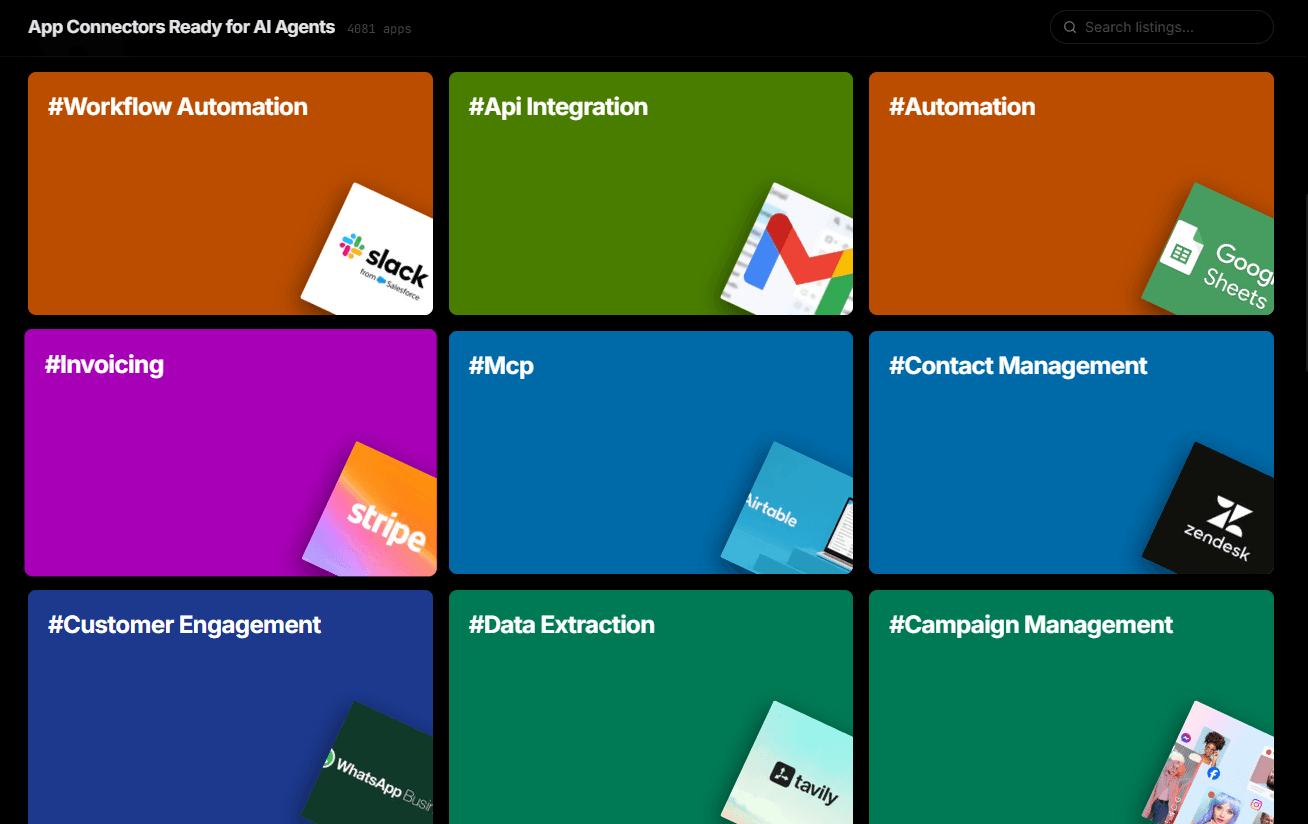
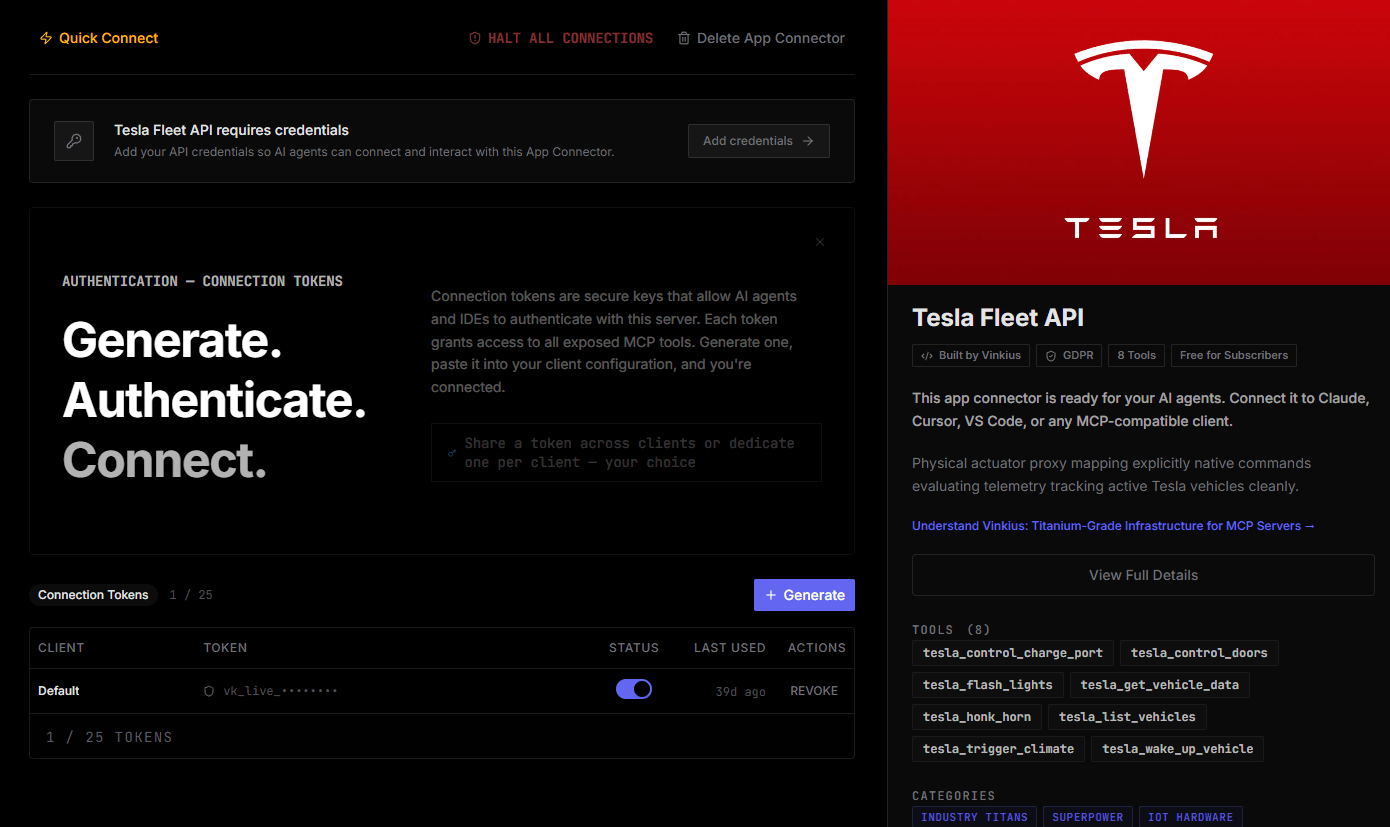
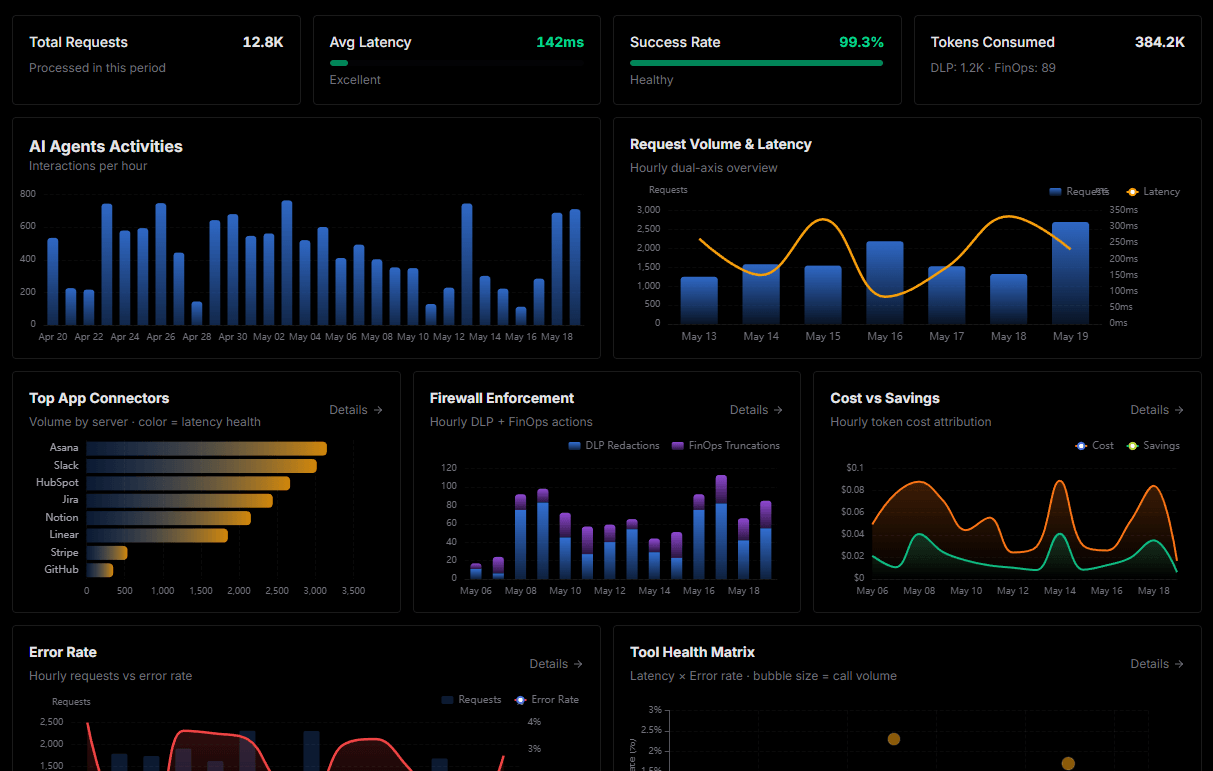
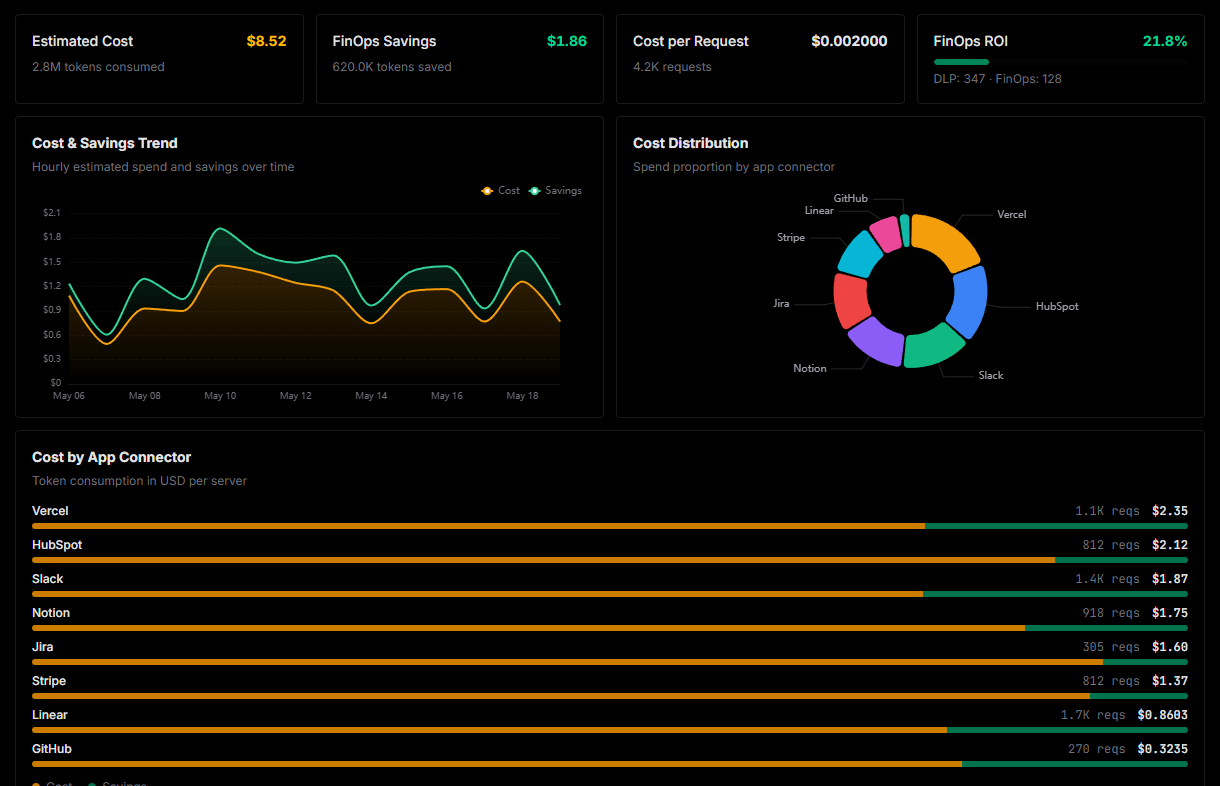
Explore our live AI Agents Analytics dashboard to see it all working
This dashboard is included when you connect Fly.io Alternative using Vinkius. You will never be left in the dark about what your AI agents are doing with your tools.
Fly.io Alternative and 4,000+ other AI tools. No hosting, no code, ready to use.
Professionals who connect Fly.io Alternative to VS Code Copilot through Vinkius don't need to write code, manage servers, or worry about security. Everything is pre-configured, secure, and runs automatically in the background.
Raw MCP | Vinkius | |
|---|---|---|
| Ready-to-use MCPs | Find and configure each manually | 4,000+ MCPs ready to use |
| Connection Setup | Manual coding & server setup | 1-click instant connection |
| Server Hosting | You host it yourself (needs 24/7 uptime) | 100% hosted & managed by Vinkius |
| Security & Privacy | Stored in plaintext config files | Bank-grade encrypted vault |
| Activity Visibility | Blind execution (no logs or tracking) | Live dashboard with real-time logs |
| Cost Control | Runaway AI token spend risk | Automatic budget limits |
| Revoking Access | Must delete files or code to stop | 1-click disconnect button |
How Vinkius secures
Fly.io Alternative for VS Code Copilot
Every request between VS Code Copilot and Fly.io Alternative is protected by our secure gateway. We automatically keep your sensitive data private, prevent unauthorized access, and let you disconnect instantly at any time.
Frequently asked questions
How do I create a Fly.io Personal Access Token?
Log in to the Fly.io Dashboard, go to Settings > Personal Access Tokens, click Create, name your token and copy it immediately — it won't be shown again. Alternatively, use fly tokens create from the CLI after authenticating with fly auth login.
What is a Fly.io Machine and how does it work?
A Machine is a Fly.io VM (micro-VM) that runs your Docker container image. Each machine has its own CPU, memory, storage and IP address. Machines can be started, stopped, restarted and updated independently. They can run in any of Fly.io's 30+ global regions and are the fundamental compute unit of the platform.
Can I start and stop machines to save costs?
Yes! Use stop_machine to halt a machine and release its compute resources, and start_machine to boot it again. Stopped machines don't incur compute charges. This is perfect for development/staging environments that don't need to run 24/7. Persistent volumes attached to stopped machines retain all data.
How do I deploy a machine in a specific region?
Use the create_machine tool with the region parameter set to your desired Fly.io region code. Common regions include: iad (Virginia, US), sjc (San Jose, US), nrt (Tokyo, Japan), fra (Frankfurt, Germany), syd (Sydney, Australia). The full list is available in the Fly.io documentation.
Which VS Code version supports MCP?
MCP support requires VS Code 1.99 or later with the GitHub Copilot extension. Ensure both are updated to the latest version. Older versions of Copilot may not expose the Agent mode toggle.
How do I switch to Agent mode?
Open the Copilot Chat panel and look for two mode options: "Ask" and "Agent". Click "Agent" to enable autonomous tool calling. In Ask mode, Copilot provides conversational answers but cannot invoke MCP tools.
Can I restrict which MCP tools Copilot can access?
Yes. VS Code shows a tool consent dialog before any MCP tool is invoked for the first time. You can also configure tool access policies at the organization level through GitHub Copilot settings.
Does MCP work in VS Code Remote or Codespaces?
Yes. MCP servers configured via .vscode/mcp.json work in Remote SSH, WSL, and GitHub Codespaces environments. The MCP connection is established from the remote host, so ensure the server URL is accessible from that environment.
MCP tools not available
Ensure you are in Agent mode in Copilot Chat. MCP tools only appear in Agent mode.
Explore More MCP Servers
View all →
SITA Airport Reference API
3 toolsQuery global airport infrastructure data — IATA codes, terminals, gates, and reference metadata via AI.
Ideogram
12 toolsGenerate stunning images from text prompts with an AI model that excels at typography, logos, and photorealistic compositions.

eSignly Electronic Signature
10 toolsEquip your AI agent to manage e-signature documents, track templates, and monitor audit trails via the eSignly API.

WhatsApp Business Alternative
8 toolsAutomate your customer communication — send templates and manage profiles via AI.