
Integrate Internet Archive Wayback with Claude, Cursor, Chatbots & AI Agents MCP Server
 GDPR Free for Subscribers
Compatible with every major AI agent and IDE
 Gemini
Check availability on Internet Archive Wayback
Returns the closest (most recent) snapshot timestamp and availability status. Use this to verify if a page is preserved and find its latest archived version. Check if a URL has been archived by the Wayback Machine
Get capture count on Internet Archive Wayback
Use this to measure how frequently a page has been preserved over time. Get the total number of captures for a URL
Get captures by mime type on Internet Archive Wayback
Common types: "text/html" (web pages), "image/jpeg" (JPEG images), "application/pdf" (PDFs), "text/css" (stylesheets). Use this to find specific resource types in the archive. Get captures filtered by MIME type
Get captures by status on Internet Archive Wayback
Common codes: "200" (OK), "404" (Not Found), "301" (Redirect), "500" (Server Error). Use this to analyze site availability patterns over time. Get captures filtered by HTTP status code
Get captures by year on Internet Archive Wayback
Use this to analyze archival frequency or find snapshots from a particular year. Year should be 4-digit format (e.g., "2020"). Get captures filtered by a specific year
Get captures collapsed on Internet Archive Wayback
This shows unique page captures without redundant entries for the same page. Use this for a cleaner view of archived content. Get captures deduplicated by URL key
Get cdx captures on Internet Archive Wayback
Each capture includes timestamp, original URL, MIME type, HTTP status code, and file size. Use this for comprehensive archival analysis. Optional limit parameter controls maximum results. Get detailed capture history from the CDX server
Get first capture on Internet Archive Wayback
Includes the timestamp, status code, and original URL. Use this to find when a page was first preserved. Get the first (earliest) capture of a URL
Get latest capture on Internet Archive Wayback
Includes timestamp, status code, and URL. Use this to find the newest preserved version of a page. Get the most recent capture of a URL
Get subdomain captures on Internet Archive Wayback
g., *.example.com). Use this to discover the archival footprint of an entire domain, finding all subdomains that have been preserved. Get captures for all subdomains of a domain
Security & Code Integrity Audit
Every tool in the Internet Archive Wayback MCP Server is continuously audited by the Vinkius Security Engine. We guarantee zero-trust payload isolation, strict data boundaries, and deterministic execution for enterprise-grade AI agents.
How Vinkius protects your data
Is there a risk of the AI "going crazy" and deleting important company data?
No. With Vinkius, the AI operates on "rails". It can only make the exact moves you authorized in the tool's settings. It cannot invent routes, access other networks in your company, or decide to delete random files. If the action isn't in the approved catalog, the attempt is blocked instantly.
How far back does the Wayback Machine go?
The Wayback Machine has archived web pages since 1996. However, coverage varies significantly — major websites have captures going back 20+ years, while smaller or newer sites may have fewer or no captures. Use get_first_capture to find the earliest archived version of any URL.
How does the AI access my passwords and credentials?
It simply doesn't. On Vinkius, your passwords, API keys, and login details are kept in a secure vault. The AI (like ChatGPT or Claude) merely "asks" Vinkius to perform the task. Vinkius opens the door, does the work, and hands the result back to the AI. Your credentials are never seen, read, or learned by the artificial intelligence.
What if the AI ends up reading customer data or confidential information?
We have a built-in digital "bodyguard" called DLP (Data Loss Prevention). If a tool fetches data and the response contains social security numbers, credit cards, or personal customer info, Vinkius magically blocks and erases that information before it is delivered to the AI. The AI works only with what is strictly necessary, and your sensitive data never leaks.
Automated Workflows using Internet Archive Wayback
The Internet Archive Wayback MCP server handles authentication and payload formatting, allowing your LLM to perform deterministic actions.
The Future of web archiving
The Internet Archive Wayback integration allows Cursor and ChatGPT to securely fetch web archiving data. It handles the API requests required for knowledge management operations.
Automating url history with AI
Connect your AI agent to Internet Archive Wayback for comprehensive url history coverage. The integration features standard schemas for reliable knowledge management tool execution.
Internet Archive Wayback. Runs on everything.
From IDE to framework. Every connection governed by Vinkius.
Anthropic's native desktop app for Claude with built-in MCP support.
AI-first code editor with integrated LLM-powered coding assistance.
GitHub Copilot in VS Code with Agent mode and MCP support.
Purpose-built IDE for agentic AI coding workflows.
Autonomous AI coding agent that runs inside VS Code.
Anthropic's agentic CLI for terminal-first development.
Python SDK for building production-grade OpenAI agent workflows.
Google's framework for building production AI agents.
Type-safe agent development for Python with first-class MCP support.
TypeScript toolkit for building AI-powered web applications.
TypeScript-native agent framework for modern web stacks.
Python framework for orchestrating collaborative AI agent crews.
Leading Python framework for composable LLM applications.
Data-aware AI agent framework for structured and unstructured sources.
Microsoft's framework for multi-agent collaborative conversations.
Explore More MCP Servers
View all →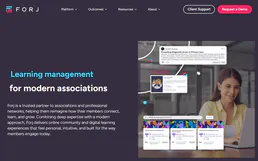
Forj
12 toolsManage community members, groups, and activity via AI agents with Forj (formerly Mobilize).
HubSpot CRM (Full)
10 toolsManage contacts, companies, deals, tickets, notes, owners, and pipelines — full access to your HubSpot CRM through natural conversation.
Vertex AI Search
7 toolsSearch across your enterprise data using Google's semantic search and generative AI grounding.
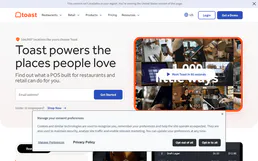
Toast
10 toolsManage restaurant orders, menus, employees, labor, tables, and payments for your Toast POS through natural conversation.