
Bring Gps Tracking
to Vercel AI SDK
Create your Vinkius account to connect Google Roads to Vercel AI SDK and start using all 4 AI tools in minutes. Fully managed, enterprise secure, and ready to use without writing a single line of code. No hosting, no server setup — just connect and start using.
 GDPR Free for Subscribers
Compatible with every major AI agent and IDE
 Gemini
What is the Google Roads MCP Server?
Connect your Google Roads API to any AI agent and take full control of GPS map matching, road segment identification, and speed limit data retrieval through natural conversation.
What you can do
- Snap to Roads — Match GPS coordinate paths to the most likely roads travelled with interpolated points for smooth road geometry
- Nearest Roads — Find the nearest road segment for up to 100 individual GPS coordinates independently
- Speed Limits — Get posted speed limit data for specific road segments using place IDs from road matching
- Snapped Speed Limits — Snap GPS coordinates to roads AND get speed limits in a single combined request
- Place ID Mapping — Obtain Google place IDs for road segments that can be used with other Google Maps APIs
- Fleet Tracking — Clean noisy GPS traces from fleet vehicles for accurate route visualization
- GPS Correction — Convert raw GPS points into accurate road-level positions for mapping applications
How it works
- Subscribe to this server
- Enter your Google Maps Platform API key with Roads API enabled
- Start matching GPS data to roads from Claude, Cursor, or any MCP-compatible client
No more manual map matching or noisy GPS data visualization. Your AI acts as a dedicated GPS data analyst and road matching assistant.
Who is this for?
- Fleet Managers — clean GPS tracks from vehicles, identify roads travelled, and monitor speed compliance
- Mapping Developers — convert raw GPS traces into clean road geometries for visualization and analysis
- Safety Analysts — retrieve speed limit data for road segments to analyze driver behavior and compliance
- GIS Professionals — snap scattered GPS points to road networks for spatial analysis and cartography
Built-in capabilities (4)
Returns the snapped coordinate, the original coordinate, and the place ID for each nearest road segment. Unlike snapToRoads which assumes coordinates form a continuous path, nearestRoads treats each point independently. Essential for reverse geocoding, finding which road a vehicle is on, identifying road segments for individual location points, and mapping scattered GPS points to roads. Each point is matched to the nearest road segment within a reasonable distance. Place IDs can be used with the speed limits endpoint. AI agents should reference this when users ask "what road is at these coordinates", "find the nearest road for each GPS point", or need to map individual location points to road segments without assuming a path. Get the nearest road segments for up to 100 individual GPS coordinates
Snaps GPS coordinates to the nearest road segments and returns both the snapped coordinates with place IDs AND the speed limits for each road segment. This is more efficient than making separate calls to snapToRoads and then speedLimits. Returns snapped points with place IDs, original coordinates, and speed limit data in km/h for each road segment. Essential for applications that need both map-matched road geometry and speed limit data, such as fleet management, driver safety monitoring, route planning with speed awareness, and GPS track analysis. AI agents should reference this when users ask "snap these GPS points to roads and show speed limits", "get both snapped coordinates and speed limits for this route", or need combined road matching and speed limit data in one call. Snap GPS coordinates to roads and get speed limits in a single request
Returns speed limit values in km/h along with the place IDs and corresponding road segment information. Place IDs are obtained from the snapToRoads or nearestRoads responses. Essential for speed compliance monitoring, fleet safety management, driver behavior analysis, and road safety applications. Speed limits reflect posted legal limits and may vary by road type, urban/rural designation, and local regulations. AI agents should use this when users ask "what is the speed limit on this road segment", "get speed limits for these place IDs", or need speed limit data for specific road segments identified through map matching. Get speed limit data for specific road segments using place IDs
Returns snapped coordinates with place IDs, original coordinates, and interpolated points along the road. Essential for map matching, GPS track correction, route reconstruction, fleet tracking visualization, and converting raw GPS traces into clean road geometries. The path parameter accepts up to 100 coordinate pairs in "lat,lng|lat,lng" format. Set interpolate=true to return additional points between input coordinates for smoother road geometry. Place IDs returned can be used with the speed limits endpoint to get speed limit data for each road segment. AI agents should use this when users ask "snap this GPS track to roads", "match these coordinates to the actual roads travelled", or need to clean up noisy GPS data for mapping and visualization. Snap GPS coordinates to the most likely roads travelled using Google Roads API
Why Vercel AI SDK?
The Vercel AI SDK gives every Google Roads tool full TypeScript type inference, IDE autocomplete, and compile-time error checking. Connect 4 tools through Vinkius and stream results progressively to React, Svelte, or Vue components. works on Edge Functions, Cloudflare Workers, and any Node.js runtime.
- —
TypeScript-first: every MCP tool gets full type inference, IDE autocomplete, and compile-time error checking out of the box
- —
Framework-agnostic core works with Next.js, Nuxt, SvelteKit, or any Node.js runtime. same Google Roads integration everywhere
- —
Built-in streaming UI primitives let you display Google Roads tool results progressively in React, Svelte, or Vue components
- —
Edge-compatible: the AI SDK runs on Vercel Edge Functions, Cloudflare Workers, and other edge runtimes for minimal latency
Google Roads in Vercel AI SDK
Why run Google Roads with Vinkius?
The Google Roads connection runs on our fully managed, secure cloud infrastructure. We handle the hosting, maintenance, and security so you don't have to deal with servers or code. All 4 tools are ready to work instantly without any complex setup.
You stay in complete control of your data. Your AI only accesses the information you approve, keeping your sensitive passwords and private details completely safe. Plus, with automatic optimizations, your AI works faster and more efficiently.
* Every connection is hosted and maintained by Vinkius. We handle the security, updates, and infrastructure so you don't have to write code or manage servers. See our infrastructure
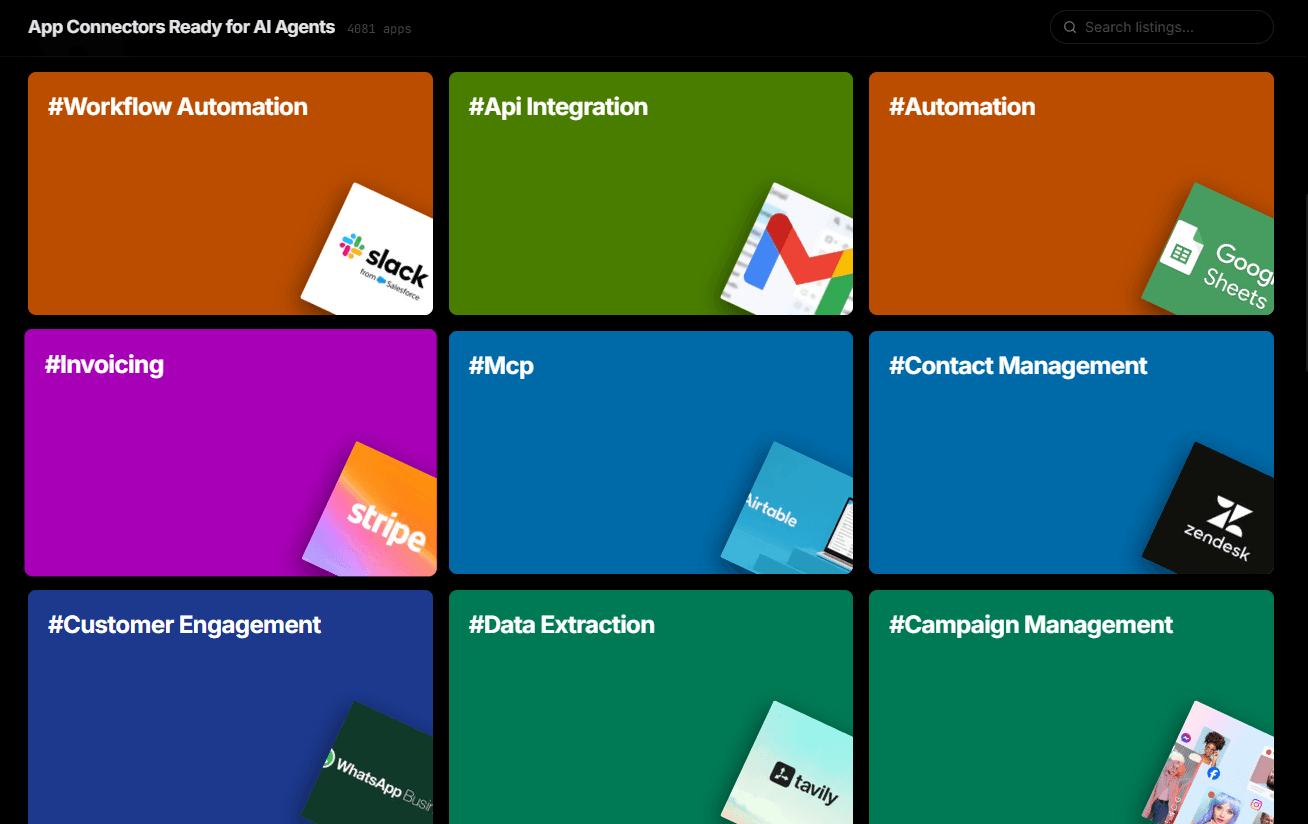
Over 4,000 integrations ready for AI agents
Explore a vast library of pre-built integrations, optimized and ready to deploy.
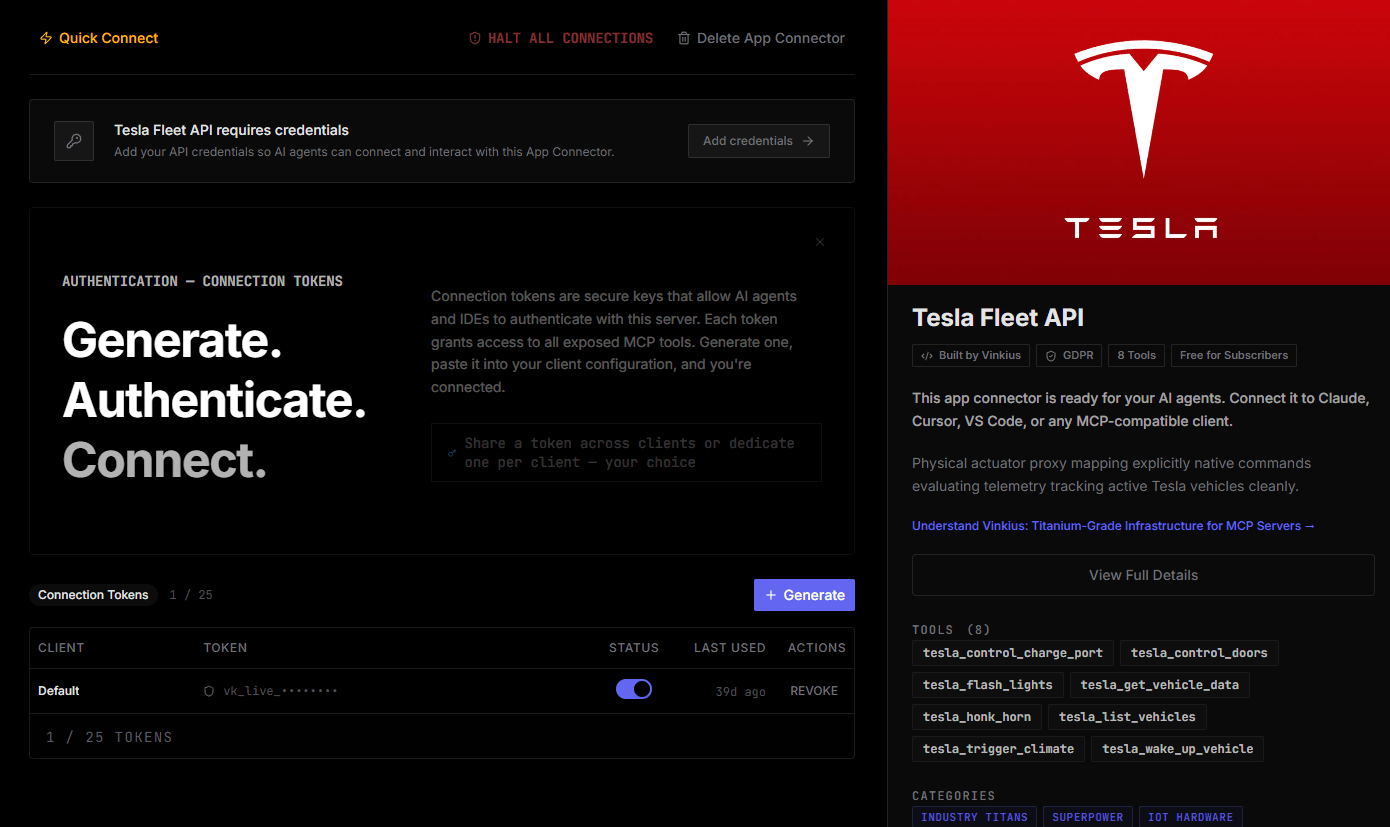
Connect securely in under 30 seconds
Generate tokens to authenticate and link external services in a single step.
Complete visibility into every agent action
Audit live requests, latency, success rates, and active security compliance policies.
Optimize spending and track token ROI
Analyze real-time token consumption and cost metrics detailed by connection.
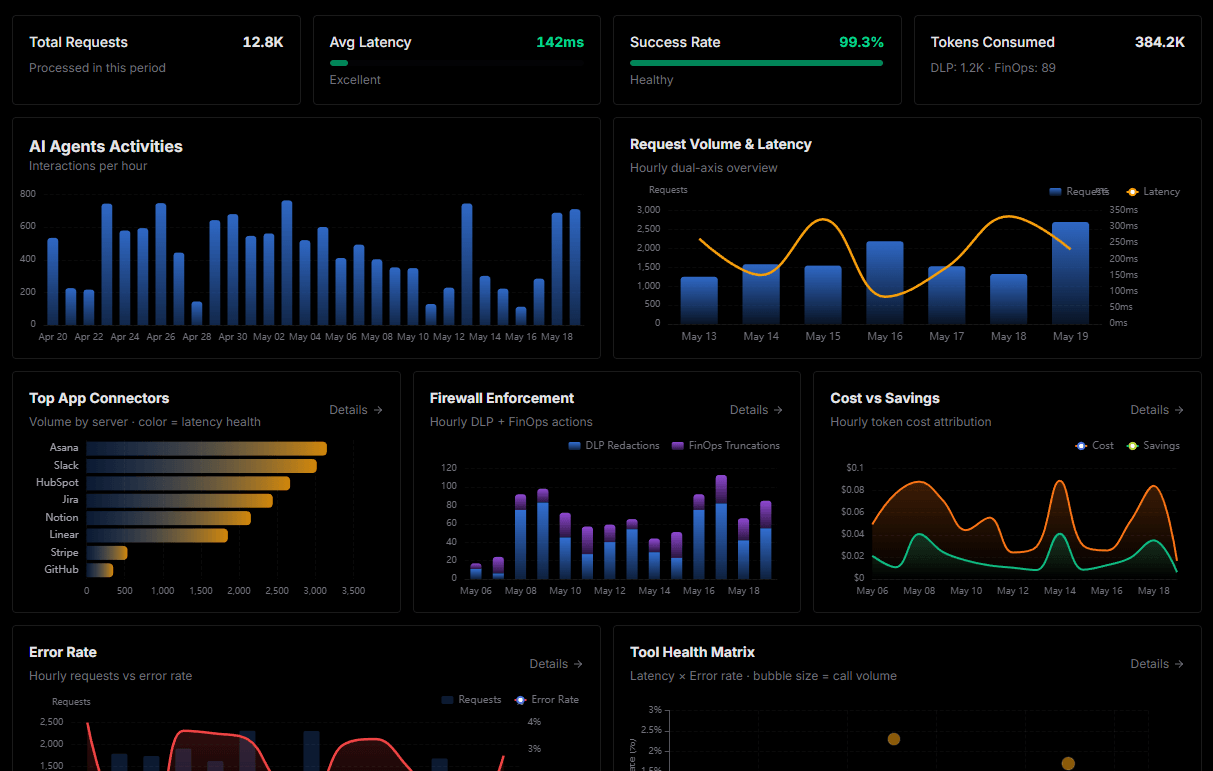
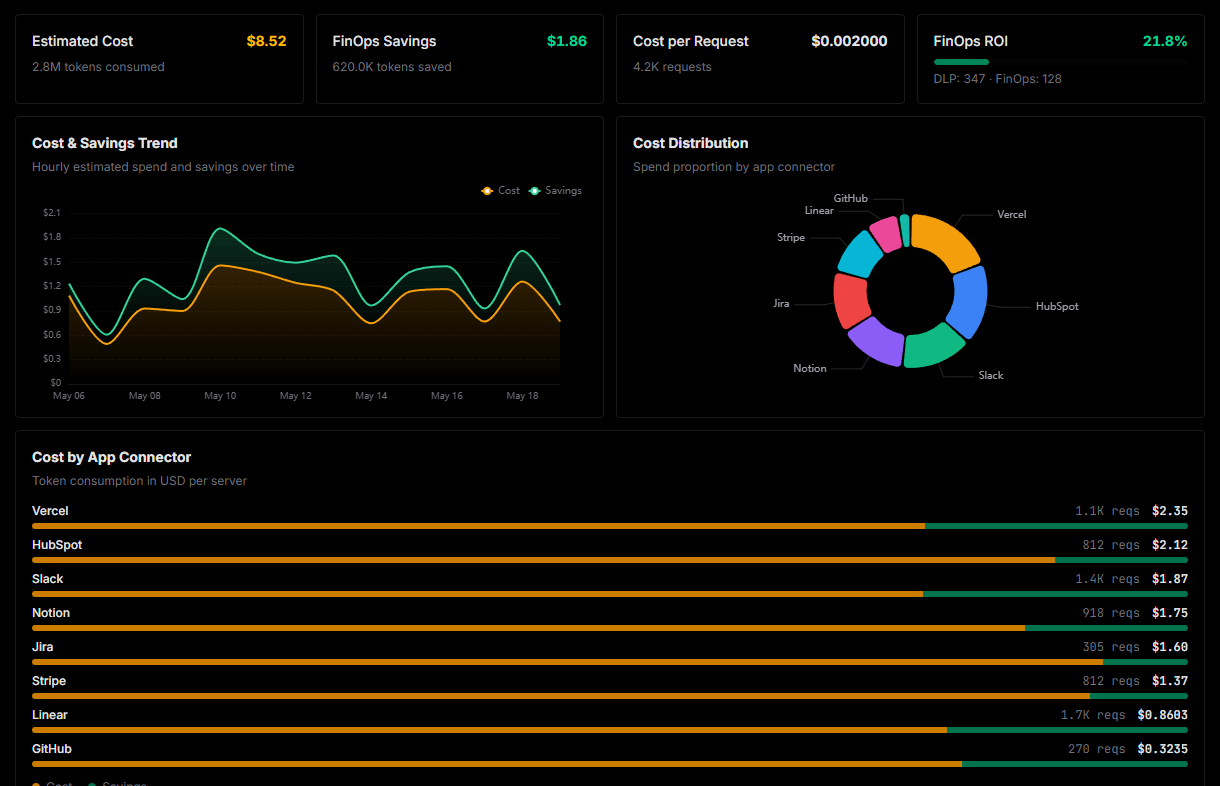
Explore our live AI Agents Analytics dashboard to see it all working
This dashboard is included when you connect Google Roads using Vinkius. You will never be left in the dark about what your AI agents are doing with your tools.
Google Roads and 4,000+ other AI tools. No hosting, no code, ready to use.
Professionals who connect Google Roads to Vercel AI SDK through Vinkius don't need to write code, manage servers, or worry about security. Everything is pre-configured, secure, and runs automatically in the background.
Raw MCP | Vinkius | |
|---|---|---|
| Ready-to-use MCPs | Find and configure each manually | 4,000+ MCPs ready to use |
| Connection Setup | Manual coding & server setup | 1-click instant connection |
| Server Hosting | You host it yourself (needs 24/7 uptime) | 100% hosted & managed by Vinkius |
| Security & Privacy | Stored in plaintext config files | Bank-grade encrypted vault |
| Activity Visibility | Blind execution (no logs or tracking) | Live dashboard with real-time logs |
| Cost Control | Runaway AI token spend risk | Automatic budget limits |
| Revoking Access | Must delete files or code to stop | 1-click disconnect button |
How Vinkius secures
Google Roads for Vercel AI SDK
Every request between Vercel AI SDK and Google Roads is protected by our secure gateway. We automatically keep your sensitive data private, prevent unauthorized access, and let you disconnect instantly at any time.
Frequently asked questions
Can my AI snap a GPS track to the actual roads travelled?
Yes! Use the snap_to_roads tool with your GPS coordinates in path format (latitude,longitude pairs separated by pipes). For example: path=40.7128,-74.0060|40.7135,-74.0055|40.7142,-74.0048. Set interpolate=true for smoother road geometry with additional interpolated points between your input coordinates. The response includes snapped coordinates, original coordinates, and place IDs for each road segment.
How do I get speed limit data for a specific road segment?
Use the get_speed_limits tool with place IDs obtained from snap_to_roads or get_nearest_roads responses. For example: place_ids=ChIJplaceId1|ChIJplaceId2|ChIJplaceId3. The API returns speed limits in km/h for each road segment. If you need both snapped coordinates AND speed limits in one call, use get_snapped_speed_limits with a GPS path instead.
What is the difference between snap_to_roads and get_nearest_roads?
snap_to_roads assumes your coordinates form a continuous path and snaps them to the most likely sequence of roads travelled, with optional interpolation for smoother geometry. get_nearest_roads treats each coordinate independently and finds the nearest road segment for each point without assuming they form a path. Use snap_to_roads for GPS tracks and routes, and get_nearest_roads for scattered individual points.
How does the Vercel AI SDK connect to MCP servers?
Import createMCPClient from @ai-sdk/mcp and pass the server URL. The SDK discovers all tools and provides typed TypeScript interfaces for each one.
Can I use MCP tools in Edge Functions?
Yes. The AI SDK is fully edge-compatible. MCP connections work on Vercel Edge Functions, Cloudflare Workers, and similar runtimes.
Does it support streaming tool results?
Yes. The SDK provides streaming primitives like useChat and streamText that handle tool calls and display results progressively in the UI.
createMCPClient is not a function
Install: npm install @ai-sdk/mcp
Explore More MCP Servers
View all →
The Odds API
3 toolsUniversal sports betting intelligence — get real-time odds, scores, and sports data via AI.
Feishu Bitable
10 toolsCollaborative multi-dimensional table platform by Lark — manage bases, tables, and records via AI.

Bitso Exchange
12 toolsTrade dynamically on Mexico's biggest Crypto Exchange. Access live balances, order books, and command trades programmatically.

X Ads (Twitter)
8 toolsManage your X Ads campaigns — audit accounts, line items, and analytics via AI.