
Bring Automated Testing
to AutoGen
Create your Vinkius account to connect ContextQA to AutoGen and start using all 10 AI tools in minutes. Fully managed, enterprise secure, and ready to use without writing a single line of code. No hosting, no server setup — just connect and start using.
 GDPR Free for Subscribers
Compatible with every major AI agent and IDE
 Gemini
What is the ContextQA MCP Server?
Connect your ContextQA account to any AI agent and take full control of your context-aware AI testing platform through natural conversation.
What you can do
- Project & Suite Management — List bounded test environments and perform structural extraction of GUI test suites across your projects
- AI-Healing Executions — Monitor active test runs and inspect specific AI-healing states, including failing step boundaries and screen captures
- Automated Triggers — Dispatch live testing commands to queue suites against ContextQA test clusters directly from your workspace
- API & Swagger Testing — Enumerate automated HTTP assertions and explicitly verify structural payloads against OpenAPI configurations
- Environment Auditing — List physical runtime URLs and group active contexts to verify testing boundaries across different layers
- Test Case Inspection — Resolve AI root-cause models and validate specific case definitions to identify precise points of failure
How it works
- Subscribe to this server
- Enter your ContextQA API Key (found in your Dashboard Settings > API Keys)
- Start managing your automated testing from Claude, Cursor, or any MCP-compatible client
Who is this for?
- QA Engineers — trigger test runs and monitor AI-healing execution results without leaving the chat
- DevOps Teams — audit test suite coverage and monitor pipeline integration statuses in real-time
- Software Developers — verify API test payloads and inspect failed test case boundaries directly from the IDE
- Product Owners — monitor release readiness and audit test execution history using natural language
Built-in capabilities (10)
Validate Data Science object extraction tracking explicit steps boundaries
Execute static queries targeting exactly specific AI-healing Run states
Retrieve explicit Project mapping UUIDs analyzing execution spaces limitlessly
Extracts native REST & OpenAPI testing configurations natively
Discover explicit routing limits structuring ContextQA cases trees
List static configurations mapping Environment target layers mapping limits
Inspect deep internal interaction tracking explicit global Run chunks
Identify bounded ContextQA test environments grouping automated validations
Perform structural extraction matching asynchronous GUI test Suites payloads
Dispatch a live testing command routing explicit Jobs against pipelines
Why AutoGen?
AutoGen enables multi-agent conversations where agents negotiate, delegate, and collaboratively use ContextQA tools. Connect 10 tools through Vinkius and assign role-based access. a data analyst queries while a reviewer validates, with optional human-in-the-loop approval for sensitive operations.
- —
Multi-agent conversations: multiple AutoGen agents discuss, delegate, and collaboratively use ContextQA tools to solve complex tasks
- —
Role-based architecture lets you assign ContextQA tool access to specific agents. a data analyst queries while a reviewer validates
- —
Human-in-the-loop support: agents can pause for human approval before executing sensitive ContextQA tool calls
- —
Code execution sandbox: AutoGen agents can write and run code that processes ContextQA tool responses in an isolated environment
ContextQA in AutoGen
Why run ContextQA with Vinkius?
The ContextQA connection runs on our fully managed, secure cloud infrastructure. We handle the hosting, maintenance, and security so you don't have to deal with servers or code. All 10 tools are ready to work instantly without any complex setup.
You stay in complete control of your data. Your AI only accesses the information you approve, keeping your sensitive passwords and private details completely safe. Plus, with automatic optimizations, your AI works faster and more efficiently.
* Every connection is hosted and maintained by Vinkius. We handle the security, updates, and infrastructure so you don't have to write code or manage servers. See our infrastructure
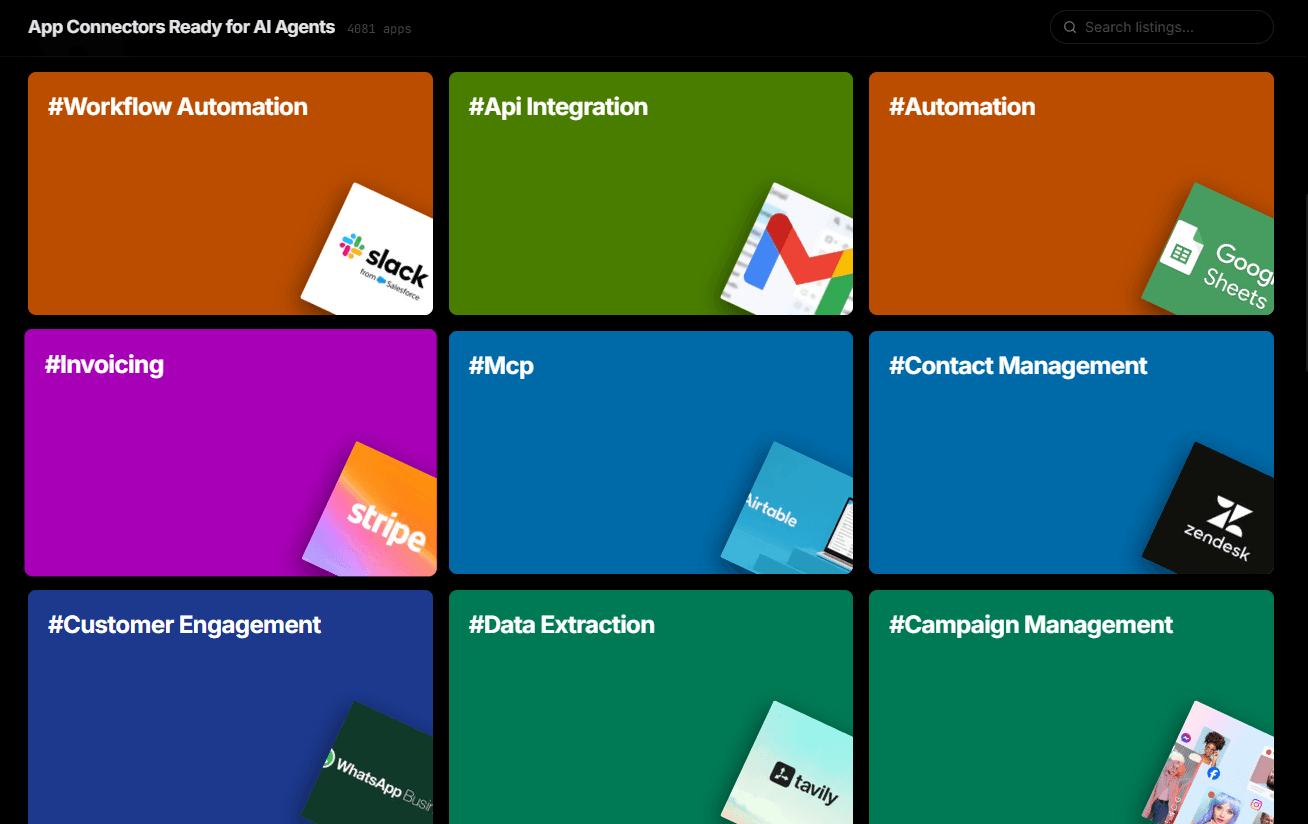
Over 4,000 integrations ready for AI agents
Explore a vast library of pre-built integrations, optimized and ready to deploy.
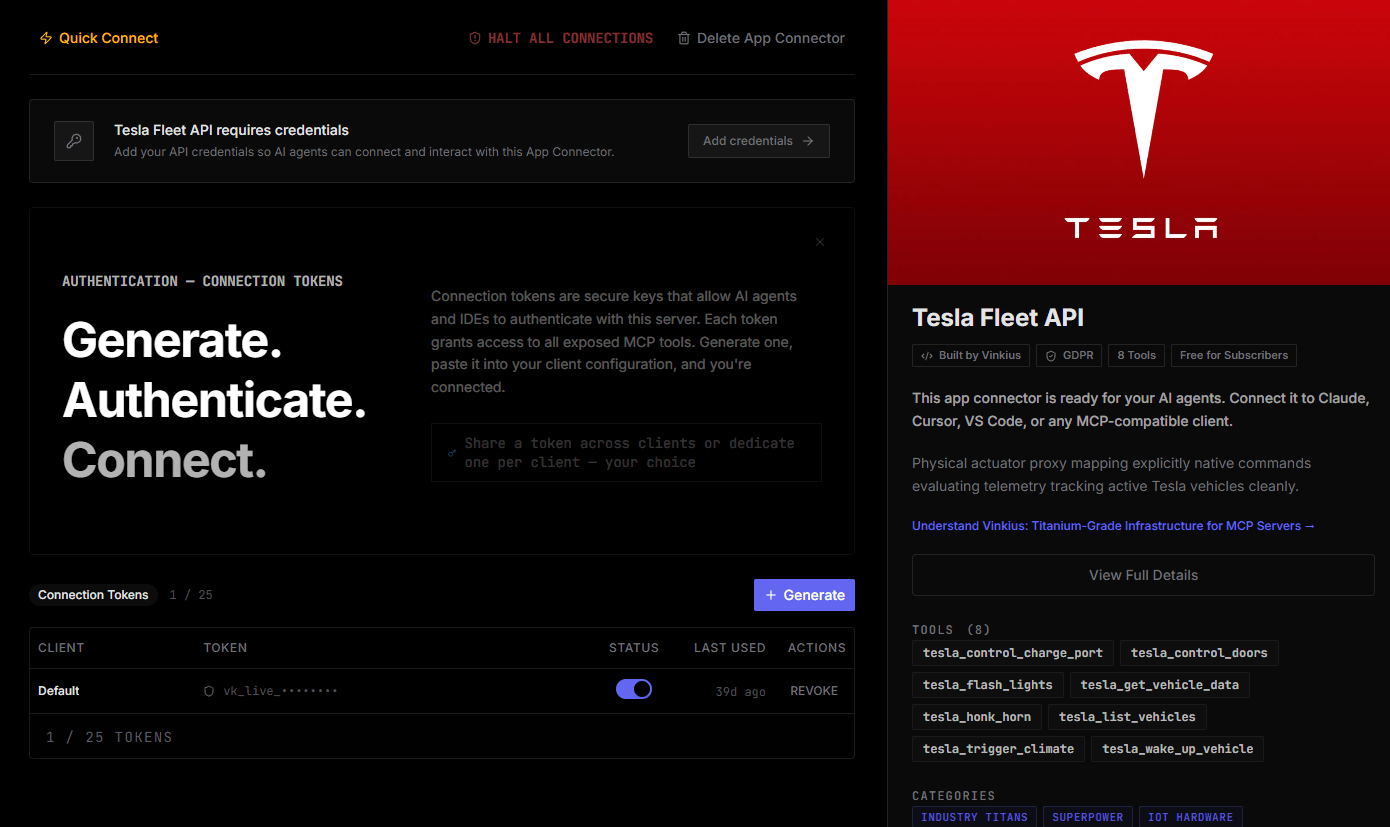
Connect securely in under 30 seconds
Generate tokens to authenticate and link external services in a single step.
Complete visibility into every agent action
Audit live requests, latency, success rates, and active security compliance policies.
Optimize spending and track token ROI
Analyze real-time token consumption and cost metrics detailed by connection.
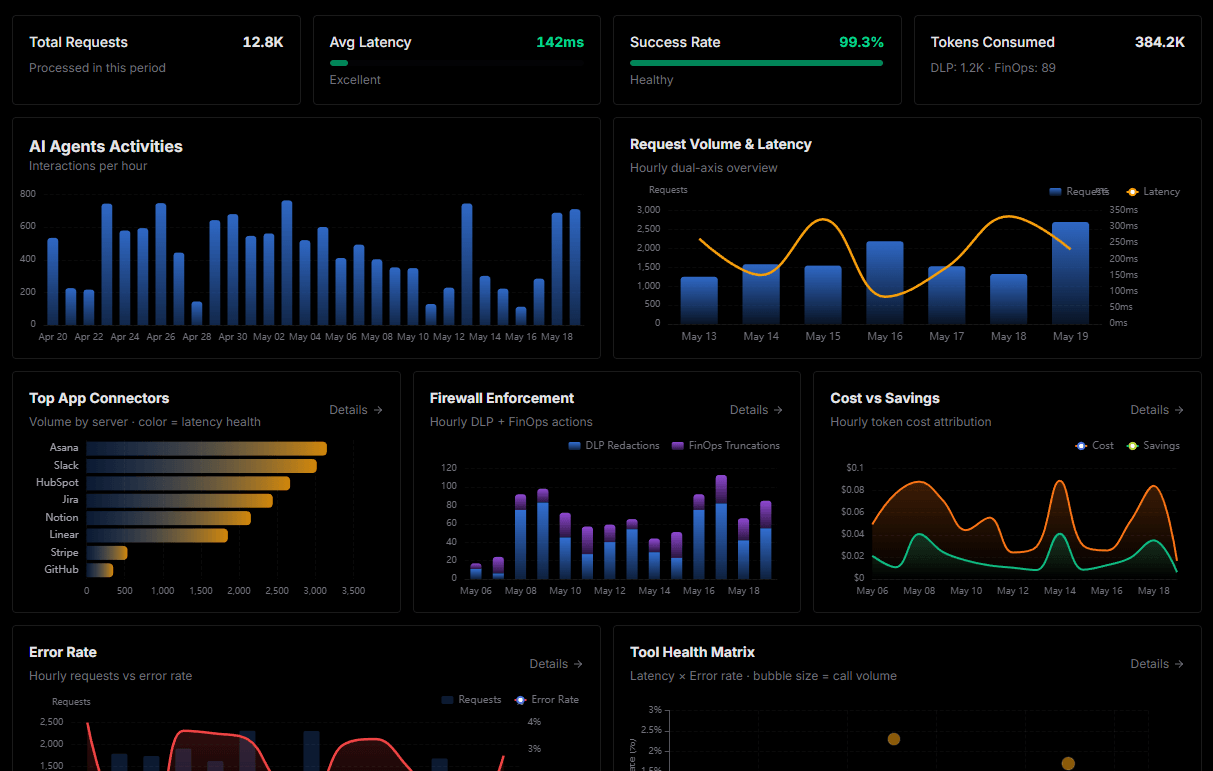
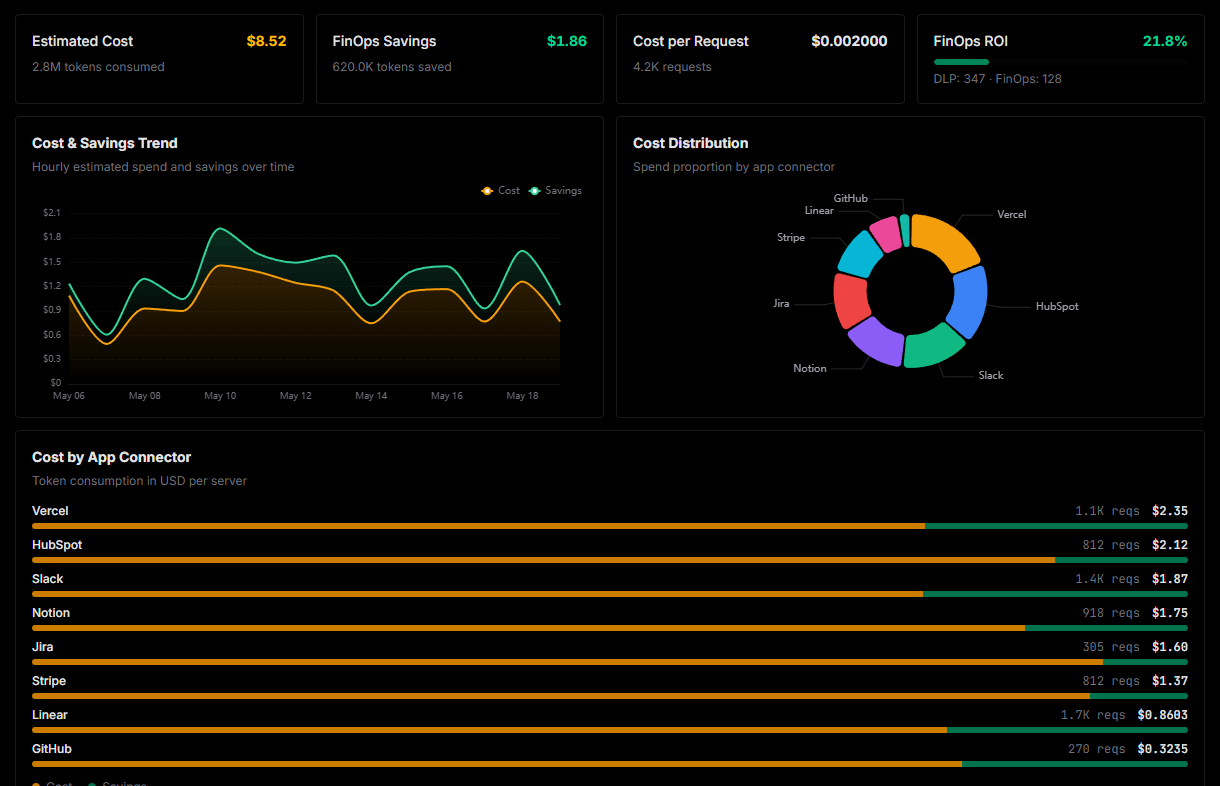
Explore our live AI Agents Analytics dashboard to see it all working
This dashboard is included when you connect ContextQA using Vinkius. You will never be left in the dark about what your AI agents are doing with your tools.
ContextQA and 4,000+ other AI tools. No hosting, no code, ready to use.
Professionals who connect ContextQA to AutoGen through Vinkius don't need to write code, manage servers, or worry about security. Everything is pre-configured, secure, and runs automatically in the background.
Raw MCP | Vinkius | |
|---|---|---|
| Ready-to-use MCPs | Find and configure each manually | 4,000+ MCPs ready to use |
| Connection Setup | Manual coding & server setup | 1-click instant connection |
| Server Hosting | You host it yourself (needs 24/7 uptime) | 100% hosted & managed by Vinkius |
| Security & Privacy | Stored in plaintext config files | Bank-grade encrypted vault |
| Activity Visibility | Blind execution (no logs or tracking) | Live dashboard with real-time logs |
| Cost Control | Runaway AI token spend risk | Automatic budget limits |
| Revoking Access | Must delete files or code to stop | 1-click disconnect button |
How Vinkius secures
ContextQA for AutoGen
Every request between AutoGen and ContextQA is protected by our secure gateway. We automatically keep your sensitive data private, prevent unauthorized access, and let you disconnect instantly at any time.
Frequently asked questions
Can my agent help me identify the root cause of a failed test case?
Yes. Use the 'get_case' tool to resolve the AI root-cause model for a specific test. The agent retrieves the definitions and AI insights to confirm exactly why a boundary was breached during execution.
How do I trigger a full test suite run via chat?
Provide the 'project_id' and 'suite_id' to your agent and use the 'trigger_run' mutation. The agent will command the backend to queue the tests against live ContextQA test clusters instantly.
Can I see screen captures of failed test steps through the agent?
The 'get_execution' tool retrieves detailed logs tracking failing step boundaries. Where supported by ContextQA, the agent can surface the associated physical screen capture limits to help you visualize the failure.
How does AutoGen connect to MCP servers?
Create an MCP tool adapter and assign it to one or more agents in the group chat. AutoGen agents can then call ContextQA tools during their conversation turns.
Can different agents have different MCP tool access?
Yes. AutoGen's role-based architecture lets you assign specific MCP tools to specific agents, so a querying agent has different capabilities than a reviewing agent.
Does AutoGen support human approval for tool calls?
Yes. Configure human-in-the-loop mode so agents pause and request approval before executing sensitive MCP tool calls.
McpWorkbench not found
Install: pip install "autogen-ext[mcp]"
Explore More MCP Servers
View all →
Aimtell
10 toolsWeb push notification orchestration — manage campaigns, segments, and subscribers via AI.

Better Proposals
10 toolsCreate and manage professional proposals via Better Proposals — list proposals, contacts, and templates directly from any AI agent.

JSON Diff Visualizer
1 toolsGenerate human-readable visual diffs between two JSON objects — added lines in green, removed in red, unchanged in gray. Like 'git diff' but for JSON structures.

FOIA.gov (Freedom of Information)
4 toolsAccess US government FOIA data — list agency components, retrieve request forms, and fetch annual reports directly from FOIA.gov.