
Bring Route Planning
to Cursor
Create your Vinkius account to connect Strava Planning to Cursor and start using all 14 AI tools in minutes. Fully managed, enterprise secure, and ready to use without writing a single line of code. No hosting, no server setup — just connect and start using.
 GDPR Free for Subscribers
Compatible with every major AI agent and IDE
 Gemini
What is the Strava Planning MCP Server?
Connect Strava Planning to any AI agent and manage your training logistics — route creation, GPX/TCX export, manual activity logging, gear tracking, segment favoriting, and profile management.
What you can do
- Route Management — List, view, and analyze all your saved routes with distance, elevation, and descriptions
- Route Streams — Get GPS coordinates, elevation profiles, and distance data for any route
- Route Export — Export routes to GPX and TCX formats for GPS devices (Garmin, Wahoo, etc.)
- Manual Activity Creation — Log activities not recorded by Strava (gym, yoga, cross-training) with full details
- Activity Updates — Edit activity names, descriptions, assign gear, mark commutes or indoor sessions
- File Uploads — Upload FIT, TCX, or GPX files for processing by Strava with status tracking
- Segment Management — Star (favorite) or unstar segments for quick training access
- Athlete Profile — View and update your profile information including weight for accurate power-to-weight ratios
- Athlete Zones — Review your heart rate and power zone configurations
- Gear Details — Track equipment mileage, models, and primary gear assignments
How it works
- Subscribe to this server
- Enter your Strava Access Token (OAuth2)
- Start planning routes and managing training data from Claude, Cursor, or any MCP-compatible client
Who is this for?
- Route Planners — create, review, and export training routes to GPS devices for guided workouts
- Multi-Sport Athletes — log non-GPS activities (gym, pool, yoga) alongside Strava-tracked workouts
- Equipment Managers — track bike and shoe mileage for maintenance planning and rotation
- Data Exporters — export route data in GPX/TCX formats for use with other platforms and devices
Built-in capabilities (14)
Required: name (activity name), type (activity type like "Run", "Ride", "Swim", "Walk", "Hike"), startDate (ISO 8601 format), elapsedTime (seconds). Optional: description, distance (meters). Use this to log activities recorded outside of Strava (gym workouts, yoga, cross-training, etc.). Activity types must match Strava's valid types list. Create a manual activity in Strava
GPX files can be downloaded and loaded onto GPS devices (Garmin, Wahoo, etc.) for navigation. The routeId is from Strava route URLs. Use this to export routes to your GPS device for guided training. Get the GPX export URL for a Strava route
TCX files include route data with additional training metadata. Compatible with Garmin Training Center and other fitness platforms. Use this to export routes with training metadata. Get the TCX export URL for a Strava route
Use this to review personal profile details, check equipment assignments, or verify account settings. Get the authenticated athlete's profile information
Required for zone-based training analysis. Use this to review training zones, ensure zones are correctly set, or use zone data for activity analysis. Get the athlete's custom heart rate and power zones
The gearId is found in activity data or athlete profile. Use this to check equipment mileage for maintenance planning or to analyze performance with specific gear. Get details about a piece of equipment (bike, shoes) tracked in Strava
The routeId is found in Strava route URLs. Use this to review route characteristics before training or to plan similar routes. Get detailed information about a specific Strava route
The "types" parameter is comma-separated: "latlng", "altitude", "distance". Use this to preview a route's elevation profile, understand the terrain, or export GPS data for navigation. Get elevation and GPS data streams for a Strava route
Status values: "Your activity is ready" (success), "Your activity is still processing" (wait and retry), or error messages. The uploadId is returned by upload_activity. Poll this endpoint every 5-10 seconds after upload until ready. Check the status of a Strava activity upload
Each route includes: name, distance, elevation gain, type (ride/run), description, and whether it's private. Use this to review saved routes, plan upcoming workouts, or export route data for GPS devices. List all routes created by the authenticated athlete
Set starred=true to favorite, starred=false to unfavorite. The segmentId is from Strava segment URLs. Use this to manage your favorite segments for quick access and training focus. Star (favorite) or unstar a Strava segment
The activityId is the numeric ID. Updatable fields: name, description, sport_type, gear_id (to assign equipment), commute (mark as commute: "true"/"false"), trainer (mark as indoor: "true"/"false"). Use this to correct activity details, assign gear, or add descriptions after the fact. Update an existing Strava activity
Currently only "weight" (in kg) is supported by the API. Accurate weight is important for power-to-weight ratio calculations and performance analysis. Use this when your weight changes to keep performance metrics accurate. Update the authenticated athlete's profile information
Supported data_type: "fit", "fit.gz", "tcx", "tcx.gz", "gpx", "gpx.gz". Returns an upload ID to check status with get_upload_status. Note: Actual file upload requires multipart/form-data with the file content. This endpoint initiates the process. Check upload status periodically — processing takes 10-60 seconds. Upload an activity file (FIT, TCX, GPX) to Strava for processing
Why Cursor?
Cursor's Agent mode turns Strava Planning into an in-editor superpower. Ask Cursor to generate code using live data from Strava Planning and it fetches, processes, and writes. all in a single agentic loop. 14 tools appear alongside file editing and terminal access, creating a unified development environment grounded in real-time information.
- —
Agent mode turns Cursor into an autonomous coding assistant that can read files, run commands, and call MCP tools without switching context
- —
Cursor's Composer feature can generate entire files using real-time data fetched through MCP. no copy-pasting from external dashboards
- —
MCP tools appear alongside built-in tools like file reading and terminal access, creating a unified agentic environment
- —
VS Code extension compatibility means your existing workflow, keybindings, and extensions all work alongside MCP tools
Strava Planning in Cursor
Why run Strava Planning with Vinkius?
The Strava Planning connection runs on our fully managed, secure cloud infrastructure. We handle the hosting, maintenance, and security so you don't have to deal with servers or code. All 14 tools are ready to work instantly without any complex setup.
You stay in complete control of your data. Your AI only accesses the information you approve, keeping your sensitive passwords and private details completely safe. Plus, with automatic optimizations, your AI works faster and more efficiently.
* Every connection is hosted and maintained by Vinkius. We handle the security, updates, and infrastructure so you don't have to write code or manage servers. See our infrastructure
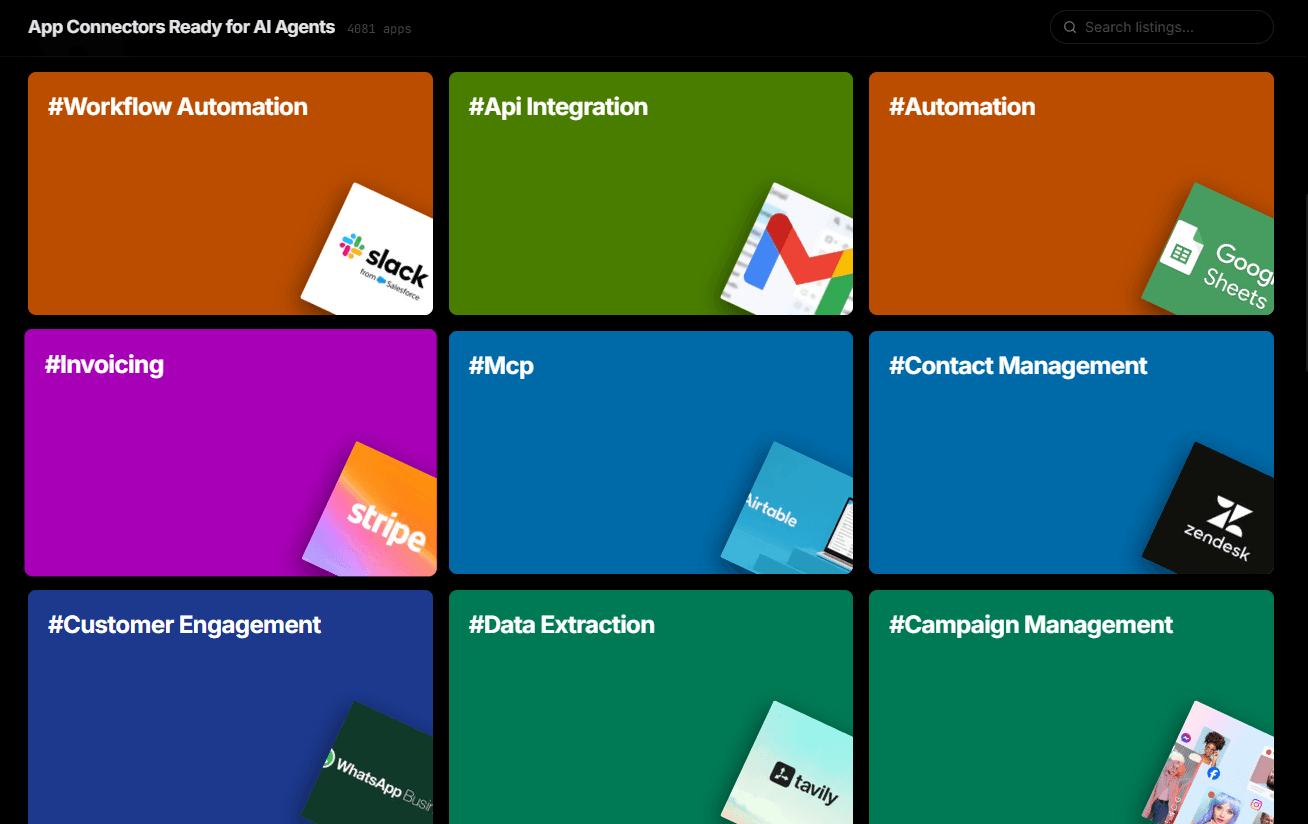
Over 4,000 integrations ready for AI agents
Explore a vast library of pre-built integrations, optimized and ready to deploy.
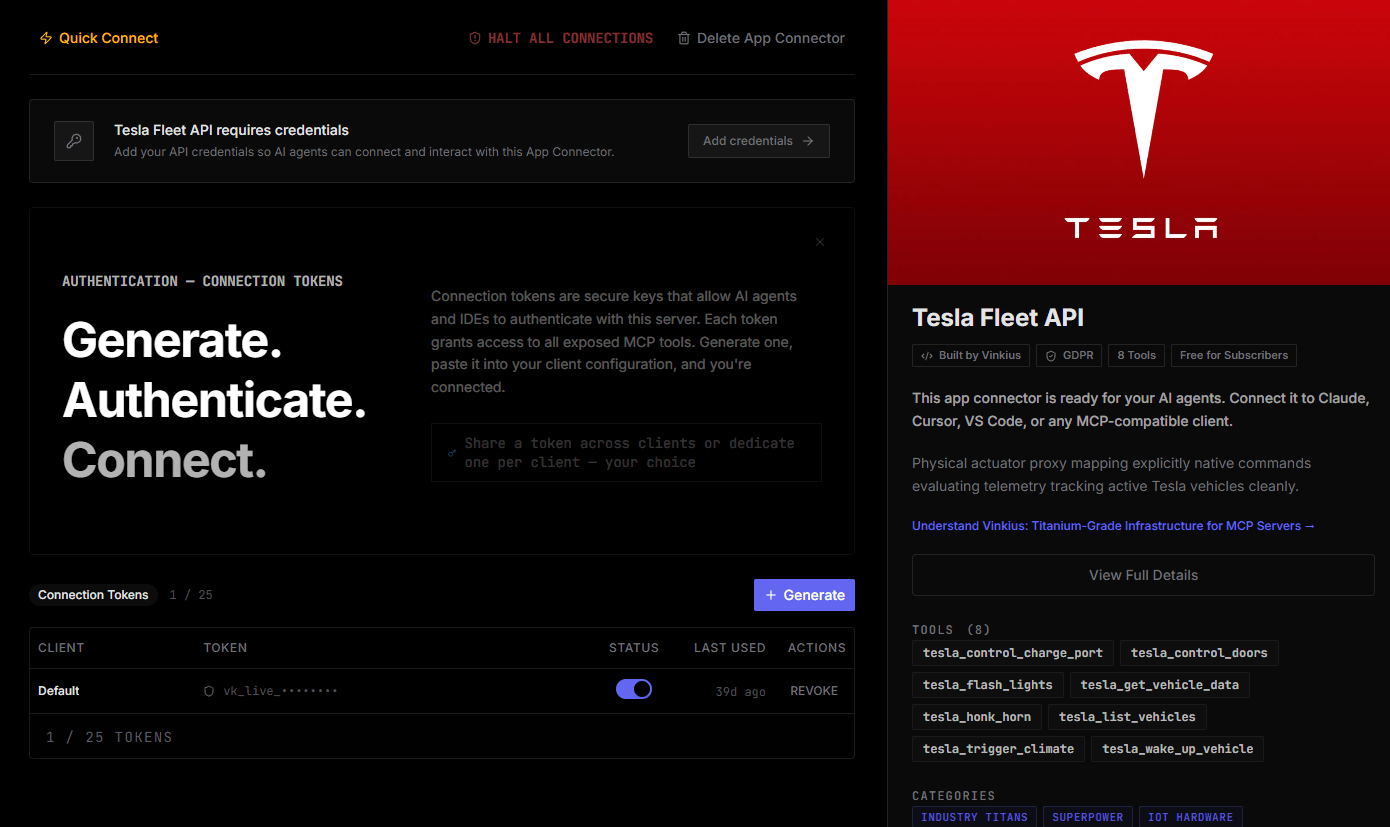
Connect securely in under 30 seconds
Generate tokens to authenticate and link external services in a single step.
Complete visibility into every agent action
Audit live requests, latency, success rates, and active security compliance policies.
Optimize spending and track token ROI
Analyze real-time token consumption and cost metrics detailed by connection.
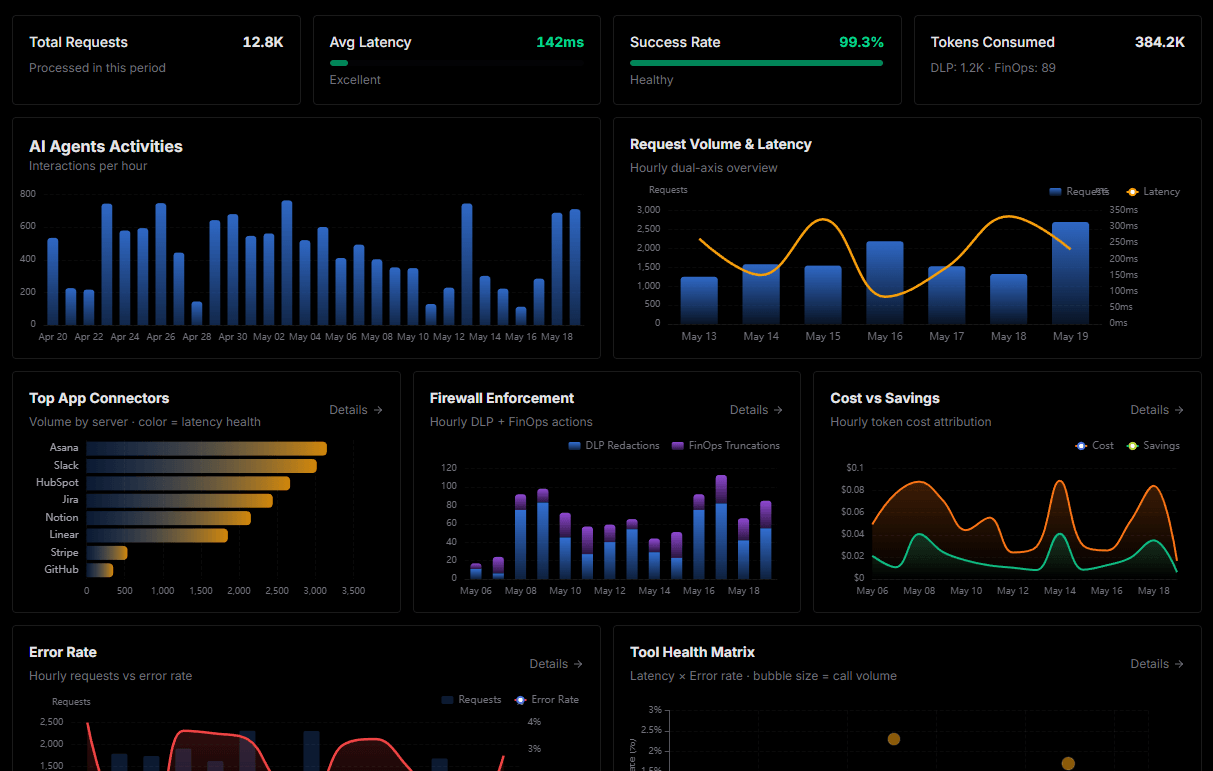
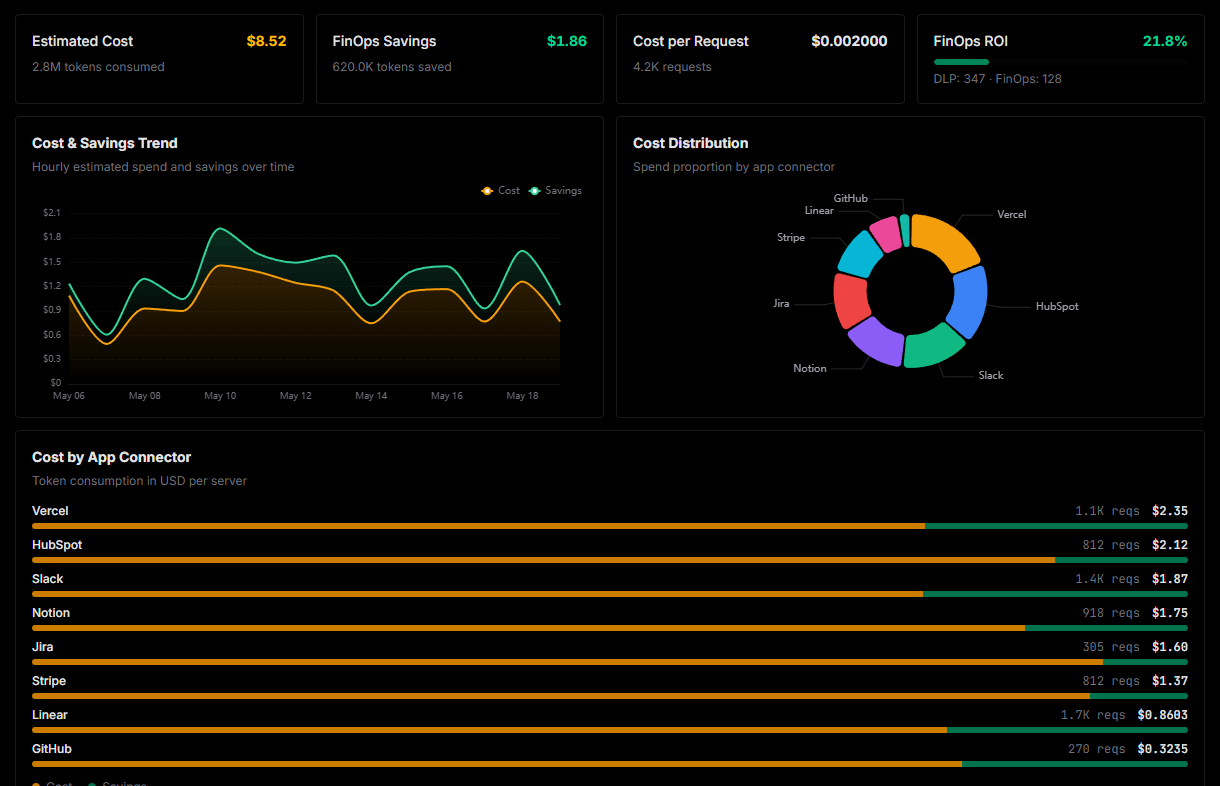
Explore our live AI Agents Analytics dashboard to see it all working
This dashboard is included when you connect Strava Planning using Vinkius. You will never be left in the dark about what your AI agents are doing with your tools.
Strava Planning and 4,000+ other AI tools. No hosting, no code, ready to use.
Professionals who connect Strava Planning to Cursor through Vinkius don't need to write code, manage servers, or worry about security. Everything is pre-configured, secure, and runs automatically in the background.
Raw MCP | Vinkius | |
|---|---|---|
| Ready-to-use MCPs | Find and configure each manually | 4,000+ MCPs ready to use |
| Connection Setup | Manual coding & server setup | 1-click instant connection |
| Server Hosting | You host it yourself (needs 24/7 uptime) | 100% hosted & managed by Vinkius |
| Security & Privacy | Stored in plaintext config files | Bank-grade encrypted vault |
| Activity Visibility | Blind execution (no logs or tracking) | Live dashboard with real-time logs |
| Cost Control | Runaway AI token spend risk | Automatic budget limits |
| Revoking Access | Must delete files or code to stop | 1-click disconnect button |
How Vinkius secures
Strava Planning for Cursor
Every request between Cursor and Strava Planning is protected by our secure gateway. We automatically keep your sensitive data private, prevent unauthorized access, and let you disconnect instantly at any time.
Frequently asked questions
How do I export a route to my GPS device?
First, use list_routes to find your route ID. Then use export_route_gpx or export_route_tcx with that route ID. The GPX file can be downloaded and loaded onto Garmin, Wahoo, or other GPS devices for turn-by-turn navigation during your workout.
Can I log activities that Strava doesn't automatically track?
Yes! Use create_activity to manually log any workout — gym sessions, yoga, swimming, hiking, cross-training. Provide the name, type (e.g., "Workout", "Yoga", "Swim"), start date, elapsed time, and optionally distance and description. This keeps all your training in one place.
How do I track my bike and shoe mileage?
Use get_gear with the gear ID to see total accumulated distance. Gear IDs are found in your athlete profile or assigned to activities. You can assign gear to activities using update_activity with the gear_id parameter. Track mileage to know when to replace chains, tires, or running shoes.
What is Agent mode and why does it matter for MCP?
Agent mode is Cursor's autonomous execution mode where the AI can perform multi-step tasks: reading files, editing code, running terminal commands, and calling MCP tools. Without Agent mode, Cursor operates in a simpler ask-and-answer mode that doesn't support tool calling. Always ensure you're in Agent mode when working with MCP servers.
Where does Cursor store MCP configuration?
Cursor looks for MCP server configurations in a mcp.json file. You can configure servers at the project level (.cursor/mcp.json in your project root) or globally (~/.cursor/mcp.json). Project-level configs take precedence.
Can Cursor use MCP tools in inline edits?
No. MCP tools are only available in Agent mode through the chat panel. Inline completions and Tab suggestions do not trigger MCP tool calls. This is by design. tool calls require user visibility and approval.
How do I verify MCP tools are loaded?
Open Settings → Features → MCP and look for your server name. A green indicator means the server is connected. You can also check Agent mode's available tools by clicking the tools dropdown in the chat panel.
Tools not appearing in Cursor
Ensure you are in Agent mode (not Ask mode). MCP tools only work in Agent mode.
Server shows as disconnected
Check Settings → Features → MCP and verify the server status. Try clicking the refresh button.
Explore More MCP Servers
View all →
Gutendex
3 toolsSearch and discover 70,000+ free public domain ebooks from Project Gutenberg — no API key required.

Benchmark Email
10 toolsAutomate email marketing via Benchmark Email — manage contacts, lists, and campaigns directly from any AI agent.

Eventzilla Alternative
11 toolsEvent management and ticketing platform — manage registrations, attendees, and check-ins via AI.

Nanoid Generator
1 toolsGenerate unique, URL-safe IDs that are 2x faster than UUID, fit in 118 bytes, and use cryptographic randomness. 40M+ weekly downloads.