
Bring Performance Metrics
to Cursor
Create your Vinkius account to connect Strava Training to Cursor and start using all 12 AI tools in minutes. Fully managed, enterprise secure, and ready to use without writing a single line of code. No hosting, no server setup — just connect and start using.
 GDPR Free for Subscribers
Compatible with every major AI agent and IDE
 Gemini
What is the Strava Training MCP Server?
Connect Strava Training to any AI agent and unlock deep performance analysis from your Strava data — activity details, time-series streams, heart rate/power zones, segment efforts, lap splits, and lifetime athlete statistics.
What you can do
- Activity Details — Full metrics: distance, time, elevation, HR, power, speed, weather, gear
- Activity Streams — Raw GPS, heart rate, power, cadence, altitude, speed, temperature, grade data
- Activity Zones — Heart rate and power zone distribution for training intensity analysis
- Activity Laps — Auto-split lap data with pace, distance, and elevation per split
- Segment Efforts — Find, compare, and analyze all efforts on any segment with detailed metrics
- Segment Streams — Elevation and grade profiles along segments for previewing difficulty
- Segment Details — Distance, elevation, grade, effort count, and personal records
- Athlete Statistics — Lifetime and recent totals for runs, rides, and all activities
- Athlete Zones — Personal heart rate and power zone configurations
- Gear Tracking — Equipment mileage, models, and primary gear assignments
How it works
- Subscribe to this server
- Enter your Strava Access Token (OAuth2)
- Start analyzing training data from Claude, Cursor, or any MCP-compatible client
Who is this for?
- Endurance Athletes — analyze training volume, zone distribution, and segment PRs to optimize training plans
- Coaches — review athlete streams, zone data, and segment efforts to provide data-driven coaching
- Cyclists — analyze power data, segment efforts, and gear mileage for performance and maintenance planning
- Runners — track pace consistency through lap splits, elevation profiles, and heart rate trends
Built-in capabilities (12)
The activityId is the numeric ID from Strava activity URLs (e.g., strava.com/activities/12345678 → 12345678). Use this for deep analysis of any workout, ride, or run. Get detailed information about a specific Strava activity
Each lap includes distance, moving time, average speed, elevation gain, and pace. GPS devices and Strava auto-split activities into laps (typically ~1km or ~1mi). Use this to analyze pace consistency, identify fast/slow sections, and compare splits within a single activity. Get lap/split data for a Strava activity
The "types" parameter is comma-separated stream types: "time", "distance", "latlng", "altitude", "velocity_smooth", "heartrate", "cadence", "watts", "temp", "moving", "grade_smooth". Example: "heartrate,watts,velocity_smooth" for HR, power, and speed data. Each stream returns an array of values with corresponding timestamps. Use this for detailed performance analysis, visualization, or export. Get raw time-series data streams from a Strava activity (GPS, heart rate, power, cadence, altitude, speed, etc)
Requires activity ID. This data helps understand training intensity and whether the workout targeted the correct zones. Only available for activities with heart rate or power data. Summit/subscription feature. Get heart rate and power zone distribution for a Strava activity
Use the athlete's Strava numeric ID. Returns recent_run_totals, recent_ride_totals, all_run_totals, all_ride_totals. Great for performance overview and progress tracking. Get consolidated activity statistics for any Strava athlete
Requires profile:read_all scope. Use this to understand training zones for zone-based analysis of activities and efforts. Get the authenticated athlete's custom heart rate and power zones
The gear ID is found in activity data or athlete profile. Use this to track equipment mileage, plan maintenance, or analyze performance with specific gear. Get details about a piece of equipment (bike, shoes) tracked in Strava
The segment ID is found in Strava segment URLs. Use this to discover segment characteristics before attempting it or to compare segments. Get details of a Strava segment including distance, elevation, grade, and leaderboards
Includes elapsed time, distance, average speed, heart rate, power, start date, and activity reference. The effort ID is found in segment effort listings or activity details. Use this to analyze specific KOM/QOM attempts and compare efforts on the same segment. Get details of a specific segment effort (KOM/QOM/PR attempt)
Same format as activity streams but limited to the segment portion. The "types" parameter is comma-separated: "time", "distance", "latlng", "altitude", "velocity_smooth", "heartrate", "cadence", "watts". Use this for granular analysis of segment performance. Get time-series data streams for a specific segment effort
Useful for previewing a segment's difficulty profile before attempting it. The "types" parameter accepts "distance", "altitude", "grade_smooth". Use this to understand elevation changes and steepness patterns along a segment. Get time-series data streams for a Strava segment (elevation profile, grade, etc)
Filter by athlete_id (required), optionally segment_id to get efforts on a specific segment, and date range with start_date_local and end_date_local (ISO 8601 format). Use this to find PRs, analyze progress on segments over time, or compare multiple efforts on the same segment. List all segment efforts for an athlete, optionally filtered by segment and date range
Why Cursor?
Cursor's Agent mode turns Strava Training into an in-editor superpower. Ask Cursor to generate code using live data from Strava Training and it fetches, processes, and writes. all in a single agentic loop. 12 tools appear alongside file editing and terminal access, creating a unified development environment grounded in real-time information.
- —
Agent mode turns Cursor into an autonomous coding assistant that can read files, run commands, and call MCP tools without switching context
- —
Cursor's Composer feature can generate entire files using real-time data fetched through MCP. no copy-pasting from external dashboards
- —
MCP tools appear alongside built-in tools like file reading and terminal access, creating a unified agentic environment
- —
VS Code extension compatibility means your existing workflow, keybindings, and extensions all work alongside MCP tools
Strava Training in Cursor
Why run Strava Training with Vinkius?
The Strava Training connection runs on our fully managed, secure cloud infrastructure. We handle the hosting, maintenance, and security so you don't have to deal with servers or code. All 12 tools are ready to work instantly without any complex setup.
You stay in complete control of your data. Your AI only accesses the information you approve, keeping your sensitive passwords and private details completely safe. Plus, with automatic optimizations, your AI works faster and more efficiently.
* Every connection is hosted and maintained by Vinkius. We handle the security, updates, and infrastructure so you don't have to write code or manage servers. See our infrastructure
Over 4,000 integrations ready for AI agents
Explore a vast library of pre-built integrations, optimized and ready to deploy.
Connect securely in under 30 seconds
Generate tokens to authenticate and link external services in a single step.
Complete visibility into every agent action
Audit live requests, latency, success rates, and active security compliance policies.
Optimize spending and track token ROI
Analyze real-time token consumption and cost metrics detailed by connection.
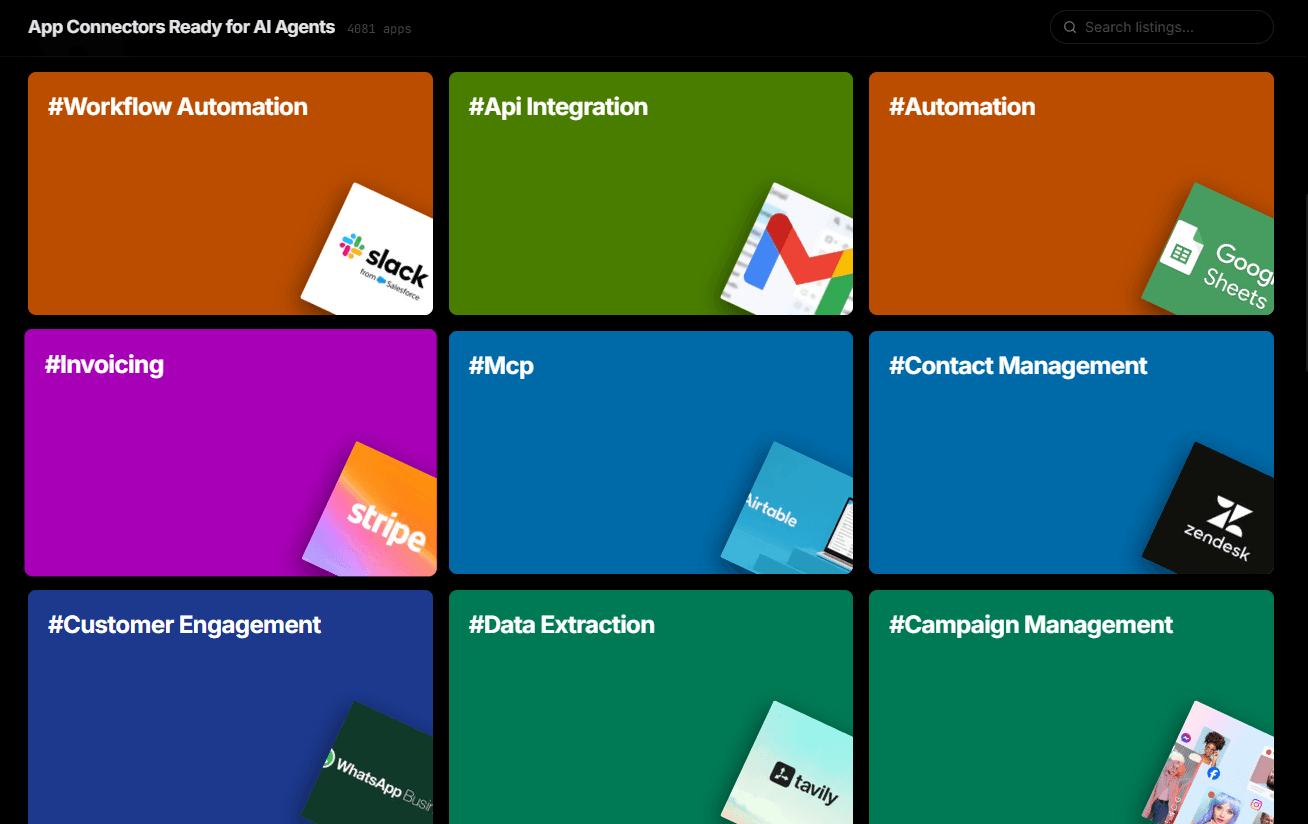
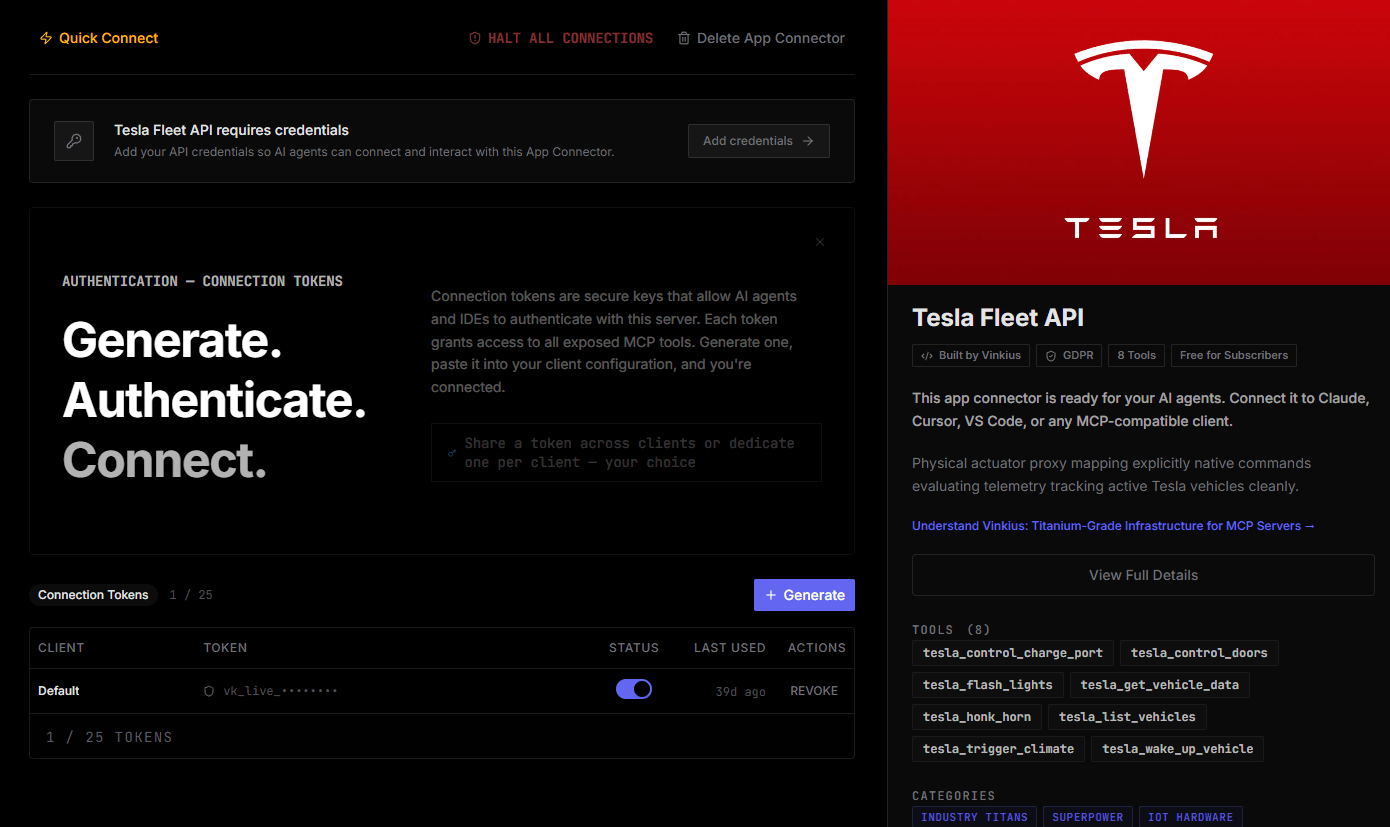
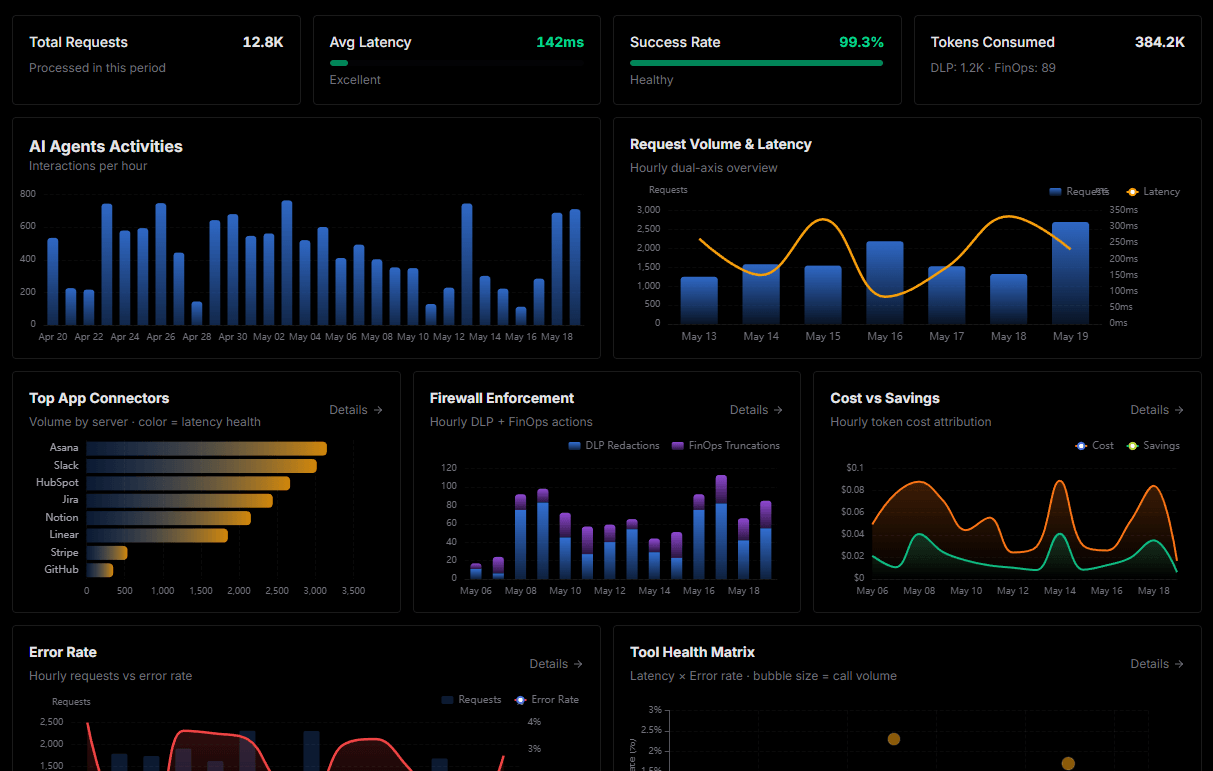
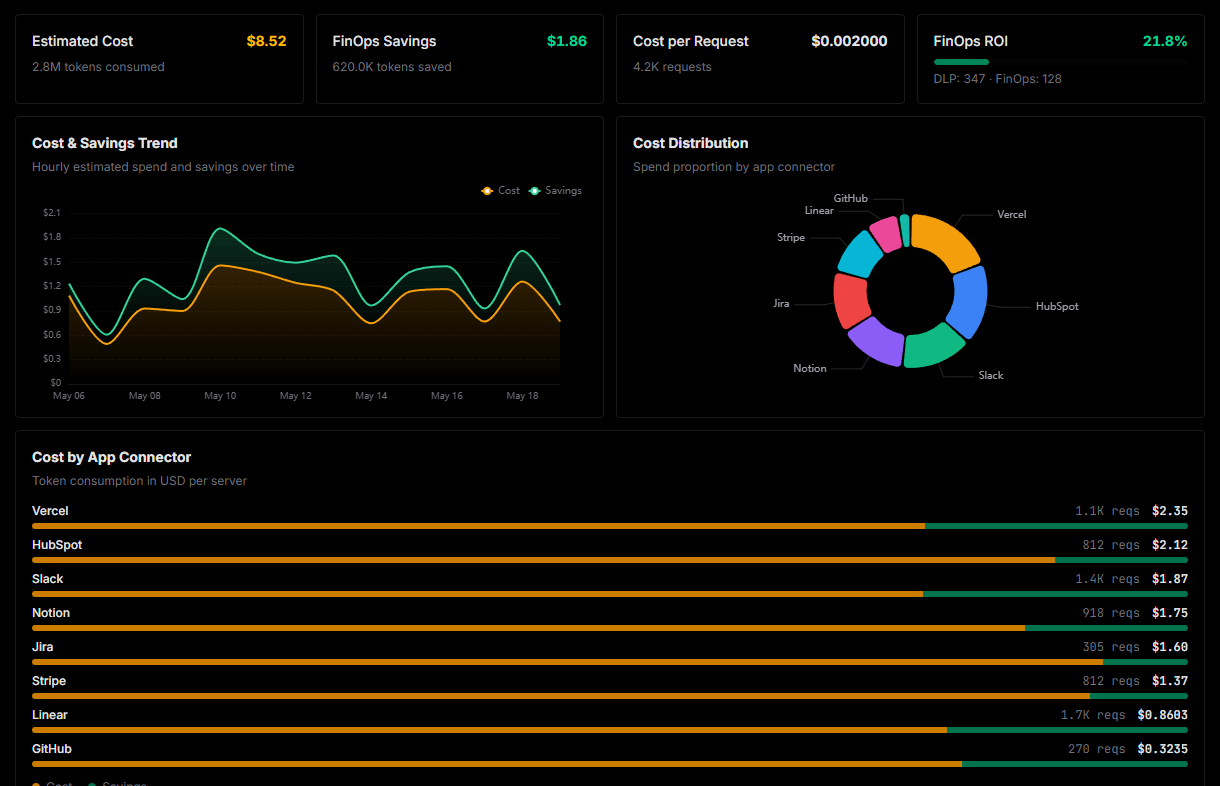
Explore our live AI Agents Analytics dashboard to see it all working
This dashboard is included when you connect Strava Training using Vinkius. You will never be left in the dark about what your AI agents are doing with your tools.
Strava Training and 4,000+ other AI tools. No hosting, no code, ready to use.
Professionals who connect Strava Training to Cursor through Vinkius don't need to write code, manage servers, or worry about security. Everything is pre-configured, secure, and runs automatically in the background.
Raw MCP | Vinkius | |
|---|---|---|
| Ready-to-use MCPs | Find and configure each manually | 4,000+ MCPs ready to use |
| Connection Setup | Manual coding & server setup | 1-click instant connection |
| Server Hosting | You host it yourself (needs 24/7 uptime) | 100% hosted & managed by Vinkius |
| Security & Privacy | Stored in plaintext config files | Bank-grade encrypted vault |
| Activity Visibility | Blind execution (no logs or tracking) | Live dashboard with real-time logs |
| Cost Control | Runaway AI token spend risk | Automatic budget limits |
| Revoking Access | Must delete files or code to stop | 1-click disconnect button |
How Vinkius secures
Strava Training for Cursor
Every request between Cursor and Strava Training is protected by our secure gateway. We automatically keep your sensitive data private, prevent unauthorized access, and let you disconnect instantly at any time.
Frequently asked questions
What data streams are available for activities?
Available streams include: time, distance, latlng (GPS coordinates), altitude, velocity_smooth (speed), heartrate, cadence, watts (power), temp (temperature), moving (moving flag), and grade_smooth (incline %). Request specific streams with comma-separated types, e.g., "heartrate,watts,velocity_smooth". Not all streams are available for every activity — it depends on the recording device.
What are activity zones and how are they calculated?
Activity zones show the time spent in each heart rate zone (Z1-Z5) or power zone during an activity. Zones are based on the athlete's personal zone configuration (set in Strava settings). Zone analysis reveals training intensity — whether a workout was aerobic (Z1-Z2), threshold (Z3), or anaerobic (Z4-Z5). This data requires a heart rate monitor or power meter.
How do I find my athlete ID on Strava?
Your athlete ID is the numeric portion of your Strava profile URL. For example, from https://www.strava.com/athletes/12345678, your athlete ID is 12345678. You can also get it from the get_athlete tool in the Strava Planning or Strava Social MCP servers.
What is Agent mode and why does it matter for MCP?
Agent mode is Cursor's autonomous execution mode where the AI can perform multi-step tasks: reading files, editing code, running terminal commands, and calling MCP tools. Without Agent mode, Cursor operates in a simpler ask-and-answer mode that doesn't support tool calling. Always ensure you're in Agent mode when working with MCP servers.
Where does Cursor store MCP configuration?
Cursor looks for MCP server configurations in a mcp.json file. You can configure servers at the project level (.cursor/mcp.json in your project root) or globally (~/.cursor/mcp.json). Project-level configs take precedence.
Can Cursor use MCP tools in inline edits?
No. MCP tools are only available in Agent mode through the chat panel. Inline completions and Tab suggestions do not trigger MCP tool calls. This is by design. tool calls require user visibility and approval.
How do I verify MCP tools are loaded?
Open Settings → Features → MCP and look for your server name. A green indicator means the server is connected. You can also check Agent mode's available tools by clicking the tools dropdown in the chat panel.
Tools not appearing in Cursor
Ensure you are in Agent mode (not Ask mode). MCP tools only work in Agent mode.
Server shows as disconnected
Check Settings → Features → MCP and verify the server status. Try clicking the refresh button.
Explore More MCP Servers
View all →
Dola Checkout
12 toolsAccept payments globally with a checkout experience designed for digital products, subscriptions, and one-time purchases.

Kolide
10 toolsAudit fleet security — list devices, track issues, and monitor people.

Harvard WHO Health
16 toolsAccess WHO global health indicators, disease statistics, and population health data for evidence-based research and policy analysis.

Foodpanda
13 toolsAutomate food delivery operations via Foodpanda — manage vendor catalogs, track orders, and control restaurant status directly from any AI agent.