
Bring Computer Vision
to OpenAI Agents SDK
Learn how to connect Roboflow to OpenAI Agents SDK and start using 29 AI agent tools in minutes. Fully managed, enterprise secure, and ready to use without writing a single line of code.
 GDPR Free for Subscribers
Compatible with every major AI agent and IDE
 Gemini
What is the Roboflow MCP Server?
Connect Roboflow to your AI agent to streamline your computer vision pipeline. From dataset management to model training and inference, handle your entire CV lifecycle through natural language.
What you can do
- Workspace & Project Management — List projects, create new ones, or fork from Roboflow Universe to jumpstart your development.
- Dataset Operations — Upload images (via URL or Base64), manage versions, and download datasets in various formats like COCO or YOLO.
- Model Training — Start training runs, monitor results, and retrieve precise performance metrics (mAP, precision, recall) for any version.
- Image Search — Search and filter images within your workspace to audit your data and improve model accuracy.
- Inference & Results — Run inference on images and retrieve results to verify model behavior in real-time.
How it works
- Subscribe to this server
- Enter your Roboflow Private API Key
- Start building and managing vision models from Claude, Cursor, or any MCP-compatible client
Who is this for?
- ML Engineers — monitor training progress and dataset health without leaving the terminal or IDE.
- Data Scientists — quickly query dataset versions and export data for custom training scripts.
- Product Teams — audit model performance and visualize inference results through simple conversation.
Built-in capabilities (29)
Add projects to a folder (Enterprise)
Start an auto-labeling job using foundation models
Cancel an active training job
Assign a batch of images to a labeler and reviewer
Create a project folder (Enterprise)
Create a new project in a workspace
Delete multiple images from a project
Delete a project or version (moves to Trash)
Retrieve a download link for a zipped dataset in a specific format
Fork a public project from Roboflow Universe
Track long-running operations like forking or large exports
Check dataset health (class distribution, missing annotations, etc)
Get details for a specific image
Get project details, metadata, and versions
Verify authentication and retrieve default workspace
Retrieve metrics and status for a version training run
Retrieve metadata for a specific dataset version
List project folders in a workspace (Enterprise)
List items in the workspace trash
List information about a workspace and its projects
Add, remove, or set tags on an image
Restore an item from the trash
Run inference on an image using hosted models
Search and filter images within a specific project
Search and filter images within a workspace
Start training a model on a dataset version
Early stop an active training job
Attach an annotation file to an existing image
Upload an image to a project
Why OpenAI Agents SDK?
The OpenAI Agents SDK auto-discovers all 29 tools from Roboflow through native MCP integration. Build agents with built-in guardrails, tracing, and handoff patterns. chain multiple agents where one queries Roboflow, another analyzes results, and a third generates reports, all orchestrated through Vinkius.
- —
Native MCP integration via
MCPServerSse, pass the URL and the SDK auto-discovers all tools with full type safety - —
Built-in guardrails, tracing, and handoff patterns let you build production-grade agents without reinventing safety infrastructure
- —
Lightweight and composable: chain multiple agents and MCP servers in a single pipeline with minimal boilerplate
- —
First-party OpenAI support ensures optimal compatibility with GPT models for tool calling and structured output
Roboflow in OpenAI Agents SDK
Roboflow and 4,000+ other MCP servers. One platform. One governance layer.
Teams that connect Roboflow to OpenAI Agents SDK through Vinkius don't need to source, host, or maintain individual MCP servers. Every tool call runs inside a hardened runtime with credential isolation, DLP, and a signed audit chain.
Raw MCP | Vinkius | |
|---|---|---|
| Server catalog | Find and host yourself | 4,000+ managed |
| Infrastructure | Self-hosted | Sandboxed V8 isolates |
| Credential handling | Plaintext in config | Vault + runtime injection |
| Data loss prevention | None | Configurable DLP policies |
| Kill switch | None | Global instant shutdown |
| Financial circuit breakers | None | Per-server limits + alerts |
| Audit trail | None | Ed25519 signed logs |
| SIEM log streaming | None | Splunk, Datadog, Webhook |
| Honeytokens | None | Canary alerts on leak |
| Custom domains | Not applicable | DNS challenge verified |
| GDPR compliance | Manual effort | Automated purge + export |
Why teams choose Vinkius for Roboflow in OpenAI Agents SDK
The Roboflow MCP Server runs on Vinkius-managed infrastructure inside AWS — a purpose-built runtime with per-request V8 isolates, Ed25519 signed audit chains, and sub-40ms cold starts. All 29 tools execute in hardened sandboxes optimized for native MCP execution.
Your AI agents in OpenAI Agents SDK only access the data you authorize, with DLP that blocks sensitive information from ever reaching the model, kill switch for instant shutdown, and up to 60% token savings. Enterprise-grade infrastructure, zero maintenance.
* Every MCP server runs on Vinkius-managed infrastructure inside AWS - a purpose-built runtime with per-request V8 isolates, Ed25519 signed audit chains, and sub-40ms cold starts optimized for native MCP execution. See our infrastructure
How Vinkius secures
Roboflow for OpenAI Agents SDK
Every tool call from OpenAI Agents SDK to the Roboflow MCP Server is protected by DLP redaction, cryptographic audit chains, V8 sandbox isolation, kill switch, and financial circuit breakers.
Frequently asked questions
How can I verify if my Roboflow API key is correctly configured?
You can use the get_root tool. It will attempt to authenticate with your key and return the default workspace details if successful.
Can I get the training performance metrics for a specific model version?
Yes! Use the get_training_results tool by providing the workspace, project, and version ID. It returns mAP, precision, recall, and other training metrics.
Is it possible to export my dataset to a specific format like YOLOv5?
Absolutely. Use the download_dataset tool and specify the format parameter (e.g., 'yolov5pytorch') to receive a download link for your zipped dataset.
How does the OpenAI Agents SDK connect to MCP?
Use MCPServerSse(url=...) to create a server connection. The SDK auto-discovers all tools and makes them available to your agent with full type information.
Can I use multiple MCP servers in one agent?
Yes. Pass a list of MCPServerSse instances to the agent constructor. The agent can use tools from all connected servers within a single run.
Does the SDK support streaming responses?
Yes. The SDK supports SSE and Streamable HTTP transports, both of which work natively with Vinkius.
MCPServerStreamableHttp not found
Ensure you have the latest version: pip install --upgrade openai-agents
Agent not calling tools
Make sure your prompt explicitly references the task the tools can help with.
Explore More MCP Servers
View all →
ZenHub
8 toolsManage agile boards, epics, and estimates via the ZenHub API.

DocuSeal
12 toolsAutomate document signing workflows via DocuSeal — manage templates, send signature requests, and track signers directly from any AI agent.
Twitch
10 toolsManage your Twitch channel — audit streams, followers, and clips via AI.
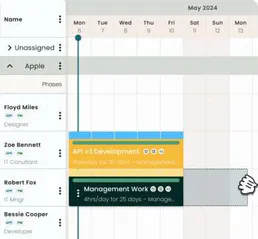
Hub Planner
10 toolsManage resources, projects, and bookings via Hub Planner API.