
Bring Music Metadata
to VS Code Copilot
Create your Vinkius account to connect MusicBrainz to VS Code Copilot and start using all 15 AI tools in minutes. Fully managed, enterprise secure, and ready to use without writing a single line of code. No hosting, no server setup — just connect and start using.
 GDPR Free for Subscribers
Compatible with every major AI agent and IDE
 Gemini
What is the MusicBrainz MCP Server?
Connect to MusicBrainz, the world's largest open music database, and explore music metadata through natural conversation — no API key needed.
What you can do
- Artist Search — Find musicians, bands, orchestras and composers with types, countries and active dates
- Release Search — Search album releases with artists, dates, countries, labels and track counts
- Track Search — Find individual recordings with durations, ISRCs and album info
- Release Groups — Browse canonical albums and singles grouped across different releases
- Label Search — Find record labels and publishers
- Work Search — Search musical compositions distinct from recordings
- Browse — Get all releases by a specific artist or label
How it works
- Subscribe to this server
- No API key needed — start searching immediately
- Explore music data from Claude, Cursor, or any MCP-compatible client
Who is this for?
- Music Enthusiasts — discover artist discographies, find album versions and explore music metadata
- Researchers — access comprehensive music metadata for analysis and cataloging
- Developers — build music apps using open, structured music data with MBIDs
Built-in capabilities (15)
Returns release titles, dates, countries and labels. Pagination: max 100 results per request. Browse all releases by a specific artist
Returns release titles, artists, dates and countries. Pagination: max 100 results. Browse all releases by a specific record label
Returns name, type, country, life span, disambiguation and more. Optionally include related data with inc parameter: "releases", "release-groups", "recordings", "works", "aliases". Get detailed info for a specific artist by MBID
Returns label name, type, country, founding date and more. Get detailed info for a specific record label by MBID
Returns title, artist, duration, ISRCs, releases it appears on and more. Optionally include: "artists", "isrcs", "releases", "aliases". Get detailed info for a specific recording by MBID
Returns title, artist, date, country, label, barcode, track listing and more. Optionally include: "artists", "labels", "recordings", "discids", "isrcs", "media". Get detailed info for a specific release by MBID
Returns title, artist, primary type, first release date and more. Optionally include: "artists", "releases", "aliases". Get detailed info for a specific release group by MBID
Returns work title, writers, type, ISWC, languages and more. Get detailed info for a specific musical work by MBID
Returns area names, types (country, city, subdivision, etc.) and ISO codes. Useful for finding area IDs to use in other searches. Search for geographic areas (countries, cities, regions)
). Returns artist names, IDs, types (person, group, orchestra, etc.), countries, active dates and disambiguation info. Supports Lucene query syntax for advanced searches. Pagination: max 100 results per request. Search for music artists
Returns label names, types (original production, reissue, etc.), countries and founding dates. Pagination: max 100 results. Search for record labels
Returns recording titles, artists, durations, album names and ISRCs. Useful for finding specific track versions and metadata. Pagination: max 100 results. Search for individual track recordings
Returns titles, artists, primary types (album, single, EP, etc.) and dates. Useful for finding the canonical album/single version. Pagination: max 100 results. Search for release groups (albums, singles, EPs)
Returns release titles, artists, dates, countries, labels and track counts. Supports filtering by status (official, promotion, bootleg). Pagination: max 100 results. Search for album releases
Returns work titles, writers, types (song, opera, symphony, etc.) and ISWCs. Useful for finding composition metadata separate from specific recordings. Pagination: max 100 results. Search for musical works (compositions)
Why VS Code Copilot?
GitHub Copilot Agent mode brings MusicBrainz data directly into your VS Code workflow. With a project-scoped config, the entire team shares access to 15 tools. Copilot queries live data, generates typed code, and writes tests from actual API responses, all without leaving the editor.
- —
VS Code is used by over 70% of developers. adding MCP tools to Copilot means your team can leverage external data without leaving their primary editor
- —
Project-scoped MCP configs (
.vscode/mcp.json) let you commit server configurations to your repository, ensuring the entire team shares the same tool access - —
Copilot's Agent mode integrates MCP tools seamlessly with file editing, terminal commands, and workspace search in a single agentic loop
- —
GitHub's enterprise compliance and audit features extend to MCP tool usage, providing visibility into how AI interacts with external services
MusicBrainz in VS Code Copilot
Why run MusicBrainz with Vinkius?
The MusicBrainz connection runs on our fully managed, secure cloud infrastructure. We handle the hosting, maintenance, and security so you don't have to deal with servers or code. All 15 tools are ready to work instantly without any complex setup.
You stay in complete control of your data. Your AI only accesses the information you approve, keeping your sensitive passwords and private details completely safe. Plus, with automatic optimizations, your AI works faster and more efficiently.
* Every connection is hosted and maintained by Vinkius. We handle the security, updates, and infrastructure so you don't have to write code or manage servers. See our infrastructure
Over 4,000 integrations ready for AI agents
Explore a vast library of pre-built integrations, optimized and ready to deploy.
Connect securely in under 30 seconds
Generate tokens to authenticate and link external services in a single step.
Complete visibility into every agent action
Audit live requests, latency, success rates, and active security compliance policies.
Optimize spending and track token ROI
Analyze real-time token consumption and cost metrics detailed by connection.
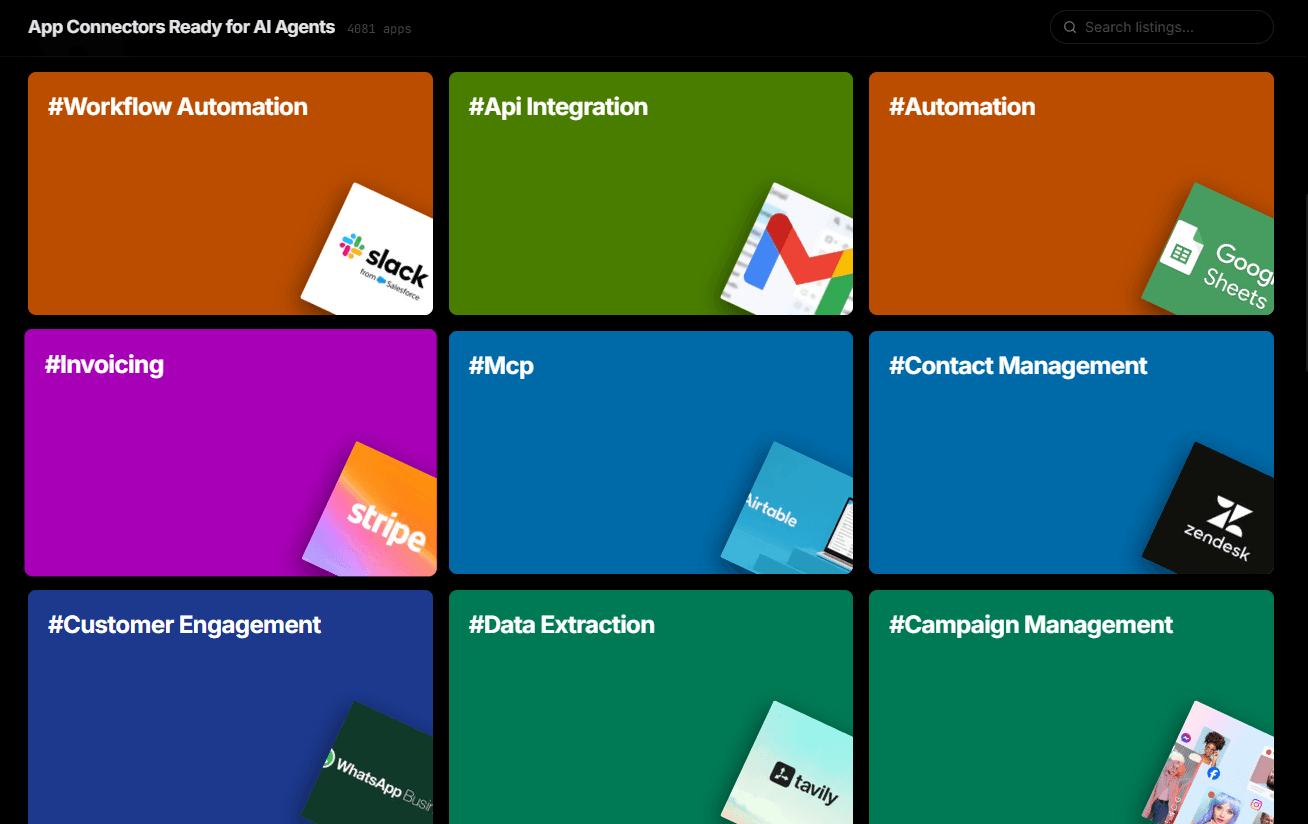
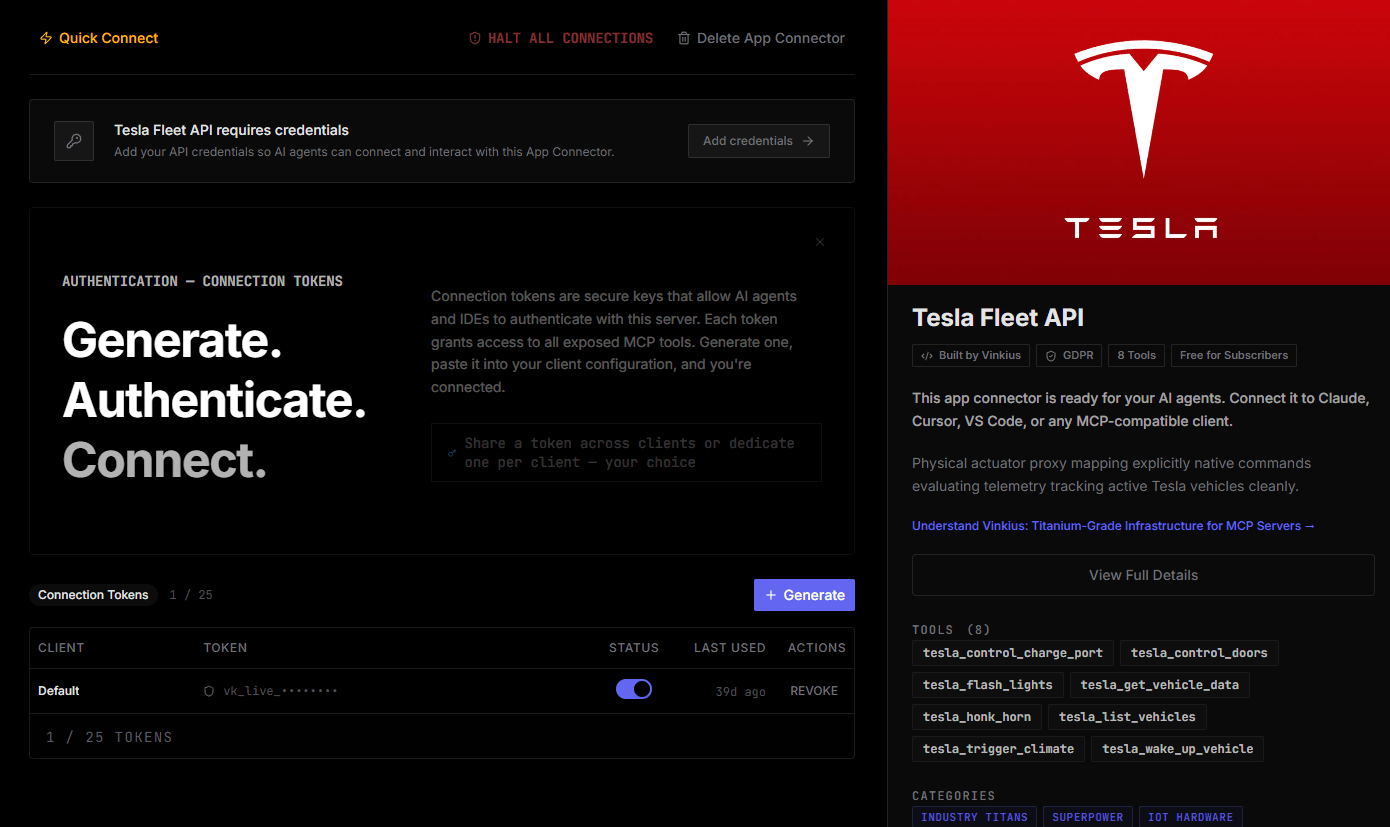
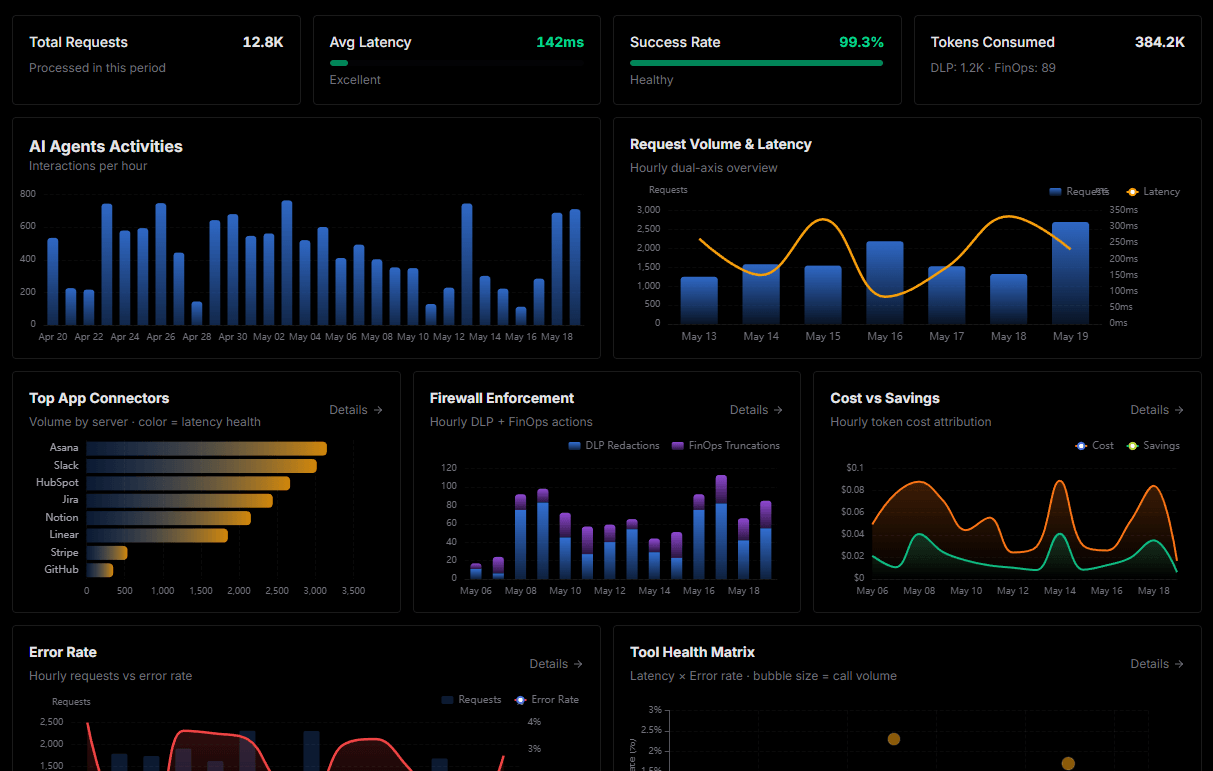
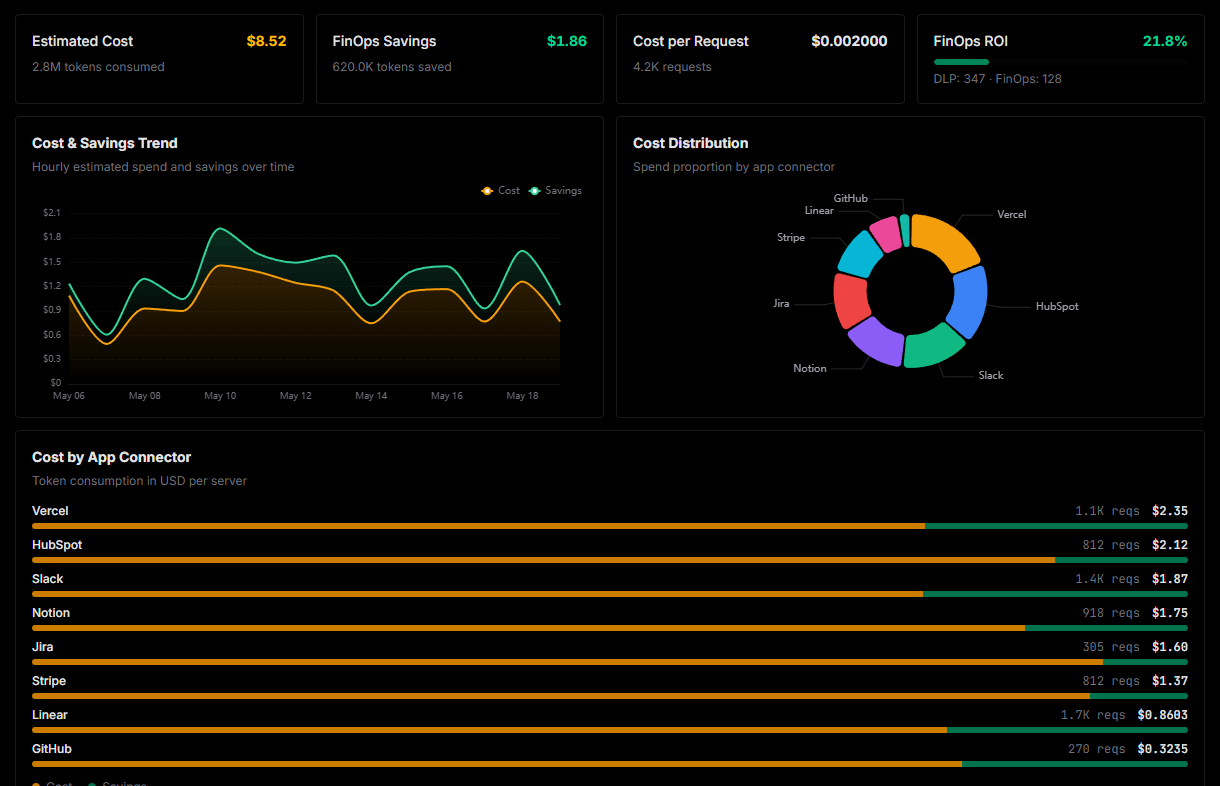
Explore our live AI Agents Analytics dashboard to see it all working
This dashboard is included when you connect MusicBrainz using Vinkius. You will never be left in the dark about what your AI agents are doing with your tools.
MusicBrainz and 4,000+ other AI tools. No hosting, no code, ready to use.
Professionals who connect MusicBrainz to VS Code Copilot through Vinkius don't need to write code, manage servers, or worry about security. Everything is pre-configured, secure, and runs automatically in the background.
Raw MCP | Vinkius | |
|---|---|---|
| Ready-to-use MCPs | Find and configure each manually | 4,000+ MCPs ready to use |
| Connection Setup | Manual coding & server setup | 1-click instant connection |
| Server Hosting | You host it yourself (needs 24/7 uptime) | 100% hosted & managed by Vinkius |
| Security & Privacy | Stored in plaintext config files | Bank-grade encrypted vault |
| Activity Visibility | Blind execution (no logs or tracking) | Live dashboard with real-time logs |
| Cost Control | Runaway AI token spend risk | Automatic budget limits |
| Revoking Access | Must delete files or code to stop | 1-click disconnect button |
How Vinkius secures
MusicBrainz for VS Code Copilot
Every request between VS Code Copilot and MusicBrainz is protected by our secure gateway. We automatically keep your sensitive data private, prevent unauthorized access, and let you disconnect instantly at any time.
Frequently asked questions
Do I need an API key?
No! MusicBrainz is completely free and open. No authentication required. Just subscribe and start searching. Rate limit is 1 request per second.
What is an MBID?
MBID stands for MusicBrainz Identifier — a unique UUID assigned to every entity in the database (artists, releases, recordings, labels, works). Use search tools to find MBIDs, then use get_* tools with the MBID for detailed info.
What's the difference between a release and a release group?
A release is a specific physical or digital version of an album (e.g. the 2012 remastered CD). A release group groups all versions of the same album together (e.g. "The Dark Side of the Moon" as a canonical work). Use release groups for finding the canonical album.
Which VS Code version supports MCP?
MCP support requires VS Code 1.99 or later with the GitHub Copilot extension. Ensure both are updated to the latest version. Older versions of Copilot may not expose the Agent mode toggle.
How do I switch to Agent mode?
Open the Copilot Chat panel and look for two mode options: "Ask" and "Agent". Click "Agent" to enable autonomous tool calling. In Ask mode, Copilot provides conversational answers but cannot invoke MCP tools.
Can I restrict which MCP tools Copilot can access?
Yes. VS Code shows a tool consent dialog before any MCP tool is invoked for the first time. You can also configure tool access policies at the organization level through GitHub Copilot settings.
Does MCP work in VS Code Remote or Codespaces?
Yes. MCP servers configured via .vscode/mcp.json work in Remote SSH, WSL, and GitHub Codespaces environments. The MCP connection is established from the remote host, so ensure the server URL is accessible from that environment.
MCP tools not available
Ensure you are in Agent mode in Copilot Chat. MCP tools only appear in Agent mode.
Explore More MCP Servers
View all →
WebHR
11 toolsManage employees, attendance, and recruitment on WebHR with AI agents.

Chess.com
15 toolsAccess Chess.com player profiles, stats, games, puzzles, and leaderboards directly from any AI agent.
FirstPromoter
12 toolsManage affiliates, track referrals, and handle rewards via AI agents with FirstPromoter.

KnoCommerce
10 toolsAnalyze post-purchase surveys — list responses, audit customer feedback, and track attribution channels.